Annika Eyth, Felix Borngaesser, Osamah M. Zmily, Maíra I. Rudolph, Ling Zhang, Vilma A. Joseph, Oleg V. Evgenov, Jason Oliveira, Nicholas Kolmel, Seena Dehkharghani, Irene Osborn, Michael E. Kiyatkin, Andrew D. Racine, Peter P. Semczuk, Shweta Garg, Karuna Wongtangman, Matthias Eikermann, Ibraheem M. Karaye
{"title":"麻醉导向镇静与非门诊介入放射和内窥镜手术后意外出院的关系:一项回顾性队列研究*","authors":"Annika Eyth, Felix Borngaesser, Osamah M. Zmily, Maíra I. Rudolph, Ling Zhang, Vilma A. Joseph, Oleg V. Evgenov, Jason Oliveira, Nicholas Kolmel, Seena Dehkharghani, Irene Osborn, Michael E. Kiyatkin, Andrew D. Racine, Peter P. Semczuk, Shweta Garg, Karuna Wongtangman, Matthias Eikermann, Ibraheem M. Karaye","doi":"10.1111/anae.16497","DOIUrl":null,"url":null,"abstract":"<div>\n \n \n <section>\n \n <h3> Introduction</h3>\n \n <p>Interventional radiology procedures and endoscopies are performed commonly worldwide, often necessitating pharmacological sedation to optimise patient comfort. It is unclear to what extent non-anaesthetists should provide procedural sedation.</p>\n </section>\n \n <section>\n \n <h3> Methods</h3>\n \n <p>We studied adult patients who previously lived independently and underwent a non-ambulatory interventional radiology or gastroenterology procedure under anaesthetist-directed or non-anaesthetist-directed sedation at a large healthcare network. The primary outcomes were postprocedural adverse discharge to a nursing home and postprocedural duration of hospital stay.</p>\n </section>\n \n <section>\n \n <h3> Results</h3>\n \n <p>Among 22,868 patients included, 15,168 (66.3%) and 7700 (33.7%) underwent anaesthetist-directed sedation and non-anaesthetist-directed sedation, respectively. Of all patients receiving anaesthetist-directed sedation, 9.2% experienced adverse discharge to a nursing home compared with 21.3% undergoing non-anaesthetist-directed sedation. Anaesthetist-directed sedation was associated with reduced risk of adverse discharge to a nursing home (adjusted relative risk 0.54, 95%CI 0.45–0.63, p < 0.001, adjusted risk difference -4.6%, 95%CI -5.8 to -3.4, p < 0.001) and a shorter postprocedural duration of hospital stay (median (IQR [range]) 2 (1–6 [0–315]) days vs. 5 (2–12 [0–268]) days; adjusted model estimate 0.84, 95%CI 0.79–0.89, p < 0.001). The lower risk of adverse discharge to a nursing home and shorter duration of hospital stay in patients undergoing anaesthetist-directed sedation was reproduced in an instrumental variable analysis (adjusted risk difference -4.3%, 95%CI -8.4 to -0.1, p = 0.043; and -1.41 days, 95%CI -1.43 to -1.41 days, p < 0.001, respectively). Among patients undergoing anaesthetist-directed sedation the mean (SD) proportion of missing blood pressure measurements was lower (0.7 (4.9) % vs. 8.0 (14.6) %, p < 0.001), which mediated the effect of anaesthetist-directed sedation on adverse discharge.</p>\n </section>\n \n <section>\n \n <h3> Discussion</h3>\n \n <p>Among patients undergoing a non-ambulatory interventional radiology procedure or a gastrointestinal endoscopy, anaesthetist-directed sedation is associated with a reduced risk of adverse discharge to a nursing home and a shorter duration of hospital stay.</p>\n </section>\n </div>","PeriodicalId":7742,"journal":{"name":"Anaesthesia","volume":"80 3","pages":"288-298"},"PeriodicalIF":7.4000,"publicationDate":"2025-02-13","publicationTypes":"Journal Article","fieldsOfStudy":null,"isOpenAccess":false,"openAccessPdf":"","citationCount":"0","resultStr":"{\"title\":\"Association of anaesthesia-directed sedation with unplanned discharge to a nursing home following non-ambulatory interventional radiology and endoscopic procedures: a retrospective cohort study*\",\"authors\":\"Annika Eyth, Felix Borngaesser, Osamah M. Zmily, Maíra I. Rudolph, Ling Zhang, Vilma A. Joseph, Oleg V. Evgenov, Jason Oliveira, Nicholas Kolmel, Seena Dehkharghani, Irene Osborn, Michael E. Kiyatkin, Andrew D. Racine, Peter P. Semczuk, Shweta Garg, Karuna Wongtangman, Matthias Eikermann, Ibraheem M. Karaye\",\"doi\":\"10.1111/anae.16497\",\"DOIUrl\":null,\"url\":null,\"abstract\":\"<div>\\n \\n \\n <section>\\n \\n <h3> Introduction</h3>\\n \\n <p>Interventional radiology procedures and endoscopies are performed commonly worldwide, often necessitating pharmacological sedation to optimise patient comfort. It is unclear to what extent non-anaesthetists should provide procedural sedation.</p>\\n </section>\\n \\n <section>\\n \\n <h3> Methods</h3>\\n \\n <p>We studied adult patients who previously lived independently and underwent a non-ambulatory interventional radiology or gastroenterology procedure under anaesthetist-directed or non-anaesthetist-directed sedation at a large healthcare network. The primary outcomes were postprocedural adverse discharge to a nursing home and postprocedural duration of hospital stay.</p>\\n </section>\\n \\n <section>\\n \\n <h3> Results</h3>\\n \\n <p>Among 22,868 patients included, 15,168 (66.3%) and 7700 (33.7%) underwent anaesthetist-directed sedation and non-anaesthetist-directed sedation, respectively. Of all patients receiving anaesthetist-directed sedation, 9.2% experienced adverse discharge to a nursing home compared with 21.3% undergoing non-anaesthetist-directed sedation. Anaesthetist-directed sedation was associated with reduced risk of adverse discharge to a nursing home (adjusted relative risk 0.54, 95%CI 0.45–0.63, p < 0.001, adjusted risk difference -4.6%, 95%CI -5.8 to -3.4, p < 0.001) and a shorter postprocedural duration of hospital stay (median (IQR [range]) 2 (1–6 [0–315]) days vs. 5 (2–12 [0–268]) days; adjusted model estimate 0.84, 95%CI 0.79–0.89, p < 0.001). The lower risk of adverse discharge to a nursing home and shorter duration of hospital stay in patients undergoing anaesthetist-directed sedation was reproduced in an instrumental variable analysis (adjusted risk difference -4.3%, 95%CI -8.4 to -0.1, p = 0.043; and -1.41 days, 95%CI -1.43 to -1.41 days, p < 0.001, respectively). Among patients undergoing anaesthetist-directed sedation the mean (SD) proportion of missing blood pressure measurements was lower (0.7 (4.9) % vs. 8.0 (14.6) %, p < 0.001), which mediated the effect of anaesthetist-directed sedation on adverse discharge.</p>\\n </section>\\n \\n <section>\\n \\n <h3> Discussion</h3>\\n \\n <p>Among patients undergoing a non-ambulatory interventional radiology procedure or a gastrointestinal endoscopy, anaesthetist-directed sedation is associated with a reduced risk of adverse discharge to a nursing home and a shorter duration of hospital stay.</p>\\n </section>\\n </div>\",\"PeriodicalId\":7742,\"journal\":{\"name\":\"Anaesthesia\",\"volume\":\"80 3\",\"pages\":\"288-298\"},\"PeriodicalIF\":7.4000,\"publicationDate\":\"2025-02-13\",\"publicationTypes\":\"Journal Article\",\"fieldsOfStudy\":null,\"isOpenAccess\":false,\"openAccessPdf\":\"\",\"citationCount\":\"0\",\"resultStr\":null,\"platform\":\"Semanticscholar\",\"paperid\":null,\"PeriodicalName\":\"Anaesthesia\",\"FirstCategoryId\":\"3\",\"ListUrlMain\":\"https://onlinelibrary.wiley.com/doi/10.1111/anae.16497\",\"RegionNum\":1,\"RegionCategory\":\"医学\",\"ArticlePicture\":[],\"TitleCN\":null,\"AbstractTextCN\":null,\"PMCID\":null,\"EPubDate\":\"2024/12/5 0:00:00\",\"PubModel\":\"Epub\",\"JCR\":\"Q1\",\"JCRName\":\"ANESTHESIOLOGY\",\"Score\":null,\"Total\":0}","platform":"Semanticscholar","paperid":null,"PeriodicalName":"Anaesthesia","FirstCategoryId":"3","ListUrlMain":"https://onlinelibrary.wiley.com/doi/10.1111/anae.16497","RegionNum":1,"RegionCategory":"医学","ArticlePicture":[],"TitleCN":null,"AbstractTextCN":null,"PMCID":null,"EPubDate":"2024/12/5 0:00:00","PubModel":"Epub","JCR":"Q1","JCRName":"ANESTHESIOLOGY","Score":null,"Total":0}
Association of anaesthesia-directed sedation with unplanned discharge to a nursing home following non-ambulatory interventional radiology and endoscopic procedures: a retrospective cohort study*
Introduction
Interventional radiology procedures and endoscopies are performed commonly worldwide, often necessitating pharmacological sedation to optimise patient comfort. It is unclear to what extent non-anaesthetists should provide procedural sedation.
Methods
We studied adult patients who previously lived independently and underwent a non-ambulatory interventional radiology or gastroenterology procedure under anaesthetist-directed or non-anaesthetist-directed sedation at a large healthcare network. The primary outcomes were postprocedural adverse discharge to a nursing home and postprocedural duration of hospital stay.
Results
Among 22,868 patients included, 15,168 (66.3%) and 7700 (33.7%) underwent anaesthetist-directed sedation and non-anaesthetist-directed sedation, respectively. Of all patients receiving anaesthetist-directed sedation, 9.2% experienced adverse discharge to a nursing home compared with 21.3% undergoing non-anaesthetist-directed sedation. Anaesthetist-directed sedation was associated with reduced risk of adverse discharge to a nursing home (adjusted relative risk 0.54, 95%CI 0.45–0.63, p < 0.001, adjusted risk difference -4.6%, 95%CI -5.8 to -3.4, p < 0.001) and a shorter postprocedural duration of hospital stay (median (IQR [range]) 2 (1–6 [0–315]) days vs. 5 (2–12 [0–268]) days; adjusted model estimate 0.84, 95%CI 0.79–0.89, p < 0.001). The lower risk of adverse discharge to a nursing home and shorter duration of hospital stay in patients undergoing anaesthetist-directed sedation was reproduced in an instrumental variable analysis (adjusted risk difference -4.3%, 95%CI -8.4 to -0.1, p = 0.043; and -1.41 days, 95%CI -1.43 to -1.41 days, p < 0.001, respectively). Among patients undergoing anaesthetist-directed sedation the mean (SD) proportion of missing blood pressure measurements was lower (0.7 (4.9) % vs. 8.0 (14.6) %, p < 0.001), which mediated the effect of anaesthetist-directed sedation on adverse discharge.
Discussion
Among patients undergoing a non-ambulatory interventional radiology procedure or a gastrointestinal endoscopy, anaesthetist-directed sedation is associated with a reduced risk of adverse discharge to a nursing home and a shorter duration of hospital stay.
期刊介绍:
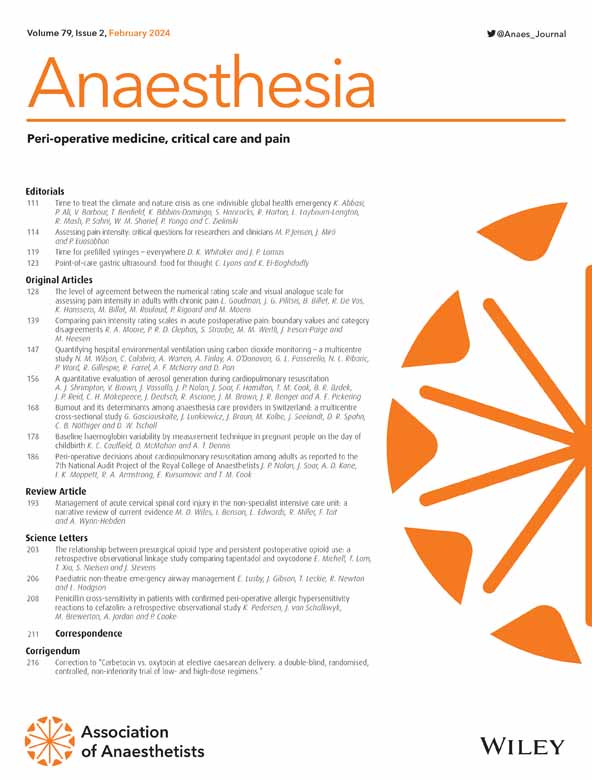
The official journal of the Association of Anaesthetists is Anaesthesia. It is a comprehensive international publication that covers a wide range of topics. The journal focuses on general and regional anaesthesia, as well as intensive care and pain therapy. It includes original articles that have undergone peer review, covering all aspects of these fields, including research on equipment.




 京公网安备 11010802042870号
京ICP备2023020795号-1
京公网安备 11010802042870号
京ICP备2023020795号-1

 分享
分享
 求助内容:
求助内容: 应助结果提醒方式:
 扫码关注我们
