{"title":"靶向HMGB1及其与受体的相互作用:挑战和未来方向","authors":"Pingping Shen, Libang Zhang, Xuewa Jiang, Boyang Yu, Jian Zhang","doi":"10.1021/acs.jmedchem.4c01912","DOIUrl":null,"url":null,"abstract":"High mobility group box 1 (HMGB1) is a nonhistone chromatin protein predominantly located in the nucleus. However, under pathological conditions, HMGB1 can translocate from the nucleus to the cytoplasm and subsequently be released into the extracellular space through both active secretion and passive release mechanisms. The distinct cellular locations of HMGB1 facilitate its interaction with various endogenous and exogenous factors, allowing it to perform diverse functions across a range of diseases. This Perspective provides a comprehensive overview of the structure, release mechanisms, and multifaceted roles of HMGB1 in disease contexts. Furthermore, it introduces the development of both small molecule and macromolecule inhibitors targeting HMGB1 and its interaction with receptors. A detailed analysis of the predicted pockets is also presented, aiming to establish a foundation for the future design and development of HMGB1 inhibitors.","PeriodicalId":46,"journal":{"name":"Journal of Medicinal Chemistry","volume":"17 1","pages":""},"PeriodicalIF":6.8000,"publicationDate":"2024-12-09","publicationTypes":"Journal Article","fieldsOfStudy":null,"isOpenAccess":false,"openAccessPdf":"","citationCount":"0","resultStr":"{\"title\":\"Targeting HMGB1 and Its Interaction with Receptors: Challenges and Future Directions\",\"authors\":\"Pingping Shen, Libang Zhang, Xuewa Jiang, Boyang Yu, Jian Zhang\",\"doi\":\"10.1021/acs.jmedchem.4c01912\",\"DOIUrl\":null,\"url\":null,\"abstract\":\"High mobility group box 1 (HMGB1) is a nonhistone chromatin protein predominantly located in the nucleus. However, under pathological conditions, HMGB1 can translocate from the nucleus to the cytoplasm and subsequently be released into the extracellular space through both active secretion and passive release mechanisms. The distinct cellular locations of HMGB1 facilitate its interaction with various endogenous and exogenous factors, allowing it to perform diverse functions across a range of diseases. This Perspective provides a comprehensive overview of the structure, release mechanisms, and multifaceted roles of HMGB1 in disease contexts. Furthermore, it introduces the development of both small molecule and macromolecule inhibitors targeting HMGB1 and its interaction with receptors. A detailed analysis of the predicted pockets is also presented, aiming to establish a foundation for the future design and development of HMGB1 inhibitors.\",\"PeriodicalId\":46,\"journal\":{\"name\":\"Journal of Medicinal Chemistry\",\"volume\":\"17 1\",\"pages\":\"\"},\"PeriodicalIF\":6.8000,\"publicationDate\":\"2024-12-09\",\"publicationTypes\":\"Journal Article\",\"fieldsOfStudy\":null,\"isOpenAccess\":false,\"openAccessPdf\":\"\",\"citationCount\":\"0\",\"resultStr\":null,\"platform\":\"Semanticscholar\",\"paperid\":null,\"PeriodicalName\":\"Journal of Medicinal Chemistry\",\"FirstCategoryId\":\"3\",\"ListUrlMain\":\"https://doi.org/10.1021/acs.jmedchem.4c01912\",\"RegionNum\":1,\"RegionCategory\":\"医学\",\"ArticlePicture\":[],\"TitleCN\":null,\"AbstractTextCN\":null,\"PMCID\":null,\"EPubDate\":\"\",\"PubModel\":\"\",\"JCR\":\"Q1\",\"JCRName\":\"CHEMISTRY, MEDICINAL\",\"Score\":null,\"Total\":0}","platform":"Semanticscholar","paperid":null,"PeriodicalName":"Journal of Medicinal Chemistry","FirstCategoryId":"3","ListUrlMain":"https://doi.org/10.1021/acs.jmedchem.4c01912","RegionNum":1,"RegionCategory":"医学","ArticlePicture":[],"TitleCN":null,"AbstractTextCN":null,"PMCID":null,"EPubDate":"","PubModel":"","JCR":"Q1","JCRName":"CHEMISTRY, MEDICINAL","Score":null,"Total":0}
Targeting HMGB1 and Its Interaction with Receptors: Challenges and Future Directions
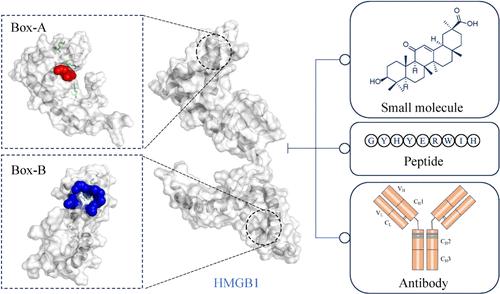
High mobility group box 1 (HMGB1) is a nonhistone chromatin protein predominantly located in the nucleus. However, under pathological conditions, HMGB1 can translocate from the nucleus to the cytoplasm and subsequently be released into the extracellular space through both active secretion and passive release mechanisms. The distinct cellular locations of HMGB1 facilitate its interaction with various endogenous and exogenous factors, allowing it to perform diverse functions across a range of diseases. This Perspective provides a comprehensive overview of the structure, release mechanisms, and multifaceted roles of HMGB1 in disease contexts. Furthermore, it introduces the development of both small molecule and macromolecule inhibitors targeting HMGB1 and its interaction with receptors. A detailed analysis of the predicted pockets is also presented, aiming to establish a foundation for the future design and development of HMGB1 inhibitors.
期刊介绍:
The Journal of Medicinal Chemistry is a prestigious biweekly peer-reviewed publication that focuses on the multifaceted field of medicinal chemistry. Since its inception in 1959 as the Journal of Medicinal and Pharmaceutical Chemistry, it has evolved to become a cornerstone in the dissemination of research findings related to the design, synthesis, and development of therapeutic agents.
The Journal of Medicinal Chemistry is recognized for its significant impact in the scientific community, as evidenced by its 2022 impact factor of 7.3. This metric reflects the journal's influence and the importance of its content in shaping the future of drug discovery and development. The journal serves as a vital resource for chemists, pharmacologists, and other researchers interested in the molecular mechanisms of drug action and the optimization of therapeutic compounds.




 京公网安备 11010802042870号
京ICP备2023020795号-1
京公网安备 11010802042870号
京ICP备2023020795号-1

 分享
分享
 求助内容:
求助内容: 应助结果提醒方式:
 扫码关注我们
