Renwei Cao, Jianyu Zhang, Weitong Sun, Xieyuan Jiang, Kehan Hua, Dan Xiao, Chen Chen, Yejun Zha, Maoqi Gong
{"title":"移除前臂钢板会增加再骨折的风险——一项系统回顾和荟萃分析。","authors":"Renwei Cao, Jianyu Zhang, Weitong Sun, Xieyuan Jiang, Kehan Hua, Dan Xiao, Chen Chen, Yejun Zha, Maoqi Gong","doi":"10.1111/os.14307","DOIUrl":null,"url":null,"abstract":"<p><strong>Objective: </strong>Plate fixation is the preferred method for treating forearm shaft fractures. However, it remains controversial regarding the necessity of implant removal after bone union. This review aims to assess refracture risk after plate removal.</p><p><strong>Methods: </strong>We searched various data sources, including PubMed, Embase, Web of Science, and Cochrane Library. A total of 6749 papers were identified, of which 23 studies were eligible for final quantitative syntheses. Subgroup analyses and sensitivity analyses were conducted to reduce heterogeneity and make the results more reliable.</p><p><strong>Results: </strong>The total risk difference (RD) was 0.06 (0.04-0.09), indicating that the difference was significant. In the \"Reasons for Removal\" subgroup analysis, the RD of the \"No Symptom\" subgroup was 0.07 (95% CI = 0.04-0.11), while the RD of the \"Symptoms\" subgroup was 0.04 (95% CI = -0.02 to 0.10). In the \"Plate Type\" subgroup analysis, the RD of the \"LCP\" subgroup was 0.07 (95% CI = 0.02-0.13), while the RD of the \"DCP\" subgroup was 0.07 (95% CI = 0.01-0.13). After omitting each study one by one, the RDs were all significant.</p><p><strong>Conclusions: </strong>Plate retention is significantly associated with a lower rate of refracture than plate removal. Consequently, it is not recommended to remove implants, especially for patients without implant-related symptoms, but more reliable evidence is still needed.</p><p><strong>Trial registration: </strong>The review was registered on PROSPERO and the registration ID is CRD42023424743, and a protocol was not prepared.</p>","PeriodicalId":19566,"journal":{"name":"Orthopaedic Surgery","volume":" ","pages":"36-44"},"PeriodicalIF":2.1000,"publicationDate":"2025-01-01","publicationTypes":"Journal Article","fieldsOfStudy":null,"isOpenAccess":false,"openAccessPdf":"https://www.ncbi.nlm.nih.gov/pmc/articles/PMC11735362/pdf/","citationCount":"0","resultStr":"{\"title\":\"Removal of Forearm Plate Leads to a Higher Risk of Refracture-A Systematic Review and Meta-Analysis.\",\"authors\":\"Renwei Cao, Jianyu Zhang, Weitong Sun, Xieyuan Jiang, Kehan Hua, Dan Xiao, Chen Chen, Yejun Zha, Maoqi Gong\",\"doi\":\"10.1111/os.14307\",\"DOIUrl\":null,\"url\":null,\"abstract\":\"<p><strong>Objective: </strong>Plate fixation is the preferred method for treating forearm shaft fractures. However, it remains controversial regarding the necessity of implant removal after bone union. This review aims to assess refracture risk after plate removal.</p><p><strong>Methods: </strong>We searched various data sources, including PubMed, Embase, Web of Science, and Cochrane Library. A total of 6749 papers were identified, of which 23 studies were eligible for final quantitative syntheses. Subgroup analyses and sensitivity analyses were conducted to reduce heterogeneity and make the results more reliable.</p><p><strong>Results: </strong>The total risk difference (RD) was 0.06 (0.04-0.09), indicating that the difference was significant. In the \\\"Reasons for Removal\\\" subgroup analysis, the RD of the \\\"No Symptom\\\" subgroup was 0.07 (95% CI = 0.04-0.11), while the RD of the \\\"Symptoms\\\" subgroup was 0.04 (95% CI = -0.02 to 0.10). In the \\\"Plate Type\\\" subgroup analysis, the RD of the \\\"LCP\\\" subgroup was 0.07 (95% CI = 0.02-0.13), while the RD of the \\\"DCP\\\" subgroup was 0.07 (95% CI = 0.01-0.13). After omitting each study one by one, the RDs were all significant.</p><p><strong>Conclusions: </strong>Plate retention is significantly associated with a lower rate of refracture than plate removal. Consequently, it is not recommended to remove implants, especially for patients without implant-related symptoms, but more reliable evidence is still needed.</p><p><strong>Trial registration: </strong>The review was registered on PROSPERO and the registration ID is CRD42023424743, and a protocol was not prepared.</p>\",\"PeriodicalId\":19566,\"journal\":{\"name\":\"Orthopaedic Surgery\",\"volume\":\" \",\"pages\":\"36-44\"},\"PeriodicalIF\":2.1000,\"publicationDate\":\"2025-01-01\",\"publicationTypes\":\"Journal Article\",\"fieldsOfStudy\":null,\"isOpenAccess\":false,\"openAccessPdf\":\"https://www.ncbi.nlm.nih.gov/pmc/articles/PMC11735362/pdf/\",\"citationCount\":\"0\",\"resultStr\":null,\"platform\":\"Semanticscholar\",\"paperid\":null,\"PeriodicalName\":\"Orthopaedic Surgery\",\"FirstCategoryId\":\"3\",\"ListUrlMain\":\"https://doi.org/10.1111/os.14307\",\"RegionNum\":2,\"RegionCategory\":\"医学\",\"ArticlePicture\":[],\"TitleCN\":null,\"AbstractTextCN\":null,\"PMCID\":null,\"EPubDate\":\"2024/12/11 0:00:00\",\"PubModel\":\"Epub\",\"JCR\":\"Q2\",\"JCRName\":\"ORTHOPEDICS\",\"Score\":null,\"Total\":0}","platform":"Semanticscholar","paperid":null,"PeriodicalName":"Orthopaedic Surgery","FirstCategoryId":"3","ListUrlMain":"https://doi.org/10.1111/os.14307","RegionNum":2,"RegionCategory":"医学","ArticlePicture":[],"TitleCN":null,"AbstractTextCN":null,"PMCID":null,"EPubDate":"2024/12/11 0:00:00","PubModel":"Epub","JCR":"Q2","JCRName":"ORTHOPEDICS","Score":null,"Total":0}
引用次数: 0
摘要
目的:钢板内固定是治疗前臂骨干骨折的首选方法。然而,关于骨愈合后是否需要取出种植体仍存在争议。本综述旨在评估钢板取出后再骨折的风险。方法:检索PubMed、Embase、Web of Science、Cochrane Library等多种数据来源。总共鉴定了6749篇论文,其中23篇研究符合最终定量合成的条件。进行亚组分析和敏感性分析,以减少异质性,使结果更可靠。结果:总风险差(RD)为0.06(0.04 ~ 0.09),差异有统计学意义。在“移除原因”亚组分析中,“无症状”亚组的RD为0.07 (95% CI = 0.04-0.11),而“症状”亚组的RD为0.04 (95% CI = -0.02至0.10)。在“Plate Type”亚组分析中,“LCP”亚组的RD为0.07 (95% CI = 0.02 ~ 0.13),“DCP”亚组的RD为0.07 (95% CI = 0.01 ~ 0.13)。在逐一剔除每项研究后,rd均显著。结论:钢板保留与钢板取出相比,其折旧率明显降低。因此,不建议移除种植体,特别是对于没有种植体相关症状的患者,但仍需要更可靠的证据。试验注册:本综述在PROSPERO上注册,注册ID为CRD42023424743,未准备方案。
Removal of Forearm Plate Leads to a Higher Risk of Refracture-A Systematic Review and Meta-Analysis.
Objective: Plate fixation is the preferred method for treating forearm shaft fractures. However, it remains controversial regarding the necessity of implant removal after bone union. This review aims to assess refracture risk after plate removal.
Methods: We searched various data sources, including PubMed, Embase, Web of Science, and Cochrane Library. A total of 6749 papers were identified, of which 23 studies were eligible for final quantitative syntheses. Subgroup analyses and sensitivity analyses were conducted to reduce heterogeneity and make the results more reliable.
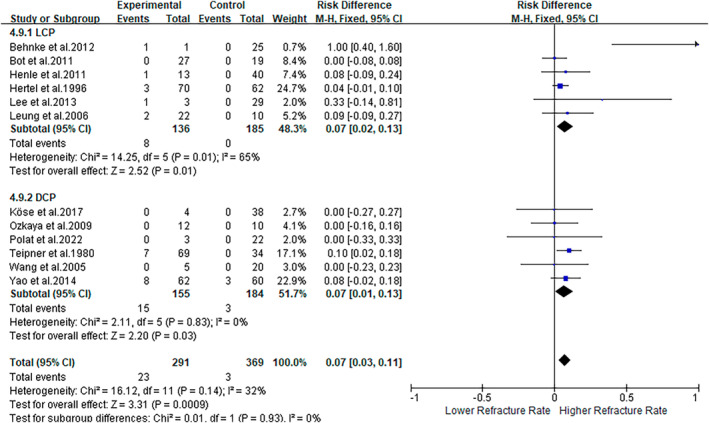
Results: The total risk difference (RD) was 0.06 (0.04-0.09), indicating that the difference was significant. In the "Reasons for Removal" subgroup analysis, the RD of the "No Symptom" subgroup was 0.07 (95% CI = 0.04-0.11), while the RD of the "Symptoms" subgroup was 0.04 (95% CI = -0.02 to 0.10). In the "Plate Type" subgroup analysis, the RD of the "LCP" subgroup was 0.07 (95% CI = 0.02-0.13), while the RD of the "DCP" subgroup was 0.07 (95% CI = 0.01-0.13). After omitting each study one by one, the RDs were all significant.
Conclusions: Plate retention is significantly associated with a lower rate of refracture than plate removal. Consequently, it is not recommended to remove implants, especially for patients without implant-related symptoms, but more reliable evidence is still needed.
Trial registration: The review was registered on PROSPERO and the registration ID is CRD42023424743, and a protocol was not prepared.
期刊介绍:
Orthopaedic Surgery (OS) is the official journal of the Chinese Orthopaedic Association, focusing on all aspects of orthopaedic technique and surgery.
The journal publishes peer-reviewed articles in the following categories: Original Articles, Clinical Articles, Review Articles, Guidelines, Editorials, Commentaries, Surgical Techniques, Case Reports and Meeting Reports.





 京公网安备 11010802042870号
京ICP备2023020795号-1
京公网安备 11010802042870号
京ICP备2023020795号-1

 分享
分享
 求助内容:
求助内容: 应助结果提醒方式:
 扫码关注我们
