Harpriya Minhas, Milan Kumar Jena, Rahul Kumar Sharma, Biswarup Pathak
{"title":"对烟原硫属化合物导热性的深入研究:机器学习立体化学活性孤对和杂化","authors":"Harpriya Minhas, Milan Kumar Jena, Rahul Kumar Sharma, Biswarup Pathak","doi":"10.1021/acs.chemmater.4c02294","DOIUrl":null,"url":null,"abstract":"Stereochemically active lone pairs (SCALPs) are pivotal in influencing the lattice thermal conductivity (κ<sub>L</sub>), representing a critical aspect in formulating strategies for achieving high thermoelectric performance. Despite the transformative potential of the material genome paradigm for screening materials with tailored properties, accurately describing SCALPs in terms of performance indicators remains a challenge. In this machine learning (ML) study, we introduce specialized chemical bonding descriptors that capture the empirical hidden influence of SCALP and chemical bonding hierarchies in pnictogen chalcogenide materials. The ML model, trained with screened data sets from the Open Quantum Materials Database, the Materials Project, and experimental reports, achieved a significant reduction in test error scores by using chemical bonding descriptors over conventional features in predicting κ<sub>L</sub> values for pnictogen chalcogenides. We predict five materials, MnTl<sub>2</sub>As<sub>2</sub>S<sub>5</sub>, Ba<sub>2</sub>As<sub>2</sub>Se<sub>5</sub>, Bi<sub>14</sub>Te<sub>13</sub>S<sub>8</sub>, AgCu<sub>2</sub>PbBiS<sub>4</sub>, and Tl<sub>2</sub>SnAs<sub>2</sub>S<sub>6</sub>, exhibiting ultralow κ<sub>L</sub> values of ≤0.40 W m<sup>–1</sup> K<sup>–1</sup> at room temperature. Additionally, we specified the precise ranges for ionicity, hybridization, number mismatch, and polarizability required for ultralow κ<sub>L</sub> for 245 newly predicted materials. Our data-driven approach not only identifies promising candidates with ultralow κ<sub>L</sub> but also reveals new avenues for the design of pnictogen-based thermoelectric materials, emphasizing the crucial influence of lone pairs and hybridization.","PeriodicalId":33,"journal":{"name":"Chemistry of Materials","volume":"22 1","pages":""},"PeriodicalIF":7.0000,"publicationDate":"2024-12-13","publicationTypes":"Journal Article","fieldsOfStudy":null,"isOpenAccess":false,"openAccessPdf":"","citationCount":"0","resultStr":"{\"title\":\"Insights into Thermal Conductivity of Pnictogen Chalcogenides: Machine Learning Stereochemically Active Lone Pairs and Hybridization\",\"authors\":\"Harpriya Minhas, Milan Kumar Jena, Rahul Kumar Sharma, Biswarup Pathak\",\"doi\":\"10.1021/acs.chemmater.4c02294\",\"DOIUrl\":null,\"url\":null,\"abstract\":\"Stereochemically active lone pairs (SCALPs) are pivotal in influencing the lattice thermal conductivity (κ<sub>L</sub>), representing a critical aspect in formulating strategies for achieving high thermoelectric performance. Despite the transformative potential of the material genome paradigm for screening materials with tailored properties, accurately describing SCALPs in terms of performance indicators remains a challenge. In this machine learning (ML) study, we introduce specialized chemical bonding descriptors that capture the empirical hidden influence of SCALP and chemical bonding hierarchies in pnictogen chalcogenide materials. The ML model, trained with screened data sets from the Open Quantum Materials Database, the Materials Project, and experimental reports, achieved a significant reduction in test error scores by using chemical bonding descriptors over conventional features in predicting κ<sub>L</sub> values for pnictogen chalcogenides. We predict five materials, MnTl<sub>2</sub>As<sub>2</sub>S<sub>5</sub>, Ba<sub>2</sub>As<sub>2</sub>Se<sub>5</sub>, Bi<sub>14</sub>Te<sub>13</sub>S<sub>8</sub>, AgCu<sub>2</sub>PbBiS<sub>4</sub>, and Tl<sub>2</sub>SnAs<sub>2</sub>S<sub>6</sub>, exhibiting ultralow κ<sub>L</sub> values of ≤0.40 W m<sup>–1</sup> K<sup>–1</sup> at room temperature. Additionally, we specified the precise ranges for ionicity, hybridization, number mismatch, and polarizability required for ultralow κ<sub>L</sub> for 245 newly predicted materials. Our data-driven approach not only identifies promising candidates with ultralow κ<sub>L</sub> but also reveals new avenues for the design of pnictogen-based thermoelectric materials, emphasizing the crucial influence of lone pairs and hybridization.\",\"PeriodicalId\":33,\"journal\":{\"name\":\"Chemistry of Materials\",\"volume\":\"22 1\",\"pages\":\"\"},\"PeriodicalIF\":7.0000,\"publicationDate\":\"2024-12-13\",\"publicationTypes\":\"Journal Article\",\"fieldsOfStudy\":null,\"isOpenAccess\":false,\"openAccessPdf\":\"\",\"citationCount\":\"0\",\"resultStr\":null,\"platform\":\"Semanticscholar\",\"paperid\":null,\"PeriodicalName\":\"Chemistry of Materials\",\"FirstCategoryId\":\"88\",\"ListUrlMain\":\"https://doi.org/10.1021/acs.chemmater.4c02294\",\"RegionNum\":2,\"RegionCategory\":\"材料科学\",\"ArticlePicture\":[],\"TitleCN\":null,\"AbstractTextCN\":null,\"PMCID\":null,\"EPubDate\":\"\",\"PubModel\":\"\",\"JCR\":\"Q2\",\"JCRName\":\"CHEMISTRY, PHYSICAL\",\"Score\":null,\"Total\":0}","platform":"Semanticscholar","paperid":null,"PeriodicalName":"Chemistry of Materials","FirstCategoryId":"88","ListUrlMain":"https://doi.org/10.1021/acs.chemmater.4c02294","RegionNum":2,"RegionCategory":"材料科学","ArticlePicture":[],"TitleCN":null,"AbstractTextCN":null,"PMCID":null,"EPubDate":"","PubModel":"","JCR":"Q2","JCRName":"CHEMISTRY, PHYSICAL","Score":null,"Total":0}
引用次数: 0
摘要
立体化学活性孤对(SCALPs)是影响晶格导热系数(κL)的关键因素,是制定实现高热电性能策略的关键方面。尽管材料基因组模式在筛选具有定制特性的材料方面具有变革潜力,但根据性能指标准确描述scalp仍然是一个挑战。在这项机器学习(ML)研究中,我们引入了专门的化学键描述符,这些描述符捕获了烟碱硫系材料中头皮和化学键层次的经验隐藏影响。该机器学习模型使用来自开放量子材料数据库、材料项目和实验报告的筛选数据集进行训练,通过使用化学键描述符而不是传统特征来预测硫属烟原的κL值,从而显著降低了测试误差分数。我们预测五种材料MnTl2As2S5、Ba2As2Se5、Bi14Te13S8、AgCu2PbBiS4和Tl2SnAs2S6在室温下表现出≤0.40 W m-1 K-1的超低κL值。此外,我们为245种新预测材料指定了超低κL所需的离子性、杂化、数不匹配和极化率的精确范围。我们的数据驱动方法不仅确定了具有超低κL的有前途的候选材料,而且还揭示了设计基于光子原的热电材料的新途径,强调了孤对和杂化的关键影响。
Insights into Thermal Conductivity of Pnictogen Chalcogenides: Machine Learning Stereochemically Active Lone Pairs and Hybridization
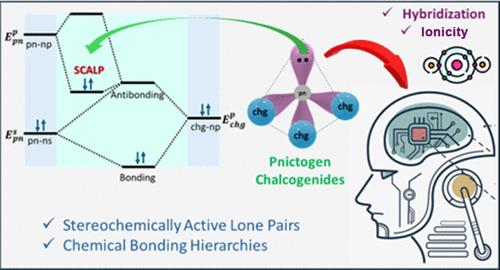
Stereochemically active lone pairs (SCALPs) are pivotal in influencing the lattice thermal conductivity (κL), representing a critical aspect in formulating strategies for achieving high thermoelectric performance. Despite the transformative potential of the material genome paradigm for screening materials with tailored properties, accurately describing SCALPs in terms of performance indicators remains a challenge. In this machine learning (ML) study, we introduce specialized chemical bonding descriptors that capture the empirical hidden influence of SCALP and chemical bonding hierarchies in pnictogen chalcogenide materials. The ML model, trained with screened data sets from the Open Quantum Materials Database, the Materials Project, and experimental reports, achieved a significant reduction in test error scores by using chemical bonding descriptors over conventional features in predicting κL values for pnictogen chalcogenides. We predict five materials, MnTl2As2S5, Ba2As2Se5, Bi14Te13S8, AgCu2PbBiS4, and Tl2SnAs2S6, exhibiting ultralow κL values of ≤0.40 W m–1 K–1 at room temperature. Additionally, we specified the precise ranges for ionicity, hybridization, number mismatch, and polarizability required for ultralow κL for 245 newly predicted materials. Our data-driven approach not only identifies promising candidates with ultralow κL but also reveals new avenues for the design of pnictogen-based thermoelectric materials, emphasizing the crucial influence of lone pairs and hybridization.
期刊介绍:
The journal Chemistry of Materials focuses on publishing original research at the intersection of materials science and chemistry. The studies published in the journal involve chemistry as a prominent component and explore topics such as the design, synthesis, characterization, processing, understanding, and application of functional or potentially functional materials. The journal covers various areas of interest, including inorganic and organic solid-state chemistry, nanomaterials, biomaterials, thin films and polymers, and composite/hybrid materials. The journal particularly seeks papers that highlight the creation or development of innovative materials with novel optical, electrical, magnetic, catalytic, or mechanical properties. It is essential that manuscripts on these topics have a primary focus on the chemistry of materials and represent a significant advancement compared to prior research. Before external reviews are sought, submitted manuscripts undergo a review process by a minimum of two editors to ensure their appropriateness for the journal and the presence of sufficient evidence of a significant advance that will be of broad interest to the materials chemistry community.




 京公网安备 11010802042870号
京ICP备2023020795号-1
京公网安备 11010802042870号
京ICP备2023020795号-1

 分享
分享
 求助内容:
求助内容: 应助结果提醒方式:
 扫码关注我们
