Barbara Mordyl, Nikola Fajkis-Zajączkowska, Katarzyna Szafrańska, Agata Siwek, Monika Głuch-Lutwin, Paweł Żmudzki, Jakub Jończyk, Tadeusz Karcz, Karolina Słoczyńska, Elżbieta Pękala, Bartosz Pomierny, Weronika Krzyżanowska, Jakub Jurczyk, Alicja Skórkowska, Aleksandra Sałach, Magdalena Jastrzębska-Więsek, Maria Walczak, Maciej Tadeusz Gawlik, Magdalena Smolik, Marcin Kolaczkowski, Monika Marcinkowska
{"title":"GABA-A受体配体的优先突触型增强缺血性脑卒中后神经元存活并促进功能恢复","authors":"Barbara Mordyl, Nikola Fajkis-Zajączkowska, Katarzyna Szafrańska, Agata Siwek, Monika Głuch-Lutwin, Paweł Żmudzki, Jakub Jończyk, Tadeusz Karcz, Karolina Słoczyńska, Elżbieta Pękala, Bartosz Pomierny, Weronika Krzyżanowska, Jakub Jurczyk, Alicja Skórkowska, Aleksandra Sałach, Magdalena Jastrzębska-Więsek, Maria Walczak, Maciej Tadeusz Gawlik, Magdalena Smolik, Marcin Kolaczkowski, Monika Marcinkowska","doi":"10.1021/acs.jmedchem.4c01578","DOIUrl":null,"url":null,"abstract":"Selective enhancement of synaptic GABA signaling mediated by GABA-A receptors has been previously reported to promote functional recovery after ischemic stroke, while tonic GABA signaling has been detrimental. To identify agents that enhance synaptic signaling, we synthesized GABA-A ligands based on three chemotypes with affinity values p<i>K</i><sub>i</sub>= 6.44–8.32. Representative compounds showed a preference in functional responses toward synaptic type of GABA-A receptors, compared to the extrasynaptic ones. In a cellular ischemia model (OGD), selected compounds showed the potential to improve neuronal recovery. The selected lead, compound <b>4</b>, demonstrated the ability to reduce mitochondrial dysfunction, regulate intracellular calcium levels, decrease caspase 3 levels, and promote neurite outgrowth in <i>in vitro</i> assays. In an animal model, compound <b>4</b> enhanced motor recovery and showed neuroprotective activity by reducing infarct volume and decreasing poststroke acidosis. These findings underscore the value of selective ligands modulating synaptic GABA-A receptors in promoting recovery from ischemic stroke.","PeriodicalId":46,"journal":{"name":"Journal of Medicinal Chemistry","volume":"93 1","pages":""},"PeriodicalIF":6.8000,"publicationDate":"2024-12-12","publicationTypes":"Journal Article","fieldsOfStudy":null,"isOpenAccess":false,"openAccessPdf":"","citationCount":"0","resultStr":"{\"title\":\"Preferential Synaptic Type of GABA-A Receptor Ligands Enhancing Neuronal Survival and Facilitating Functional Recovery After Ischemic Stroke\",\"authors\":\"Barbara Mordyl, Nikola Fajkis-Zajączkowska, Katarzyna Szafrańska, Agata Siwek, Monika Głuch-Lutwin, Paweł Żmudzki, Jakub Jończyk, Tadeusz Karcz, Karolina Słoczyńska, Elżbieta Pękala, Bartosz Pomierny, Weronika Krzyżanowska, Jakub Jurczyk, Alicja Skórkowska, Aleksandra Sałach, Magdalena Jastrzębska-Więsek, Maria Walczak, Maciej Tadeusz Gawlik, Magdalena Smolik, Marcin Kolaczkowski, Monika Marcinkowska\",\"doi\":\"10.1021/acs.jmedchem.4c01578\",\"DOIUrl\":null,\"url\":null,\"abstract\":\"Selective enhancement of synaptic GABA signaling mediated by GABA-A receptors has been previously reported to promote functional recovery after ischemic stroke, while tonic GABA signaling has been detrimental. To identify agents that enhance synaptic signaling, we synthesized GABA-A ligands based on three chemotypes with affinity values p<i>K</i><sub>i</sub>= 6.44–8.32. Representative compounds showed a preference in functional responses toward synaptic type of GABA-A receptors, compared to the extrasynaptic ones. In a cellular ischemia model (OGD), selected compounds showed the potential to improve neuronal recovery. The selected lead, compound <b>4</b>, demonstrated the ability to reduce mitochondrial dysfunction, regulate intracellular calcium levels, decrease caspase 3 levels, and promote neurite outgrowth in <i>in vitro</i> assays. In an animal model, compound <b>4</b> enhanced motor recovery and showed neuroprotective activity by reducing infarct volume and decreasing poststroke acidosis. These findings underscore the value of selective ligands modulating synaptic GABA-A receptors in promoting recovery from ischemic stroke.\",\"PeriodicalId\":46,\"journal\":{\"name\":\"Journal of Medicinal Chemistry\",\"volume\":\"93 1\",\"pages\":\"\"},\"PeriodicalIF\":6.8000,\"publicationDate\":\"2024-12-12\",\"publicationTypes\":\"Journal Article\",\"fieldsOfStudy\":null,\"isOpenAccess\":false,\"openAccessPdf\":\"\",\"citationCount\":\"0\",\"resultStr\":null,\"platform\":\"Semanticscholar\",\"paperid\":null,\"PeriodicalName\":\"Journal of Medicinal Chemistry\",\"FirstCategoryId\":\"3\",\"ListUrlMain\":\"https://doi.org/10.1021/acs.jmedchem.4c01578\",\"RegionNum\":1,\"RegionCategory\":\"医学\",\"ArticlePicture\":[],\"TitleCN\":null,\"AbstractTextCN\":null,\"PMCID\":null,\"EPubDate\":\"\",\"PubModel\":\"\",\"JCR\":\"Q1\",\"JCRName\":\"CHEMISTRY, MEDICINAL\",\"Score\":null,\"Total\":0}","platform":"Semanticscholar","paperid":null,"PeriodicalName":"Journal of Medicinal Chemistry","FirstCategoryId":"3","ListUrlMain":"https://doi.org/10.1021/acs.jmedchem.4c01578","RegionNum":1,"RegionCategory":"医学","ArticlePicture":[],"TitleCN":null,"AbstractTextCN":null,"PMCID":null,"EPubDate":"","PubModel":"","JCR":"Q1","JCRName":"CHEMISTRY, MEDICINAL","Score":null,"Total":0}
Preferential Synaptic Type of GABA-A Receptor Ligands Enhancing Neuronal Survival and Facilitating Functional Recovery After Ischemic Stroke
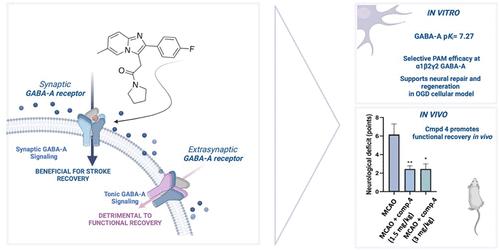
Selective enhancement of synaptic GABA signaling mediated by GABA-A receptors has been previously reported to promote functional recovery after ischemic stroke, while tonic GABA signaling has been detrimental. To identify agents that enhance synaptic signaling, we synthesized GABA-A ligands based on three chemotypes with affinity values pKi= 6.44–8.32. Representative compounds showed a preference in functional responses toward synaptic type of GABA-A receptors, compared to the extrasynaptic ones. In a cellular ischemia model (OGD), selected compounds showed the potential to improve neuronal recovery. The selected lead, compound 4, demonstrated the ability to reduce mitochondrial dysfunction, regulate intracellular calcium levels, decrease caspase 3 levels, and promote neurite outgrowth in in vitro assays. In an animal model, compound 4 enhanced motor recovery and showed neuroprotective activity by reducing infarct volume and decreasing poststroke acidosis. These findings underscore the value of selective ligands modulating synaptic GABA-A receptors in promoting recovery from ischemic stroke.
期刊介绍:
The Journal of Medicinal Chemistry is a prestigious biweekly peer-reviewed publication that focuses on the multifaceted field of medicinal chemistry. Since its inception in 1959 as the Journal of Medicinal and Pharmaceutical Chemistry, it has evolved to become a cornerstone in the dissemination of research findings related to the design, synthesis, and development of therapeutic agents.
The Journal of Medicinal Chemistry is recognized for its significant impact in the scientific community, as evidenced by its 2022 impact factor of 7.3. This metric reflects the journal's influence and the importance of its content in shaping the future of drug discovery and development. The journal serves as a vital resource for chemists, pharmacologists, and other researchers interested in the molecular mechanisms of drug action and the optimization of therapeutic compounds.




 京公网安备 11010802042870号
京ICP备2023020795号-1
京公网安备 11010802042870号
京ICP备2023020795号-1

 分享
分享
 求助内容:
求助内容: 应助结果提醒方式:
 扫码关注我们
