{"title":"量化神经发育遗传综合征和特发性神经发育障碍的神经行为特征。","authors":"","doi":"10.1111/dmcn.16204","DOIUrl":null,"url":null,"abstract":"<p>This study examined several different groups of participants, between the ages of 3 years and 45 years, including groups with rare genetic syndromes, groups with non-genetic developmental conditions, and neurotypical controls. The focus of the research was whether these groups would show distinct patterns on measures of symptoms, such as anxiety and sleep problems, and skills, such as daily living skills and social communication skills.</p><p>The first major finding is that the measures of these skills were reliable and had good score ranges to be able to detect differences between groups. The second major finding is that genetic syndrome groups, including people with PTEN hamartoma tumor syndrome, SYNGAP1-related developmental challenges, and NFIX-related developmental challenges showed distinct patterns. The PTEN group had generally lower symptoms and higher skills, but with significant reductions in motor skills and processing speed. The SYNGAP1 group tended to have the highest symptom levels (especially for challenging behavior) and the lowest skill levels. The NFIX group generally fell in between the other two groups but with less sleep problems and more anxiety related to physiological activation (a state of general wakefulness or attention).</p>","PeriodicalId":50587,"journal":{"name":"Developmental Medicine and Child Neurology","volume":"67 2","pages":"e48"},"PeriodicalIF":4.3000,"publicationDate":"2024-12-12","publicationTypes":"Journal Article","fieldsOfStudy":null,"isOpenAccess":false,"openAccessPdf":"https://onlinelibrary.wiley.com/doi/epdf/10.1111/dmcn.16204","citationCount":"0","resultStr":"{\"title\":\"Quantifying neurobehavioral profiles across neurodevelopmental genetic syndromes and idiopathic neurodevelopmental disorders\",\"authors\":\"\",\"doi\":\"10.1111/dmcn.16204\",\"DOIUrl\":null,\"url\":null,\"abstract\":\"<p>This study examined several different groups of participants, between the ages of 3 years and 45 years, including groups with rare genetic syndromes, groups with non-genetic developmental conditions, and neurotypical controls. The focus of the research was whether these groups would show distinct patterns on measures of symptoms, such as anxiety and sleep problems, and skills, such as daily living skills and social communication skills.</p><p>The first major finding is that the measures of these skills were reliable and had good score ranges to be able to detect differences between groups. The second major finding is that genetic syndrome groups, including people with PTEN hamartoma tumor syndrome, SYNGAP1-related developmental challenges, and NFIX-related developmental challenges showed distinct patterns. The PTEN group had generally lower symptoms and higher skills, but with significant reductions in motor skills and processing speed. The SYNGAP1 group tended to have the highest symptom levels (especially for challenging behavior) and the lowest skill levels. The NFIX group generally fell in between the other two groups but with less sleep problems and more anxiety related to physiological activation (a state of general wakefulness or attention).</p>\",\"PeriodicalId\":50587,\"journal\":{\"name\":\"Developmental Medicine and Child Neurology\",\"volume\":\"67 2\",\"pages\":\"e48\"},\"PeriodicalIF\":4.3000,\"publicationDate\":\"2024-12-12\",\"publicationTypes\":\"Journal Article\",\"fieldsOfStudy\":null,\"isOpenAccess\":false,\"openAccessPdf\":\"https://onlinelibrary.wiley.com/doi/epdf/10.1111/dmcn.16204\",\"citationCount\":\"0\",\"resultStr\":null,\"platform\":\"Semanticscholar\",\"paperid\":null,\"PeriodicalName\":\"Developmental Medicine and Child Neurology\",\"FirstCategoryId\":\"3\",\"ListUrlMain\":\"https://onlinelibrary.wiley.com/doi/10.1111/dmcn.16204\",\"RegionNum\":2,\"RegionCategory\":\"医学\",\"ArticlePicture\":[],\"TitleCN\":null,\"AbstractTextCN\":null,\"PMCID\":null,\"EPubDate\":\"\",\"PubModel\":\"\",\"JCR\":\"Q1\",\"JCRName\":\"CLINICAL NEUROLOGY\",\"Score\":null,\"Total\":0}","platform":"Semanticscholar","paperid":null,"PeriodicalName":"Developmental Medicine and Child Neurology","FirstCategoryId":"3","ListUrlMain":"https://onlinelibrary.wiley.com/doi/10.1111/dmcn.16204","RegionNum":2,"RegionCategory":"医学","ArticlePicture":[],"TitleCN":null,"AbstractTextCN":null,"PMCID":null,"EPubDate":"","PubModel":"","JCR":"Q1","JCRName":"CLINICAL NEUROLOGY","Score":null,"Total":0}
Quantifying neurobehavioral profiles across neurodevelopmental genetic syndromes and idiopathic neurodevelopmental disorders
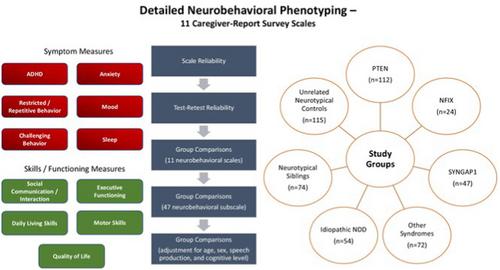
This study examined several different groups of participants, between the ages of 3 years and 45 years, including groups with rare genetic syndromes, groups with non-genetic developmental conditions, and neurotypical controls. The focus of the research was whether these groups would show distinct patterns on measures of symptoms, such as anxiety and sleep problems, and skills, such as daily living skills and social communication skills.
The first major finding is that the measures of these skills were reliable and had good score ranges to be able to detect differences between groups. The second major finding is that genetic syndrome groups, including people with PTEN hamartoma tumor syndrome, SYNGAP1-related developmental challenges, and NFIX-related developmental challenges showed distinct patterns. The PTEN group had generally lower symptoms and higher skills, but with significant reductions in motor skills and processing speed. The SYNGAP1 group tended to have the highest symptom levels (especially for challenging behavior) and the lowest skill levels. The NFIX group generally fell in between the other two groups but with less sleep problems and more anxiety related to physiological activation (a state of general wakefulness or attention).
期刊介绍:
Wiley-Blackwell is pleased to publish Developmental Medicine & Child Neurology (DMCN), a Mac Keith Press publication and official journal of the American Academy for Cerebral Palsy and Developmental Medicine (AACPDM) and the British Paediatric Neurology Association (BPNA).
For over 50 years, DMCN has defined the field of paediatric neurology and neurodisability and is one of the world’s leading journals in the whole field of paediatrics. DMCN disseminates a range of information worldwide to improve the lives of disabled children and their families. The high quality of published articles is maintained by expert review, including independent statistical assessment, before acceptance.




 京公网安备 11010802042870号
京ICP备2023020795号-1
京公网安备 11010802042870号
京ICP备2023020795号-1

 分享
分享
 求助内容:
求助内容: 应助结果提醒方式:
 扫码关注我们
