Hyunwook Kim, Seungjin Baek, Sookyeong Han, Gun Min Kim, Joohyuk Sohn, Yumie Rhee, Namki Hong, Min Hwan Kim
{"title":"低骨骼肌放射密度预测CDK4/6抑制剂加芳香酶抑制剂对晚期乳腺癌的反应","authors":"Hyunwook Kim, Seungjin Baek, Sookyeong Han, Gun Min Kim, Joohyuk Sohn, Yumie Rhee, Namki Hong, Min Hwan Kim","doi":"10.1002/jcsm.13666","DOIUrl":null,"url":null,"abstract":"<div>\n \n \n <section>\n \n <h3> Background</h3>\n \n <p>Recent evidence indicates that a dysregulated host metabolism influences treatment outcomes in patients with breast cancer. We investigated the association of computed tomography (CT)-derived body composition indices with therapeutic responses in patients with hormone receptor-positive, HER2-negative advanced breast cancer (ABC) on endocrine plus CDK4/6 inhibitor (CDK4/6i) treatment.</p>\n </section>\n \n <section>\n \n <h3> Methods</h3>\n \n <p>The study involved a retrospective cohort of patients with ABC at the Yonsei Cancer Center who received CDK4/6i and aromatase inhibitors as first-line therapy between January 2017 and October 2020. Body composition parameters were estimated from the non-enhanced CT images of the third lumbar spine by commercialized deep learning software. Patients with low skeletal muscle radiodensity (SMD) were defined as patients with SMD of low tertile (≤ 28.7 Hounsfield Units). The primary outcome was progression-free survival (PFS).</p>\n </section>\n \n <section>\n \n <h3> Results</h3>\n \n <p>Among the 247 female participants (median age, 53 years; mean body mass index [BMI], 23.7 kg/m<sup>2</sup>), 45.7% had disease progression or death during a median follow-up of 36.4 months. After adjusting for age and visceral metastasis, SMD was the only independent predictor among body composition parameters for worse PFS (adjusted hazard ratio [HR] = 1.20 per standard deviation decrement, 95% CI: 1.01–1.42, <i>p</i> = 0.041), whereas BMI, muscle area, and fat area were not. Participants with low SMD had a higher risk of progression than those without (PFS, 27.2 vs. 51.1 months, <i>p</i> = 0.009; adjusted HR 1.84, 95% CI: 1.22–2.76, <i>p</i> = 0.003). Strong associations between low SMD and poor PFS were observed in groups with pre-menopause status (HR, 3.04 vs. 1.19 in post-menopause; 95% CI: 1.54–5.99, <i>p</i> for interaction < 0.05) and without visceral metastases (HR, 2.95 vs. 1.19 in with visceral metastases; 95% CI: 1.59–5.49, <i>p</i> for interaction < 0.05).</p>\n </section>\n \n <section>\n \n <h3> Conclusions</h3>\n \n <p>CT-defined low SMD predicts poor treatment outcomes in patients with ABC undergoing first-line treatment with aromatase inhibitors and CDK4/6i.</p>\n </section>\n </div>","PeriodicalId":48911,"journal":{"name":"Journal of Cachexia Sarcopenia and Muscle","volume":"16 1","pages":""},"PeriodicalIF":9.1000,"publicationDate":"2024-12-17","publicationTypes":"Journal Article","fieldsOfStudy":null,"isOpenAccess":false,"openAccessPdf":"https://onlinelibrary.wiley.com/doi/epdf/10.1002/jcsm.13666","citationCount":"0","resultStr":"{\"title\":\"Low Skeletal Muscle Radiodensity Predicts Response to CDK4/6 Inhibitors Plus Aromatase Inhibitors in Advanced Breast Cancer\",\"authors\":\"Hyunwook Kim, Seungjin Baek, Sookyeong Han, Gun Min Kim, Joohyuk Sohn, Yumie Rhee, Namki Hong, Min Hwan Kim\",\"doi\":\"10.1002/jcsm.13666\",\"DOIUrl\":null,\"url\":null,\"abstract\":\"<div>\\n \\n \\n <section>\\n \\n <h3> Background</h3>\\n \\n <p>Recent evidence indicates that a dysregulated host metabolism influences treatment outcomes in patients with breast cancer. We investigated the association of computed tomography (CT)-derived body composition indices with therapeutic responses in patients with hormone receptor-positive, HER2-negative advanced breast cancer (ABC) on endocrine plus CDK4/6 inhibitor (CDK4/6i) treatment.</p>\\n </section>\\n \\n <section>\\n \\n <h3> Methods</h3>\\n \\n <p>The study involved a retrospective cohort of patients with ABC at the Yonsei Cancer Center who received CDK4/6i and aromatase inhibitors as first-line therapy between January 2017 and October 2020. Body composition parameters were estimated from the non-enhanced CT images of the third lumbar spine by commercialized deep learning software. Patients with low skeletal muscle radiodensity (SMD) were defined as patients with SMD of low tertile (≤ 28.7 Hounsfield Units). The primary outcome was progression-free survival (PFS).</p>\\n </section>\\n \\n <section>\\n \\n <h3> Results</h3>\\n \\n <p>Among the 247 female participants (median age, 53 years; mean body mass index [BMI], 23.7 kg/m<sup>2</sup>), 45.7% had disease progression or death during a median follow-up of 36.4 months. After adjusting for age and visceral metastasis, SMD was the only independent predictor among body composition parameters for worse PFS (adjusted hazard ratio [HR] = 1.20 per standard deviation decrement, 95% CI: 1.01–1.42, <i>p</i> = 0.041), whereas BMI, muscle area, and fat area were not. Participants with low SMD had a higher risk of progression than those without (PFS, 27.2 vs. 51.1 months, <i>p</i> = 0.009; adjusted HR 1.84, 95% CI: 1.22–2.76, <i>p</i> = 0.003). Strong associations between low SMD and poor PFS were observed in groups with pre-menopause status (HR, 3.04 vs. 1.19 in post-menopause; 95% CI: 1.54–5.99, <i>p</i> for interaction < 0.05) and without visceral metastases (HR, 2.95 vs. 1.19 in with visceral metastases; 95% CI: 1.59–5.49, <i>p</i> for interaction < 0.05).</p>\\n </section>\\n \\n <section>\\n \\n <h3> Conclusions</h3>\\n \\n <p>CT-defined low SMD predicts poor treatment outcomes in patients with ABC undergoing first-line treatment with aromatase inhibitors and CDK4/6i.</p>\\n </section>\\n </div>\",\"PeriodicalId\":48911,\"journal\":{\"name\":\"Journal of Cachexia Sarcopenia and Muscle\",\"volume\":\"16 1\",\"pages\":\"\"},\"PeriodicalIF\":9.1000,\"publicationDate\":\"2024-12-17\",\"publicationTypes\":\"Journal Article\",\"fieldsOfStudy\":null,\"isOpenAccess\":false,\"openAccessPdf\":\"https://onlinelibrary.wiley.com/doi/epdf/10.1002/jcsm.13666\",\"citationCount\":\"0\",\"resultStr\":null,\"platform\":\"Semanticscholar\",\"paperid\":null,\"PeriodicalName\":\"Journal of Cachexia Sarcopenia and Muscle\",\"FirstCategoryId\":\"3\",\"ListUrlMain\":\"https://onlinelibrary.wiley.com/doi/10.1002/jcsm.13666\",\"RegionNum\":1,\"RegionCategory\":\"医学\",\"ArticlePicture\":[],\"TitleCN\":null,\"AbstractTextCN\":null,\"PMCID\":null,\"EPubDate\":\"\",\"PubModel\":\"\",\"JCR\":\"Q1\",\"JCRName\":\"GERIATRICS & GERONTOLOGY\",\"Score\":null,\"Total\":0}","platform":"Semanticscholar","paperid":null,"PeriodicalName":"Journal of Cachexia Sarcopenia and Muscle","FirstCategoryId":"3","ListUrlMain":"https://onlinelibrary.wiley.com/doi/10.1002/jcsm.13666","RegionNum":1,"RegionCategory":"医学","ArticlePicture":[],"TitleCN":null,"AbstractTextCN":null,"PMCID":null,"EPubDate":"","PubModel":"","JCR":"Q1","JCRName":"GERIATRICS & GERONTOLOGY","Score":null,"Total":0}
Low Skeletal Muscle Radiodensity Predicts Response to CDK4/6 Inhibitors Plus Aromatase Inhibitors in Advanced Breast Cancer
Background
Recent evidence indicates that a dysregulated host metabolism influences treatment outcomes in patients with breast cancer. We investigated the association of computed tomography (CT)-derived body composition indices with therapeutic responses in patients with hormone receptor-positive, HER2-negative advanced breast cancer (ABC) on endocrine plus CDK4/6 inhibitor (CDK4/6i) treatment.
Methods
The study involved a retrospective cohort of patients with ABC at the Yonsei Cancer Center who received CDK4/6i and aromatase inhibitors as first-line therapy between January 2017 and October 2020. Body composition parameters were estimated from the non-enhanced CT images of the third lumbar spine by commercialized deep learning software. Patients with low skeletal muscle radiodensity (SMD) were defined as patients with SMD of low tertile (≤ 28.7 Hounsfield Units). The primary outcome was progression-free survival (PFS).
Results
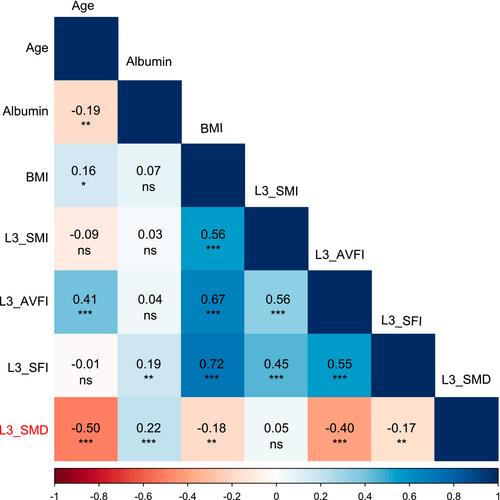
Among the 247 female participants (median age, 53 years; mean body mass index [BMI], 23.7 kg/m2), 45.7% had disease progression or death during a median follow-up of 36.4 months. After adjusting for age and visceral metastasis, SMD was the only independent predictor among body composition parameters for worse PFS (adjusted hazard ratio [HR] = 1.20 per standard deviation decrement, 95% CI: 1.01–1.42, p = 0.041), whereas BMI, muscle area, and fat area were not. Participants with low SMD had a higher risk of progression than those without (PFS, 27.2 vs. 51.1 months, p = 0.009; adjusted HR 1.84, 95% CI: 1.22–2.76, p = 0.003). Strong associations between low SMD and poor PFS were observed in groups with pre-menopause status (HR, 3.04 vs. 1.19 in post-menopause; 95% CI: 1.54–5.99, p for interaction < 0.05) and without visceral metastases (HR, 2.95 vs. 1.19 in with visceral metastases; 95% CI: 1.59–5.49, p for interaction < 0.05).
Conclusions
CT-defined low SMD predicts poor treatment outcomes in patients with ABC undergoing first-line treatment with aromatase inhibitors and CDK4/6i.
期刊介绍:
The Journal of Cachexia, Sarcopenia and Muscle is a peer-reviewed international journal dedicated to publishing materials related to cachexia and sarcopenia, as well as body composition and its physiological and pathophysiological changes across the lifespan and in response to various illnesses from all fields of life sciences. The journal aims to provide a reliable resource for professionals interested in related research or involved in the clinical care of affected patients, such as those suffering from AIDS, cancer, chronic heart failure, chronic lung disease, liver cirrhosis, chronic kidney failure, rheumatoid arthritis, or sepsis.




 京公网安备 11010802042870号
京ICP备2023020795号-1
京公网安备 11010802042870号
京ICP备2023020795号-1

 分享
分享
 求助内容:
求助内容: 应助结果提醒方式:
 扫码关注我们
