Agustín Robles-Remacho, Ismael Martos-Jamai, Mavys Tabraue-Chávez, Araceli Aguilar-González, Jose A Laz-Ruiz, M Victoria Cano-Cortés, F Javier López-Delgado, Juan J Guardia-Monteagudo, Salvatore Pernagallo, Juan J Diaz-Mochon, Rosario M Sanchez-Martin
{"title":"点击基于化学的双纳米系统,用于肿瘤细胞中单碱基特异性的microRNA-122检测。","authors":"Agustín Robles-Remacho, Ismael Martos-Jamai, Mavys Tabraue-Chávez, Araceli Aguilar-González, Jose A Laz-Ruiz, M Victoria Cano-Cortés, F Javier López-Delgado, Juan J Guardia-Monteagudo, Salvatore Pernagallo, Juan J Diaz-Mochon, Rosario M Sanchez-Martin","doi":"10.1186/s12951-024-03071-6","DOIUrl":null,"url":null,"abstract":"<p><p>MicroRNAs (miRNAs) have been recognised as potential biomarkers due to their specific expression patterns in different biological tissues and their changes in expression under pathological conditions. MicroRNA-122 (miR-122) is a vertebrate-specific miRNA that is predominantly expressed in the liver and plays an important role in liver metabolism and development. Dysregulation of miR-122 expression is associated with several liver-related diseases, including hepatocellular carcinoma and drug-induced liver injury (DILI). Given the potential of miR-122 as a biomarker, its effective detection is important for accurate diagnosis. However, miRNA detection methods still face challenges, particularly in terms of accurately identifying miRNA isoforms that may differ by only a single base. Here, with the aim of advancing accessible methods for the detection of miRNAs with single-base specificity, we have developed a robust dual nanosystem that leverages the simplicity of click chemistry reactions. Using the dual nanosystem, we successfully detected miR-122 at single-base resolution using flow cytometry and analysed its expression in various tumour cell lines with high specificity and strong correlation with TaqMan assay results. We also detected miR-122 in serum and identified four single nucleotide variations in its sequence. The chemistry employed in this dual nanosystem is highly versatile and offers a promising opportunity to develop nanoparticle-based strategies that incorporate click chemistry and bioorthogonal chemistry for the detection of miRNAs and their isoforms.</p>","PeriodicalId":16383,"journal":{"name":"Journal of Nanobiotechnology","volume":"22 1","pages":"791"},"PeriodicalIF":15.0000,"publicationDate":"2024-12-23","publicationTypes":"Journal Article","fieldsOfStudy":null,"isOpenAccess":false,"openAccessPdf":"https://www.ncbi.nlm.nih.gov/pmc/articles/PMC11665063/pdf/","citationCount":"0","resultStr":"{\"title\":\"Click chemistry-based dual nanosystem for microRNA-122 detection with single-base specificity from tumour cells.\",\"authors\":\"Agustín Robles-Remacho, Ismael Martos-Jamai, Mavys Tabraue-Chávez, Araceli Aguilar-González, Jose A Laz-Ruiz, M Victoria Cano-Cortés, F Javier López-Delgado, Juan J Guardia-Monteagudo, Salvatore Pernagallo, Juan J Diaz-Mochon, Rosario M Sanchez-Martin\",\"doi\":\"10.1186/s12951-024-03071-6\",\"DOIUrl\":null,\"url\":null,\"abstract\":\"<p><p>MicroRNAs (miRNAs) have been recognised as potential biomarkers due to their specific expression patterns in different biological tissues and their changes in expression under pathological conditions. MicroRNA-122 (miR-122) is a vertebrate-specific miRNA that is predominantly expressed in the liver and plays an important role in liver metabolism and development. Dysregulation of miR-122 expression is associated with several liver-related diseases, including hepatocellular carcinoma and drug-induced liver injury (DILI). Given the potential of miR-122 as a biomarker, its effective detection is important for accurate diagnosis. However, miRNA detection methods still face challenges, particularly in terms of accurately identifying miRNA isoforms that may differ by only a single base. Here, with the aim of advancing accessible methods for the detection of miRNAs with single-base specificity, we have developed a robust dual nanosystem that leverages the simplicity of click chemistry reactions. Using the dual nanosystem, we successfully detected miR-122 at single-base resolution using flow cytometry and analysed its expression in various tumour cell lines with high specificity and strong correlation with TaqMan assay results. We also detected miR-122 in serum and identified four single nucleotide variations in its sequence. The chemistry employed in this dual nanosystem is highly versatile and offers a promising opportunity to develop nanoparticle-based strategies that incorporate click chemistry and bioorthogonal chemistry for the detection of miRNAs and their isoforms.</p>\",\"PeriodicalId\":16383,\"journal\":{\"name\":\"Journal of Nanobiotechnology\",\"volume\":\"22 1\",\"pages\":\"791\"},\"PeriodicalIF\":15.0000,\"publicationDate\":\"2024-12-23\",\"publicationTypes\":\"Journal Article\",\"fieldsOfStudy\":null,\"isOpenAccess\":false,\"openAccessPdf\":\"https://www.ncbi.nlm.nih.gov/pmc/articles/PMC11665063/pdf/\",\"citationCount\":\"0\",\"resultStr\":null,\"platform\":\"Semanticscholar\",\"paperid\":null,\"PeriodicalName\":\"Journal of Nanobiotechnology\",\"FirstCategoryId\":\"5\",\"ListUrlMain\":\"https://doi.org/10.1186/s12951-024-03071-6\",\"RegionNum\":1,\"RegionCategory\":\"生物学\",\"ArticlePicture\":[],\"TitleCN\":null,\"AbstractTextCN\":null,\"PMCID\":null,\"EPubDate\":\"\",\"PubModel\":\"\",\"JCR\":\"Q1\",\"JCRName\":\"BIOTECHNOLOGY & APPLIED MICROBIOLOGY\",\"Score\":null,\"Total\":0}","platform":"Semanticscholar","paperid":null,"PeriodicalName":"Journal of Nanobiotechnology","FirstCategoryId":"5","ListUrlMain":"https://doi.org/10.1186/s12951-024-03071-6","RegionNum":1,"RegionCategory":"生物学","ArticlePicture":[],"TitleCN":null,"AbstractTextCN":null,"PMCID":null,"EPubDate":"","PubModel":"","JCR":"Q1","JCRName":"BIOTECHNOLOGY & APPLIED MICROBIOLOGY","Score":null,"Total":0}
Click chemistry-based dual nanosystem for microRNA-122 detection with single-base specificity from tumour cells.
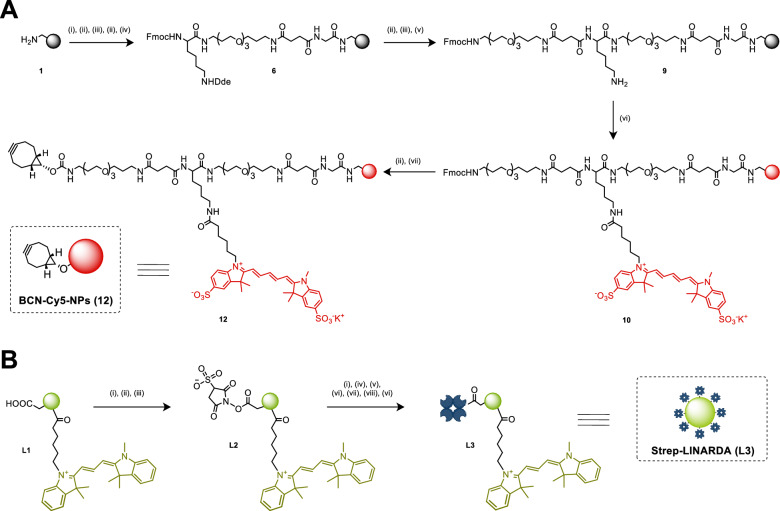
MicroRNAs (miRNAs) have been recognised as potential biomarkers due to their specific expression patterns in different biological tissues and their changes in expression under pathological conditions. MicroRNA-122 (miR-122) is a vertebrate-specific miRNA that is predominantly expressed in the liver and plays an important role in liver metabolism and development. Dysregulation of miR-122 expression is associated with several liver-related diseases, including hepatocellular carcinoma and drug-induced liver injury (DILI). Given the potential of miR-122 as a biomarker, its effective detection is important for accurate diagnosis. However, miRNA detection methods still face challenges, particularly in terms of accurately identifying miRNA isoforms that may differ by only a single base. Here, with the aim of advancing accessible methods for the detection of miRNAs with single-base specificity, we have developed a robust dual nanosystem that leverages the simplicity of click chemistry reactions. Using the dual nanosystem, we successfully detected miR-122 at single-base resolution using flow cytometry and analysed its expression in various tumour cell lines with high specificity and strong correlation with TaqMan assay results. We also detected miR-122 in serum and identified four single nucleotide variations in its sequence. The chemistry employed in this dual nanosystem is highly versatile and offers a promising opportunity to develop nanoparticle-based strategies that incorporate click chemistry and bioorthogonal chemistry for the detection of miRNAs and their isoforms.
期刊介绍:
Journal of Nanobiotechnology is an open access peer-reviewed journal communicating scientific and technological advances in the fields of medicine and biology, with an emphasis in their interface with nanoscale sciences. The journal provides biomedical scientists and the international biotechnology business community with the latest developments in the growing field of Nanobiotechnology.






 京公网安备 11010802042870号
京ICP备2023020795号-1
京公网安备 11010802042870号
京ICP备2023020795号-1

 分享
分享
 求助内容:
求助内容: 应助结果提醒方式:
 扫码关注我们
