{"title":"基于肌酐的肾小球滤过率评估公式在神经源性膀胱患者中的适用性。","authors":"Panqi He, Limin Liao","doi":"10.3389/fphys.2024.1501161","DOIUrl":null,"url":null,"abstract":"<p><strong>Purpose: </strong>Glomerular filtration rate (GFR) measured by dynamic renal scintigraphy (Gates method) is used in this study as the standard to investigate the applicability of two creatinine (Cr)-based GFR estimation equations in Chinese patients of different genders, age groups, and GFR stages diagnosed with neurogenic bladder (NB).</p><p><strong>Methods: </strong>GFR values were measured using <sup>99m</sup>Tc-DTPA renal dynamic imaging, the new serum creatinine (Cr)-based chronic kidney disease epidemiology collaborative group (CKD-EPI) equation, and the equation for the estimated GFR of CKD patients in China, which were designated as sGFR, EPI-GFR, and cGFR, respectively. Pearson's correlation and linear regression were used to compare the differences, absolute differences, precision, and accuracies of the results of the two equations with sGFR to determine the formula offering better performance for the assessment of patients with NB.</p><p><strong>Results: </strong>Measurements from a total of 99 patients with NB were used in the final analysis. Both cGFR and EPI-GFR were moderately correlated with sGFR in both men and women. The overall staging accuracies of EPI-GFR and sGFR were significantly higher than that of cGFR. Among the patients staged, only those with GFRs in the range of 60-89 mL/min/1.73 m<sup>2</sup> had moderate correlations between cGFR, EPI-GFR, and sGFR, while the remaining patients had low correlations.</p><p><strong>Conclusion: </strong>Researchers found that the equation developed for Chinese CKD patients performed well for patients with NB aged 20-25 years, while the race-neutral CKD-EPI equation performed better in NB patients aged 26-35 years.</p>","PeriodicalId":12477,"journal":{"name":"Frontiers in Physiology","volume":"15 ","pages":"1501161"},"PeriodicalIF":3.2000,"publicationDate":"2024-12-09","publicationTypes":"Journal Article","fieldsOfStudy":null,"isOpenAccess":false,"openAccessPdf":"https://www.ncbi.nlm.nih.gov/pmc/articles/PMC11667110/pdf/","citationCount":"0","resultStr":"{\"title\":\"Applicability of creatinine-based glomerular filtration rate assessment equations to patients with neurogenic bladder.\",\"authors\":\"Panqi He, Limin Liao\",\"doi\":\"10.3389/fphys.2024.1501161\",\"DOIUrl\":null,\"url\":null,\"abstract\":\"<p><strong>Purpose: </strong>Glomerular filtration rate (GFR) measured by dynamic renal scintigraphy (Gates method) is used in this study as the standard to investigate the applicability of two creatinine (Cr)-based GFR estimation equations in Chinese patients of different genders, age groups, and GFR stages diagnosed with neurogenic bladder (NB).</p><p><strong>Methods: </strong>GFR values were measured using <sup>99m</sup>Tc-DTPA renal dynamic imaging, the new serum creatinine (Cr)-based chronic kidney disease epidemiology collaborative group (CKD-EPI) equation, and the equation for the estimated GFR of CKD patients in China, which were designated as sGFR, EPI-GFR, and cGFR, respectively. Pearson's correlation and linear regression were used to compare the differences, absolute differences, precision, and accuracies of the results of the two equations with sGFR to determine the formula offering better performance for the assessment of patients with NB.</p><p><strong>Results: </strong>Measurements from a total of 99 patients with NB were used in the final analysis. Both cGFR and EPI-GFR were moderately correlated with sGFR in both men and women. The overall staging accuracies of EPI-GFR and sGFR were significantly higher than that of cGFR. Among the patients staged, only those with GFRs in the range of 60-89 mL/min/1.73 m<sup>2</sup> had moderate correlations between cGFR, EPI-GFR, and sGFR, while the remaining patients had low correlations.</p><p><strong>Conclusion: </strong>Researchers found that the equation developed for Chinese CKD patients performed well for patients with NB aged 20-25 years, while the race-neutral CKD-EPI equation performed better in NB patients aged 26-35 years.</p>\",\"PeriodicalId\":12477,\"journal\":{\"name\":\"Frontiers in Physiology\",\"volume\":\"15 \",\"pages\":\"1501161\"},\"PeriodicalIF\":3.2000,\"publicationDate\":\"2024-12-09\",\"publicationTypes\":\"Journal Article\",\"fieldsOfStudy\":null,\"isOpenAccess\":false,\"openAccessPdf\":\"https://www.ncbi.nlm.nih.gov/pmc/articles/PMC11667110/pdf/\",\"citationCount\":\"0\",\"resultStr\":null,\"platform\":\"Semanticscholar\",\"paperid\":null,\"PeriodicalName\":\"Frontiers in Physiology\",\"FirstCategoryId\":\"3\",\"ListUrlMain\":\"https://doi.org/10.3389/fphys.2024.1501161\",\"RegionNum\":3,\"RegionCategory\":\"医学\",\"ArticlePicture\":[],\"TitleCN\":null,\"AbstractTextCN\":null,\"PMCID\":null,\"EPubDate\":\"2024/1/1 0:00:00\",\"PubModel\":\"eCollection\",\"JCR\":\"Q2\",\"JCRName\":\"PHYSIOLOGY\",\"Score\":null,\"Total\":0}","platform":"Semanticscholar","paperid":null,"PeriodicalName":"Frontiers in Physiology","FirstCategoryId":"3","ListUrlMain":"https://doi.org/10.3389/fphys.2024.1501161","RegionNum":3,"RegionCategory":"医学","ArticlePicture":[],"TitleCN":null,"AbstractTextCN":null,"PMCID":null,"EPubDate":"2024/1/1 0:00:00","PubModel":"eCollection","JCR":"Q2","JCRName":"PHYSIOLOGY","Score":null,"Total":0}
Applicability of creatinine-based glomerular filtration rate assessment equations to patients with neurogenic bladder.
Purpose: Glomerular filtration rate (GFR) measured by dynamic renal scintigraphy (Gates method) is used in this study as the standard to investigate the applicability of two creatinine (Cr)-based GFR estimation equations in Chinese patients of different genders, age groups, and GFR stages diagnosed with neurogenic bladder (NB).
Methods: GFR values were measured using 99mTc-DTPA renal dynamic imaging, the new serum creatinine (Cr)-based chronic kidney disease epidemiology collaborative group (CKD-EPI) equation, and the equation for the estimated GFR of CKD patients in China, which were designated as sGFR, EPI-GFR, and cGFR, respectively. Pearson's correlation and linear regression were used to compare the differences, absolute differences, precision, and accuracies of the results of the two equations with sGFR to determine the formula offering better performance for the assessment of patients with NB.
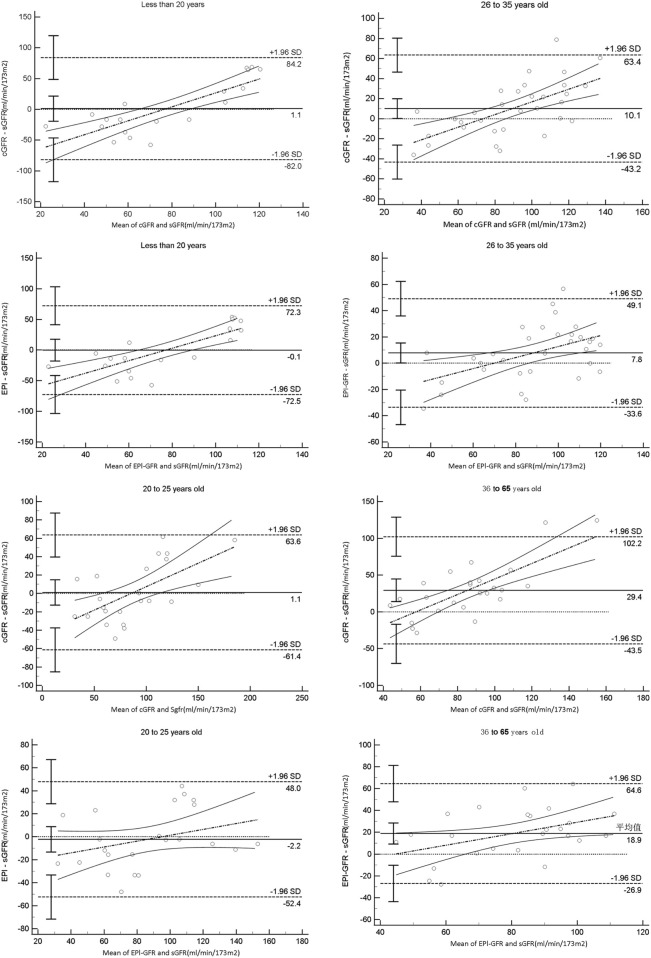
Results: Measurements from a total of 99 patients with NB were used in the final analysis. Both cGFR and EPI-GFR were moderately correlated with sGFR in both men and women. The overall staging accuracies of EPI-GFR and sGFR were significantly higher than that of cGFR. Among the patients staged, only those with GFRs in the range of 60-89 mL/min/1.73 m2 had moderate correlations between cGFR, EPI-GFR, and sGFR, while the remaining patients had low correlations.
Conclusion: Researchers found that the equation developed for Chinese CKD patients performed well for patients with NB aged 20-25 years, while the race-neutral CKD-EPI equation performed better in NB patients aged 26-35 years.
期刊介绍:
Frontiers in Physiology is a leading journal in its field, publishing rigorously peer-reviewed research on the physiology of living systems, from the subcellular and molecular domains to the intact organism, and its interaction with the environment. Field Chief Editor George E. Billman at the Ohio State University Columbus is supported by an outstanding Editorial Board of international researchers. This multidisciplinary open-access journal is at the forefront of disseminating and communicating scientific knowledge and impactful discoveries to researchers, academics, clinicians and the public worldwide.





 京公网安备 11010802042870号
京ICP备2023020795号-1
京公网安备 11010802042870号
京ICP备2023020795号-1

 分享
分享
 求助内容:
求助内容: 应助结果提醒方式:
 扫码关注我们
