Jayla Lynn Scott, Jana Christian, Manuela Plazas Montana, Yvette M Miller, Rakhi P Naik
{"title":"全美新生儿镰状细胞特征阳性筛查结果通报的可变性","authors":"Jayla Lynn Scott, Jana Christian, Manuela Plazas Montana, Yvette M Miller, Rakhi P Naik","doi":"10.1155/ah/3854629","DOIUrl":null,"url":null,"abstract":"<p><p>Universal in the United States (US) since 2006, newborn screening (NBS) programs for sickle cell disease (SCD) allow for early identification of the disease and, as an unintentional byproduct, identification of sickle cell trait (SCT). Unlike other carrier states, SCT is highly prevalent and is found in nearly 3 million Americans, which results in important reproductive implications. Currently, all NBS programs in the US are responsible for their own policies regarding SCT notification, and little is known about how SCT notification practices are performed and how these practices vary across NBS programs. We surveyed NBS programs personnel in all 50 states, the District of Columbia, and the US' territories of Puerto Rico and Guam (<i>n</i> = 53) using an electronic survey. There was a 100% response rate. All NBS programs (100%) provide notification of SCT status to either a pediatrician or parent: 49% notify the pediatrician only, 45% notify both the pediatrician and parent, and 6% notify the parent only. A total of 98% of NBS programs retain electronic records of SCT status, but only 38% can be directly accessed by pediatricians/primary care doctors. No state operates a publicly available database that allows individuals to access their own records. Only one state provides renotification at reproductive age. In conclusion, there is wide variability in NBS practices for SCT notification. This study demonstrates a need for national guidelines to standardize SCT notification across the US to ensure effective notification and counseling for SCT.</p>","PeriodicalId":7325,"journal":{"name":"Advances in Hematology","volume":"2024 ","pages":"3854629"},"PeriodicalIF":0.0000,"publicationDate":"2024-12-19","publicationTypes":"Journal Article","fieldsOfStudy":null,"isOpenAccess":false,"openAccessPdf":"https://www.ncbi.nlm.nih.gov/pmc/articles/PMC11671650/pdf/","citationCount":"0","resultStr":"{\"title\":\"Variability in Notification of Positive Newborn Screening Results for Sickle Cell Trait Across the United States.\",\"authors\":\"Jayla Lynn Scott, Jana Christian, Manuela Plazas Montana, Yvette M Miller, Rakhi P Naik\",\"doi\":\"10.1155/ah/3854629\",\"DOIUrl\":null,\"url\":null,\"abstract\":\"<p><p>Universal in the United States (US) since 2006, newborn screening (NBS) programs for sickle cell disease (SCD) allow for early identification of the disease and, as an unintentional byproduct, identification of sickle cell trait (SCT). Unlike other carrier states, SCT is highly prevalent and is found in nearly 3 million Americans, which results in important reproductive implications. Currently, all NBS programs in the US are responsible for their own policies regarding SCT notification, and little is known about how SCT notification practices are performed and how these practices vary across NBS programs. We surveyed NBS programs personnel in all 50 states, the District of Columbia, and the US' territories of Puerto Rico and Guam (<i>n</i> = 53) using an electronic survey. There was a 100% response rate. All NBS programs (100%) provide notification of SCT status to either a pediatrician or parent: 49% notify the pediatrician only, 45% notify both the pediatrician and parent, and 6% notify the parent only. A total of 98% of NBS programs retain electronic records of SCT status, but only 38% can be directly accessed by pediatricians/primary care doctors. No state operates a publicly available database that allows individuals to access their own records. Only one state provides renotification at reproductive age. In conclusion, there is wide variability in NBS practices for SCT notification. This study demonstrates a need for national guidelines to standardize SCT notification across the US to ensure effective notification and counseling for SCT.</p>\",\"PeriodicalId\":7325,\"journal\":{\"name\":\"Advances in Hematology\",\"volume\":\"2024 \",\"pages\":\"3854629\"},\"PeriodicalIF\":0.0000,\"publicationDate\":\"2024-12-19\",\"publicationTypes\":\"Journal Article\",\"fieldsOfStudy\":null,\"isOpenAccess\":false,\"openAccessPdf\":\"https://www.ncbi.nlm.nih.gov/pmc/articles/PMC11671650/pdf/\",\"citationCount\":\"0\",\"resultStr\":null,\"platform\":\"Semanticscholar\",\"paperid\":null,\"PeriodicalName\":\"Advances in Hematology\",\"FirstCategoryId\":\"1085\",\"ListUrlMain\":\"https://doi.org/10.1155/ah/3854629\",\"RegionNum\":0,\"RegionCategory\":null,\"ArticlePicture\":[],\"TitleCN\":null,\"AbstractTextCN\":null,\"PMCID\":null,\"EPubDate\":\"2024/1/1 0:00:00\",\"PubModel\":\"eCollection\",\"JCR\":\"Q3\",\"JCRName\":\"Medicine\",\"Score\":null,\"Total\":0}","platform":"Semanticscholar","paperid":null,"PeriodicalName":"Advances in Hematology","FirstCategoryId":"1085","ListUrlMain":"https://doi.org/10.1155/ah/3854629","RegionNum":0,"RegionCategory":null,"ArticlePicture":[],"TitleCN":null,"AbstractTextCN":null,"PMCID":null,"EPubDate":"2024/1/1 0:00:00","PubModel":"eCollection","JCR":"Q3","JCRName":"Medicine","Score":null,"Total":0}
Variability in Notification of Positive Newborn Screening Results for Sickle Cell Trait Across the United States.
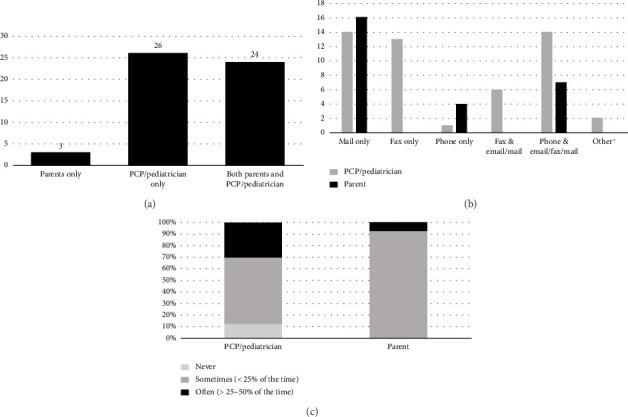
Universal in the United States (US) since 2006, newborn screening (NBS) programs for sickle cell disease (SCD) allow for early identification of the disease and, as an unintentional byproduct, identification of sickle cell trait (SCT). Unlike other carrier states, SCT is highly prevalent and is found in nearly 3 million Americans, which results in important reproductive implications. Currently, all NBS programs in the US are responsible for their own policies regarding SCT notification, and little is known about how SCT notification practices are performed and how these practices vary across NBS programs. We surveyed NBS programs personnel in all 50 states, the District of Columbia, and the US' territories of Puerto Rico and Guam (n = 53) using an electronic survey. There was a 100% response rate. All NBS programs (100%) provide notification of SCT status to either a pediatrician or parent: 49% notify the pediatrician only, 45% notify both the pediatrician and parent, and 6% notify the parent only. A total of 98% of NBS programs retain electronic records of SCT status, but only 38% can be directly accessed by pediatricians/primary care doctors. No state operates a publicly available database that allows individuals to access their own records. Only one state provides renotification at reproductive age. In conclusion, there is wide variability in NBS practices for SCT notification. This study demonstrates a need for national guidelines to standardize SCT notification across the US to ensure effective notification and counseling for SCT.





 京公网安备 11010802042870号
京ICP备2023020795号-1
京公网安备 11010802042870号
京ICP备2023020795号-1

 分享
分享
 求助内容:
求助内容: 应助结果提醒方式:
 扫码关注我们
