Ana Ibáñez-Pegenaute, María Ortega-Moneo, Robinson Ramírez-Vélez, M M Antón
{"title":"器乐音乐家对吸气肌训练方案的效果及个人反应。","authors":"Ana Ibáñez-Pegenaute, María Ortega-Moneo, Robinson Ramírez-Vélez, M M Antón","doi":"10.3389/fphys.2024.1522438","DOIUrl":null,"url":null,"abstract":"<p><p>In this quasi-experimental before-after trial, we investigated the effects of a high-intensity, low-repetition inspiratory muscle training (HI-LRMT) protocol on respiratory muscle strength in instrumental musicians. In addition, was to estimate the prevalence of \"non-responders\" (NRs) in terms of muscle force after intervention. Healthy musicians (<i>n</i> = 48) were divided into 2 groups: HI-LRMT (<i>n</i> = 33) and a control group that did not train (CG, <i>n</i> = 15). The intervention training was a high-intensity, low-repetition inspiratory muscle training program using the PowerBreathe<sup>®</sup> threshold load pressure device, 2 daily sessions of 30 repetitions per session, with a minimum frequency of 5 days per week, for 12 weeks, 5 min per session. The primary outcome measures were maximal inspiratory pressure and expiratory pressure. Change in PImax over 12 weeks for HI-LRMT vs. control was 30.9 (95% CI 25.5-38.3), with the large effect, confirming worthwhile benefits (<i>ηp</i> <sup>2</sup> = 0.61). There were significant changes in PEmax 37.3 (95% CI 19.3-48.1), with a large effect size (<i>ηp</i> <sup>2</sup> = 0.33). A third of the participants did not demonstrate improvements in terms of muscle force in instrumental musicians. In conclusion, a 12-week high-intensity, low-repetition inspiratory muscle training program using the PowerBreathe<sup>®</sup> threshold load pressure device, improved inspiratory and expiratory muscle strength in instrumental musicians.</p>","PeriodicalId":12477,"journal":{"name":"Frontiers in Physiology","volume":"15 ","pages":"1522438"},"PeriodicalIF":3.2000,"publicationDate":"2024-12-18","publicationTypes":"Journal Article","fieldsOfStudy":null,"isOpenAccess":false,"openAccessPdf":"https://www.ncbi.nlm.nih.gov/pmc/articles/PMC11688244/pdf/","citationCount":"0","resultStr":"{\"title\":\"Effect and individual response to inspiratory muscle training program among instrumentalist musicians.\",\"authors\":\"Ana Ibáñez-Pegenaute, María Ortega-Moneo, Robinson Ramírez-Vélez, M M Antón\",\"doi\":\"10.3389/fphys.2024.1522438\",\"DOIUrl\":null,\"url\":null,\"abstract\":\"<p><p>In this quasi-experimental before-after trial, we investigated the effects of a high-intensity, low-repetition inspiratory muscle training (HI-LRMT) protocol on respiratory muscle strength in instrumental musicians. In addition, was to estimate the prevalence of \\\"non-responders\\\" (NRs) in terms of muscle force after intervention. Healthy musicians (<i>n</i> = 48) were divided into 2 groups: HI-LRMT (<i>n</i> = 33) and a control group that did not train (CG, <i>n</i> = 15). The intervention training was a high-intensity, low-repetition inspiratory muscle training program using the PowerBreathe<sup>®</sup> threshold load pressure device, 2 daily sessions of 30 repetitions per session, with a minimum frequency of 5 days per week, for 12 weeks, 5 min per session. The primary outcome measures were maximal inspiratory pressure and expiratory pressure. Change in PImax over 12 weeks for HI-LRMT vs. control was 30.9 (95% CI 25.5-38.3), with the large effect, confirming worthwhile benefits (<i>ηp</i> <sup>2</sup> = 0.61). There were significant changes in PEmax 37.3 (95% CI 19.3-48.1), with a large effect size (<i>ηp</i> <sup>2</sup> = 0.33). A third of the participants did not demonstrate improvements in terms of muscle force in instrumental musicians. In conclusion, a 12-week high-intensity, low-repetition inspiratory muscle training program using the PowerBreathe<sup>®</sup> threshold load pressure device, improved inspiratory and expiratory muscle strength in instrumental musicians.</p>\",\"PeriodicalId\":12477,\"journal\":{\"name\":\"Frontiers in Physiology\",\"volume\":\"15 \",\"pages\":\"1522438\"},\"PeriodicalIF\":3.2000,\"publicationDate\":\"2024-12-18\",\"publicationTypes\":\"Journal Article\",\"fieldsOfStudy\":null,\"isOpenAccess\":false,\"openAccessPdf\":\"https://www.ncbi.nlm.nih.gov/pmc/articles/PMC11688244/pdf/\",\"citationCount\":\"0\",\"resultStr\":null,\"platform\":\"Semanticscholar\",\"paperid\":null,\"PeriodicalName\":\"Frontiers in Physiology\",\"FirstCategoryId\":\"3\",\"ListUrlMain\":\"https://doi.org/10.3389/fphys.2024.1522438\",\"RegionNum\":3,\"RegionCategory\":\"医学\",\"ArticlePicture\":[],\"TitleCN\":null,\"AbstractTextCN\":null,\"PMCID\":null,\"EPubDate\":\"2024/1/1 0:00:00\",\"PubModel\":\"eCollection\",\"JCR\":\"Q2\",\"JCRName\":\"PHYSIOLOGY\",\"Score\":null,\"Total\":0}","platform":"Semanticscholar","paperid":null,"PeriodicalName":"Frontiers in Physiology","FirstCategoryId":"3","ListUrlMain":"https://doi.org/10.3389/fphys.2024.1522438","RegionNum":3,"RegionCategory":"医学","ArticlePicture":[],"TitleCN":null,"AbstractTextCN":null,"PMCID":null,"EPubDate":"2024/1/1 0:00:00","PubModel":"eCollection","JCR":"Q2","JCRName":"PHYSIOLOGY","Score":null,"Total":0}
引用次数: 0
摘要
在这个准实验前后试验中,我们研究了高强度、低重复的吸气肌训练(HI-LRMT)方案对器乐音乐家呼吸肌力量的影响。此外,旨在评估干预后肌肉力量方面“无反应”(NRs)的患病率。健康音乐家(n = 48)分为2组:HI-LRMT组(n = 33)和不训练的对照组(CG组,n = 15)。干预训练是一个高强度、低重复的吸气肌训练项目,使用PowerBreathe®阈值负荷压力装置,每天2次,每次30次重复,每周最少5天,持续12周,每次5分钟。主要结局指标为最大吸气压和最大呼气压。HI-LRMT组与对照组相比,12周内PImax的变化为30.9 (95% CI 25.5-38.3),效果显著,证实了值得的获益(ηp 2 = 0.61)。PEmax 37.3有显著变化(95% CI 19.3-48.1),效应量较大(ηp 2 = 0.33)。三分之一的参与者在器乐音乐家的肌肉力量方面没有表现出改善。总之,使用PowerBreathe®阈值负荷压力装置进行为期12周的高强度、低重复的吸气肌训练,可以改善器乐音乐家的吸气和呼气肌力量。
Effect and individual response to inspiratory muscle training program among instrumentalist musicians.
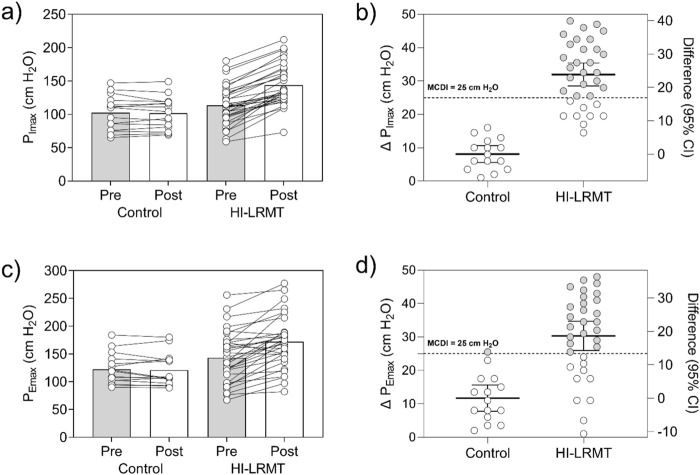
In this quasi-experimental before-after trial, we investigated the effects of a high-intensity, low-repetition inspiratory muscle training (HI-LRMT) protocol on respiratory muscle strength in instrumental musicians. In addition, was to estimate the prevalence of "non-responders" (NRs) in terms of muscle force after intervention. Healthy musicians (n = 48) were divided into 2 groups: HI-LRMT (n = 33) and a control group that did not train (CG, n = 15). The intervention training was a high-intensity, low-repetition inspiratory muscle training program using the PowerBreathe® threshold load pressure device, 2 daily sessions of 30 repetitions per session, with a minimum frequency of 5 days per week, for 12 weeks, 5 min per session. The primary outcome measures were maximal inspiratory pressure and expiratory pressure. Change in PImax over 12 weeks for HI-LRMT vs. control was 30.9 (95% CI 25.5-38.3), with the large effect, confirming worthwhile benefits (ηp2 = 0.61). There were significant changes in PEmax 37.3 (95% CI 19.3-48.1), with a large effect size (ηp2 = 0.33). A third of the participants did not demonstrate improvements in terms of muscle force in instrumental musicians. In conclusion, a 12-week high-intensity, low-repetition inspiratory muscle training program using the PowerBreathe® threshold load pressure device, improved inspiratory and expiratory muscle strength in instrumental musicians.
期刊介绍:
Frontiers in Physiology is a leading journal in its field, publishing rigorously peer-reviewed research on the physiology of living systems, from the subcellular and molecular domains to the intact organism, and its interaction with the environment. Field Chief Editor George E. Billman at the Ohio State University Columbus is supported by an outstanding Editorial Board of international researchers. This multidisciplinary open-access journal is at the forefront of disseminating and communicating scientific knowledge and impactful discoveries to researchers, academics, clinicians and the public worldwide.





 京公网安备 11010802042870号
京ICP备2023020795号-1
京公网安备 11010802042870号
京ICP备2023020795号-1

 分享
分享
 求助内容:
求助内容: 应助结果提醒方式:
 扫码关注我们
