Zhuo Xu, Gaosong Shao, Zhi Liang, Dingding Jiang, Xianwei Wang, Yuhao Wen and Peiyuan Lu
{"title":"多酚金属网络掺杂镍改善单宁酸-壳聚糖生物炭对磺胺嘧啶的吸附","authors":"Zhuo Xu, Gaosong Shao, Zhi Liang, Dingding Jiang, Xianwei Wang, Yuhao Wen and Peiyuan Lu","doi":"10.1039/D4NR04987J","DOIUrl":null,"url":null,"abstract":"<p >Antibiotics, as a representative of new pollutants, have always been a challenge in the water treatment process, and most adsorption materials do not have good adsorption capacity for them. Therefore, the adsorption capacity of materials for antibiotics was investigated using sulfadiazine (SDZ) as a representative of antibiotics. In this paper, nickel was successfully loaded onto the surface of chitosan through a polyphenol metal network. TAB-Ni was prepared by adding an appropriate amount of tannic acid–chitosan material to 0.03 mol L<small><sup>−1</sup></small> nickel chloride under alkaline conditions, and then calcined at a high temperature of 900 °C for 2 hours. The morphology and functional groups on the material surface were determined using a series of characterization methods, and the adsorption behavior of SDZ on TAB-Ni and the stability of the material were also evaluated. The results show that TAB-Ni has a strong adsorption capacity for SDZ, reaching 123.89 mg g<small><sup>−1</sup></small> at 298 K and 152.56 mg g<small><sup>−1</sup></small> at 318 K, exceeding the adsorption capacity of most carbon materials. Most importantly, the graphitization of nickel-doped biochar enhances the role of biochar in the adsorption mechanism and dramatically improves the affinity (π–π interactions) between the aromatic structure and the benzene ring in the SDZ molecule and can provide metal-unsaturated sites to enhance the adsorption capacity for SDZ. The present study sheds light on the enhanced adsorption of SDZ by carbon materials in the future.</p>","PeriodicalId":92,"journal":{"name":"Nanoscale","volume":" 10","pages":" 5925-5940"},"PeriodicalIF":5.1000,"publicationDate":"2025-01-09","publicationTypes":"Journal Article","fieldsOfStudy":null,"isOpenAccess":false,"openAccessPdf":"","citationCount":"0","resultStr":"{\"title\":\"Improvement of adsorption of sulfadiazine on tannic acid–chitosan biochar by nickel doping through a polyphenol metal network\",\"authors\":\"Zhuo Xu, Gaosong Shao, Zhi Liang, Dingding Jiang, Xianwei Wang, Yuhao Wen and Peiyuan Lu\",\"doi\":\"10.1039/D4NR04987J\",\"DOIUrl\":null,\"url\":null,\"abstract\":\"<p >Antibiotics, as a representative of new pollutants, have always been a challenge in the water treatment process, and most adsorption materials do not have good adsorption capacity for them. Therefore, the adsorption capacity of materials for antibiotics was investigated using sulfadiazine (SDZ) as a representative of antibiotics. In this paper, nickel was successfully loaded onto the surface of chitosan through a polyphenol metal network. TAB-Ni was prepared by adding an appropriate amount of tannic acid–chitosan material to 0.03 mol L<small><sup>−1</sup></small> nickel chloride under alkaline conditions, and then calcined at a high temperature of 900 °C for 2 hours. The morphology and functional groups on the material surface were determined using a series of characterization methods, and the adsorption behavior of SDZ on TAB-Ni and the stability of the material were also evaluated. The results show that TAB-Ni has a strong adsorption capacity for SDZ, reaching 123.89 mg g<small><sup>−1</sup></small> at 298 K and 152.56 mg g<small><sup>−1</sup></small> at 318 K, exceeding the adsorption capacity of most carbon materials. Most importantly, the graphitization of nickel-doped biochar enhances the role of biochar in the adsorption mechanism and dramatically improves the affinity (π–π interactions) between the aromatic structure and the benzene ring in the SDZ molecule and can provide metal-unsaturated sites to enhance the adsorption capacity for SDZ. The present study sheds light on the enhanced adsorption of SDZ by carbon materials in the future.</p>\",\"PeriodicalId\":92,\"journal\":{\"name\":\"Nanoscale\",\"volume\":\" 10\",\"pages\":\" 5925-5940\"},\"PeriodicalIF\":5.1000,\"publicationDate\":\"2025-01-09\",\"publicationTypes\":\"Journal Article\",\"fieldsOfStudy\":null,\"isOpenAccess\":false,\"openAccessPdf\":\"\",\"citationCount\":\"0\",\"resultStr\":null,\"platform\":\"Semanticscholar\",\"paperid\":null,\"PeriodicalName\":\"Nanoscale\",\"FirstCategoryId\":\"88\",\"ListUrlMain\":\"https://pubs.rsc.org/en/content/articlelanding/2025/nr/d4nr04987j\",\"RegionNum\":3,\"RegionCategory\":\"材料科学\",\"ArticlePicture\":[],\"TitleCN\":null,\"AbstractTextCN\":null,\"PMCID\":null,\"EPubDate\":\"\",\"PubModel\":\"\",\"JCR\":\"Q1\",\"JCRName\":\"CHEMISTRY, MULTIDISCIPLINARY\",\"Score\":null,\"Total\":0}","platform":"Semanticscholar","paperid":null,"PeriodicalName":"Nanoscale","FirstCategoryId":"88","ListUrlMain":"https://pubs.rsc.org/en/content/articlelanding/2025/nr/d4nr04987j","RegionNum":3,"RegionCategory":"材料科学","ArticlePicture":[],"TitleCN":null,"AbstractTextCN":null,"PMCID":null,"EPubDate":"","PubModel":"","JCR":"Q1","JCRName":"CHEMISTRY, MULTIDISCIPLINARY","Score":null,"Total":0}
Improvement of adsorption of sulfadiazine on tannic acid–chitosan biochar by nickel doping through a polyphenol metal network
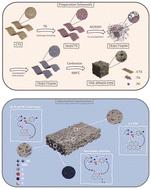
Antibiotics, as a representative of new pollutants, have always been a challenge in the water treatment process, and most adsorption materials do not have good adsorption capacity for them. Therefore, the adsorption capacity of materials for antibiotics was investigated using sulfadiazine (SDZ) as a representative of antibiotics. In this paper, nickel was successfully loaded onto the surface of chitosan through a polyphenol metal network. TAB-Ni was prepared by adding an appropriate amount of tannic acid–chitosan material to 0.03 mol L−1 nickel chloride under alkaline conditions, and then calcined at a high temperature of 900 °C for 2 hours. The morphology and functional groups on the material surface were determined using a series of characterization methods, and the adsorption behavior of SDZ on TAB-Ni and the stability of the material were also evaluated. The results show that TAB-Ni has a strong adsorption capacity for SDZ, reaching 123.89 mg g−1 at 298 K and 152.56 mg g−1 at 318 K, exceeding the adsorption capacity of most carbon materials. Most importantly, the graphitization of nickel-doped biochar enhances the role of biochar in the adsorption mechanism and dramatically improves the affinity (π–π interactions) between the aromatic structure and the benzene ring in the SDZ molecule and can provide metal-unsaturated sites to enhance the adsorption capacity for SDZ. The present study sheds light on the enhanced adsorption of SDZ by carbon materials in the future.
期刊介绍:
Nanoscale is a high-impact international journal, publishing high-quality research across nanoscience and nanotechnology. Nanoscale publishes a full mix of research articles on experimental and theoretical work, including reviews, communications, and full papers.Highly interdisciplinary, this journal appeals to scientists, researchers and professionals interested in nanoscience and nanotechnology, quantum materials and quantum technology, including the areas of physics, chemistry, biology, medicine, materials, energy/environment, information technology, detection science, healthcare and drug discovery, and electronics.




 京公网安备 11010802042870号
京ICP备2023020795号-1
京公网安备 11010802042870号
京ICP备2023020795号-1

 分享
分享
 求助内容:
求助内容: 应助结果提醒方式:
 扫码关注我们
