Robinson Odong, Ronald Okoth, Charles Masembe, Godfrey Kawooya Kubiriza, Peter Akoll, Diana Nantege, Frank Kansiime
{"title":"纸莎草-双壳贝复合材料在水产养殖废水生物修复中的应用","authors":"Robinson Odong, Ronald Okoth, Charles Masembe, Godfrey Kawooya Kubiriza, Peter Akoll, Diana Nantege, Frank Kansiime","doi":"10.1007/s11356-024-35623-6","DOIUrl":null,"url":null,"abstract":"<div><p>Aquaculture generates substantial amount of residual feeds and faecal matter that accumulate in the culture environment and pollute effluent-receiving water, diminishing its ecological functioning. To devise means of treating nutrient-rich aquaculture wastewater, the efficiency of integrated papyrus-bivalve mesocosms in removing nutrients was evaluated. The mesocosms were fed on water (6600 L) from one brood-stock pond and allowed to settle for 2 weeks. Physico-chemical parameters, including nutrient level in influent and effluent of mesocosms, were analysed fortnightly using standard methods. The integrated papyrus-bivalve mesocosms had the highest removal of 69.5, 52.9, and 70.5% for total nitrogen (TN), total phosphorus (TP), and total dissolved solids (TDS), respectively, from the aquaculture wastewater. The removal efficiency of TN and TDS by the mesocosms followed the order: integrated papyrus-bivalve ˃ papyrus ˃ bivalves ˃ control, and removal efficiency for TP followed a similar trend, albeit integrated papyrus-bivalve≈papyrus. The nutrient retention (g/DMm<sup>2</sup>) in papyrus biomass was 24.09 and 2.93 in integrated papyrus-bivalve mesocosm and 20.77 and 3.81 in papyrus mesocosms for nitrogen and phosphorus, respectively. Meanwhile, the nutrient retention in bivalve biomass was 3.06 and 0.44 in integrated papyrus-bivalve and 1.95 and 0.34 in bivalve mesocosm, for nitrogen and phosphorus, respectively. The study confirms the synergistic functionality of papyrus and bivalves in treating aquaculture wastewater. Papyrus and bivalves in the mesocosms contributed to the bioremediation of wastewater through physical and biochemical processes, including filtration, nutrient uptake, and attachment surfaces for microorganisms. Therefore, we recommend integrated papyrus-bivalve bioremediation technology to fish farmers and policy makers.</p></div>","PeriodicalId":545,"journal":{"name":"Environmental Science and Pollution Research","volume":"32 1","pages":"383 - 402"},"PeriodicalIF":5.8000,"publicationDate":"2025-01-07","publicationTypes":"Journal Article","fieldsOfStudy":null,"isOpenAccess":false,"openAccessPdf":"","citationCount":"0","resultStr":"{\"title\":\"Utility of integrated papyrus-bivalve for bioremediation of aquaculture wastewater\",\"authors\":\"Robinson Odong, Ronald Okoth, Charles Masembe, Godfrey Kawooya Kubiriza, Peter Akoll, Diana Nantege, Frank Kansiime\",\"doi\":\"10.1007/s11356-024-35623-6\",\"DOIUrl\":null,\"url\":null,\"abstract\":\"<div><p>Aquaculture generates substantial amount of residual feeds and faecal matter that accumulate in the culture environment and pollute effluent-receiving water, diminishing its ecological functioning. To devise means of treating nutrient-rich aquaculture wastewater, the efficiency of integrated papyrus-bivalve mesocosms in removing nutrients was evaluated. The mesocosms were fed on water (6600 L) from one brood-stock pond and allowed to settle for 2 weeks. Physico-chemical parameters, including nutrient level in influent and effluent of mesocosms, were analysed fortnightly using standard methods. The integrated papyrus-bivalve mesocosms had the highest removal of 69.5, 52.9, and 70.5% for total nitrogen (TN), total phosphorus (TP), and total dissolved solids (TDS), respectively, from the aquaculture wastewater. The removal efficiency of TN and TDS by the mesocosms followed the order: integrated papyrus-bivalve ˃ papyrus ˃ bivalves ˃ control, and removal efficiency for TP followed a similar trend, albeit integrated papyrus-bivalve≈papyrus. The nutrient retention (g/DMm<sup>2</sup>) in papyrus biomass was 24.09 and 2.93 in integrated papyrus-bivalve mesocosm and 20.77 and 3.81 in papyrus mesocosms for nitrogen and phosphorus, respectively. Meanwhile, the nutrient retention in bivalve biomass was 3.06 and 0.44 in integrated papyrus-bivalve and 1.95 and 0.34 in bivalve mesocosm, for nitrogen and phosphorus, respectively. The study confirms the synergistic functionality of papyrus and bivalves in treating aquaculture wastewater. Papyrus and bivalves in the mesocosms contributed to the bioremediation of wastewater through physical and biochemical processes, including filtration, nutrient uptake, and attachment surfaces for microorganisms. Therefore, we recommend integrated papyrus-bivalve bioremediation technology to fish farmers and policy makers.</p></div>\",\"PeriodicalId\":545,\"journal\":{\"name\":\"Environmental Science and Pollution Research\",\"volume\":\"32 1\",\"pages\":\"383 - 402\"},\"PeriodicalIF\":5.8000,\"publicationDate\":\"2025-01-07\",\"publicationTypes\":\"Journal Article\",\"fieldsOfStudy\":null,\"isOpenAccess\":false,\"openAccessPdf\":\"\",\"citationCount\":\"0\",\"resultStr\":null,\"platform\":\"Semanticscholar\",\"paperid\":null,\"PeriodicalName\":\"Environmental Science and Pollution Research\",\"FirstCategoryId\":\"93\",\"ListUrlMain\":\"https://link.springer.com/article/10.1007/s11356-024-35623-6\",\"RegionNum\":3,\"RegionCategory\":\"环境科学与生态学\",\"ArticlePicture\":[],\"TitleCN\":null,\"AbstractTextCN\":null,\"PMCID\":null,\"EPubDate\":\"\",\"PubModel\":\"\",\"JCR\":\"0\",\"JCRName\":\"ENVIRONMENTAL SCIENCES\",\"Score\":null,\"Total\":0}","platform":"Semanticscholar","paperid":null,"PeriodicalName":"Environmental Science and Pollution Research","FirstCategoryId":"93","ListUrlMain":"https://link.springer.com/article/10.1007/s11356-024-35623-6","RegionNum":3,"RegionCategory":"环境科学与生态学","ArticlePicture":[],"TitleCN":null,"AbstractTextCN":null,"PMCID":null,"EPubDate":"","PubModel":"","JCR":"0","JCRName":"ENVIRONMENTAL SCIENCES","Score":null,"Total":0}
Utility of integrated papyrus-bivalve for bioremediation of aquaculture wastewater
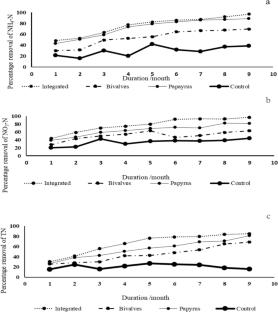
Aquaculture generates substantial amount of residual feeds and faecal matter that accumulate in the culture environment and pollute effluent-receiving water, diminishing its ecological functioning. To devise means of treating nutrient-rich aquaculture wastewater, the efficiency of integrated papyrus-bivalve mesocosms in removing nutrients was evaluated. The mesocosms were fed on water (6600 L) from one brood-stock pond and allowed to settle for 2 weeks. Physico-chemical parameters, including nutrient level in influent and effluent of mesocosms, were analysed fortnightly using standard methods. The integrated papyrus-bivalve mesocosms had the highest removal of 69.5, 52.9, and 70.5% for total nitrogen (TN), total phosphorus (TP), and total dissolved solids (TDS), respectively, from the aquaculture wastewater. The removal efficiency of TN and TDS by the mesocosms followed the order: integrated papyrus-bivalve ˃ papyrus ˃ bivalves ˃ control, and removal efficiency for TP followed a similar trend, albeit integrated papyrus-bivalve≈papyrus. The nutrient retention (g/DMm2) in papyrus biomass was 24.09 and 2.93 in integrated papyrus-bivalve mesocosm and 20.77 and 3.81 in papyrus mesocosms for nitrogen and phosphorus, respectively. Meanwhile, the nutrient retention in bivalve biomass was 3.06 and 0.44 in integrated papyrus-bivalve and 1.95 and 0.34 in bivalve mesocosm, for nitrogen and phosphorus, respectively. The study confirms the synergistic functionality of papyrus and bivalves in treating aquaculture wastewater. Papyrus and bivalves in the mesocosms contributed to the bioremediation of wastewater through physical and biochemical processes, including filtration, nutrient uptake, and attachment surfaces for microorganisms. Therefore, we recommend integrated papyrus-bivalve bioremediation technology to fish farmers and policy makers.
期刊介绍:
Environmental Science and Pollution Research (ESPR) serves the international community in all areas of Environmental Science and related subjects with emphasis on chemical compounds. This includes:
- Terrestrial Biology and Ecology
- Aquatic Biology and Ecology
- Atmospheric Chemistry
- Environmental Microbiology/Biobased Energy Sources
- Phytoremediation and Ecosystem Restoration
- Environmental Analyses and Monitoring
- Assessment of Risks and Interactions of Pollutants in the Environment
- Conservation Biology and Sustainable Agriculture
- Impact of Chemicals/Pollutants on Human and Animal Health
It reports from a broad interdisciplinary outlook.




 京公网安备 11010802042870号
京ICP备2023020795号-1
京公网安备 11010802042870号
京ICP备2023020795号-1

 分享
分享
 求助内容:
求助内容: 应助结果提醒方式:
 扫码关注我们
