Chae Rim Lee, Miseung Kim, Chihyun Hwang, Jun Ho Song, Ji-Sang Yu and Hyun-seung Kim
{"title":"在硅负极上热电化学形成固体电解质界面,通过组分改性提高富硅锂离子电池的耐久性","authors":"Chae Rim Lee, Miseung Kim, Chihyun Hwang, Jun Ho Song, Ji-Sang Yu and Hyun-seung Kim","doi":"10.1039/D4NR04451G","DOIUrl":null,"url":null,"abstract":"<p >The SiO electrode interface is passivated with a SiO<small><sub>2</sub></small> layer, which hinders the deposition of an inorganic solid electrolyte interphase (SEI) due to its high surface work function and low exchange current density of electrolyte decomposition. Consequently, a thermally vulnerable, organic-based SEI formed on the SiO electrode, leading to poor cycling performance at elevated temperatures. To address this issue, the SEI formation process is thermoelectrochemically activated. Increasing the formation temperature lowers the work function by shifting the electron energy levels and increases the exchange current density for SEI formation. Higher temperatures promote the incorporation of inorganic Li<small><sub>2</sub></small>CO<small><sub>3</sub></small> into the SEI film, resulting from the two-electron reduction of ethylene carbonate, and hence the thermally stable SEI film leads to stable cycleability. However, excessively high temperatures cause the SEI layer to become thick and resistive, significantly increasing the polarization of the SiO electrode, which leads to a deficient improvement of cycle performance. Therefore, moderate temperature exposure is required to convert the organic SEI into less resistive, inorganic components. The implementation of a mechanism-assisted SEI formation process in pouch cells using identical materials significantly improves the cycling performance, with a 20% enhancement by the 300<small><sup>th</sup></small> cycle. Additionally, the thermoelectrochemical activation of SEI formation reduces cathodic side reactions on SiO electrodes, which helps in preventing coupled failure of the NCM electrode by mitigating intergranular cracking and preserving its structure.</p>","PeriodicalId":92,"journal":{"name":"Nanoscale","volume":" 5","pages":" 2852-2859"},"PeriodicalIF":5.1000,"publicationDate":"2025-01-10","publicationTypes":"Journal Article","fieldsOfStudy":null,"isOpenAccess":false,"openAccessPdf":"","citationCount":"0","resultStr":"{\"title\":\"Thermoelectrochemical formation of a solid electrolyte interphase on a silicon negative electrode to enhance the durability of silicon-enriched lithium-ion batteries by compositional modification†\",\"authors\":\"Chae Rim Lee, Miseung Kim, Chihyun Hwang, Jun Ho Song, Ji-Sang Yu and Hyun-seung Kim\",\"doi\":\"10.1039/D4NR04451G\",\"DOIUrl\":null,\"url\":null,\"abstract\":\"<p >The SiO electrode interface is passivated with a SiO<small><sub>2</sub></small> layer, which hinders the deposition of an inorganic solid electrolyte interphase (SEI) due to its high surface work function and low exchange current density of electrolyte decomposition. Consequently, a thermally vulnerable, organic-based SEI formed on the SiO electrode, leading to poor cycling performance at elevated temperatures. To address this issue, the SEI formation process is thermoelectrochemically activated. Increasing the formation temperature lowers the work function by shifting the electron energy levels and increases the exchange current density for SEI formation. Higher temperatures promote the incorporation of inorganic Li<small><sub>2</sub></small>CO<small><sub>3</sub></small> into the SEI film, resulting from the two-electron reduction of ethylene carbonate, and hence the thermally stable SEI film leads to stable cycleability. However, excessively high temperatures cause the SEI layer to become thick and resistive, significantly increasing the polarization of the SiO electrode, which leads to a deficient improvement of cycle performance. Therefore, moderate temperature exposure is required to convert the organic SEI into less resistive, inorganic components. The implementation of a mechanism-assisted SEI formation process in pouch cells using identical materials significantly improves the cycling performance, with a 20% enhancement by the 300<small><sup>th</sup></small> cycle. Additionally, the thermoelectrochemical activation of SEI formation reduces cathodic side reactions on SiO electrodes, which helps in preventing coupled failure of the NCM electrode by mitigating intergranular cracking and preserving its structure.</p>\",\"PeriodicalId\":92,\"journal\":{\"name\":\"Nanoscale\",\"volume\":\" 5\",\"pages\":\" 2852-2859\"},\"PeriodicalIF\":5.1000,\"publicationDate\":\"2025-01-10\",\"publicationTypes\":\"Journal Article\",\"fieldsOfStudy\":null,\"isOpenAccess\":false,\"openAccessPdf\":\"\",\"citationCount\":\"0\",\"resultStr\":null,\"platform\":\"Semanticscholar\",\"paperid\":null,\"PeriodicalName\":\"Nanoscale\",\"FirstCategoryId\":\"88\",\"ListUrlMain\":\"https://pubs.rsc.org/en/content/articlelanding/2025/nr/d4nr04451g\",\"RegionNum\":3,\"RegionCategory\":\"材料科学\",\"ArticlePicture\":[],\"TitleCN\":null,\"AbstractTextCN\":null,\"PMCID\":null,\"EPubDate\":\"\",\"PubModel\":\"\",\"JCR\":\"Q1\",\"JCRName\":\"CHEMISTRY, MULTIDISCIPLINARY\",\"Score\":null,\"Total\":0}","platform":"Semanticscholar","paperid":null,"PeriodicalName":"Nanoscale","FirstCategoryId":"88","ListUrlMain":"https://pubs.rsc.org/en/content/articlelanding/2025/nr/d4nr04451g","RegionNum":3,"RegionCategory":"材料科学","ArticlePicture":[],"TitleCN":null,"AbstractTextCN":null,"PMCID":null,"EPubDate":"","PubModel":"","JCR":"Q1","JCRName":"CHEMISTRY, MULTIDISCIPLINARY","Score":null,"Total":0}
Thermoelectrochemical formation of a solid electrolyte interphase on a silicon negative electrode to enhance the durability of silicon-enriched lithium-ion batteries by compositional modification†
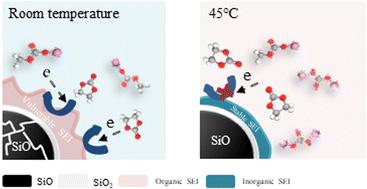
The SiO electrode interface is passivated with a SiO2 layer, which hinders the deposition of an inorganic solid electrolyte interphase (SEI) due to its high surface work function and low exchange current density of electrolyte decomposition. Consequently, a thermally vulnerable, organic-based SEI formed on the SiO electrode, leading to poor cycling performance at elevated temperatures. To address this issue, the SEI formation process is thermoelectrochemically activated. Increasing the formation temperature lowers the work function by shifting the electron energy levels and increases the exchange current density for SEI formation. Higher temperatures promote the incorporation of inorganic Li2CO3 into the SEI film, resulting from the two-electron reduction of ethylene carbonate, and hence the thermally stable SEI film leads to stable cycleability. However, excessively high temperatures cause the SEI layer to become thick and resistive, significantly increasing the polarization of the SiO electrode, which leads to a deficient improvement of cycle performance. Therefore, moderate temperature exposure is required to convert the organic SEI into less resistive, inorganic components. The implementation of a mechanism-assisted SEI formation process in pouch cells using identical materials significantly improves the cycling performance, with a 20% enhancement by the 300th cycle. Additionally, the thermoelectrochemical activation of SEI formation reduces cathodic side reactions on SiO electrodes, which helps in preventing coupled failure of the NCM electrode by mitigating intergranular cracking and preserving its structure.
期刊介绍:
Nanoscale is a high-impact international journal, publishing high-quality research across nanoscience and nanotechnology. Nanoscale publishes a full mix of research articles on experimental and theoretical work, including reviews, communications, and full papers.Highly interdisciplinary, this journal appeals to scientists, researchers and professionals interested in nanoscience and nanotechnology, quantum materials and quantum technology, including the areas of physics, chemistry, biology, medicine, materials, energy/environment, information technology, detection science, healthcare and drug discovery, and electronics.




 京公网安备 11010802042870号
京ICP备2023020795号-1
京公网安备 11010802042870号
京ICP备2023020795号-1

 分享
分享
 求助内容:
求助内容: 应助结果提醒方式:
 扫码关注我们
