Nadine Kiefer, Judith Klein, Mirko Rohr, Matthias Noll, Michael Burkhart, Michael Klein, Stefan Kalkhof
{"title":"用PELMO和COMLEAM耦合模拟土壤中杀菌剂的分布。","authors":"Nadine Kiefer, Judith Klein, Mirko Rohr, Matthias Noll, Michael Burkhart, Michael Klein, Stefan Kalkhof","doi":"10.1007/s11356-024-35760-y","DOIUrl":null,"url":null,"abstract":"<div><p>Biocides, applied in building materials as antimicrobial protectants, can be leached out by rain, presenting substantial environmental risks as confirmed by studies on aquatic environments. However, these biocides are consistently released throughout the year in a diluted form, posing unique challenges for the prediction of transport, transformation, and ecotoxicity assessment in soil. To address this challenge, we combined COMLEAM, which predicts leaching from facades into the soil, with the FOCUS PELMO pesticide model to predict biocide distribution in soil. The study predicted the concentration of the commonly used biocides 1,2-benzisothiazol-3(2H)-one (BIT), 2-n-octyl-4-isothiazolinone-3-one, and terbutryn at various soil depths over 600 days, thereby evaluating the influence of different leaching simulations, absorption, and degradation kinetics on the PELMO simulation results. The findings suggest an effective simulation of biocide behavior in soil, with a tendency to overestimate the risk associated with short-acting in-can preservatives like BIT and provide more precise predictions for long-acting film preservatives. Biocide concentrations showed little variance in the upper layers and increased discrepancies at greater depths. This integrated approach provides a cost-effective means for predicting environmental risks and formulating management strategies, especially when paired with experimentally determined soil-specific degradation and absorption values.</p></div>","PeriodicalId":545,"journal":{"name":"Environmental Science and Pollution Research","volume":"32 5","pages":"2425 - 2440"},"PeriodicalIF":5.8000,"publicationDate":"2025-01-09","publicationTypes":"Journal Article","fieldsOfStudy":null,"isOpenAccess":false,"openAccessPdf":"https://link.springer.com/content/pdf/10.1007/s11356-024-35760-y.pdf","citationCount":"0","resultStr":"{\"title\":\"Simulation of the biocide distribution in soil using PELMO coupled with COMLEAM\",\"authors\":\"Nadine Kiefer, Judith Klein, Mirko Rohr, Matthias Noll, Michael Burkhart, Michael Klein, Stefan Kalkhof\",\"doi\":\"10.1007/s11356-024-35760-y\",\"DOIUrl\":null,\"url\":null,\"abstract\":\"<div><p>Biocides, applied in building materials as antimicrobial protectants, can be leached out by rain, presenting substantial environmental risks as confirmed by studies on aquatic environments. However, these biocides are consistently released throughout the year in a diluted form, posing unique challenges for the prediction of transport, transformation, and ecotoxicity assessment in soil. To address this challenge, we combined COMLEAM, which predicts leaching from facades into the soil, with the FOCUS PELMO pesticide model to predict biocide distribution in soil. The study predicted the concentration of the commonly used biocides 1,2-benzisothiazol-3(2H)-one (BIT), 2-n-octyl-4-isothiazolinone-3-one, and terbutryn at various soil depths over 600 days, thereby evaluating the influence of different leaching simulations, absorption, and degradation kinetics on the PELMO simulation results. The findings suggest an effective simulation of biocide behavior in soil, with a tendency to overestimate the risk associated with short-acting in-can preservatives like BIT and provide more precise predictions for long-acting film preservatives. Biocide concentrations showed little variance in the upper layers and increased discrepancies at greater depths. This integrated approach provides a cost-effective means for predicting environmental risks and formulating management strategies, especially when paired with experimentally determined soil-specific degradation and absorption values.</p></div>\",\"PeriodicalId\":545,\"journal\":{\"name\":\"Environmental Science and Pollution Research\",\"volume\":\"32 5\",\"pages\":\"2425 - 2440\"},\"PeriodicalIF\":5.8000,\"publicationDate\":\"2025-01-09\",\"publicationTypes\":\"Journal Article\",\"fieldsOfStudy\":null,\"isOpenAccess\":false,\"openAccessPdf\":\"https://link.springer.com/content/pdf/10.1007/s11356-024-35760-y.pdf\",\"citationCount\":\"0\",\"resultStr\":null,\"platform\":\"Semanticscholar\",\"paperid\":null,\"PeriodicalName\":\"Environmental Science and Pollution Research\",\"FirstCategoryId\":\"93\",\"ListUrlMain\":\"https://link.springer.com/article/10.1007/s11356-024-35760-y\",\"RegionNum\":3,\"RegionCategory\":\"环境科学与生态学\",\"ArticlePicture\":[],\"TitleCN\":null,\"AbstractTextCN\":null,\"PMCID\":null,\"EPubDate\":\"\",\"PubModel\":\"\",\"JCR\":\"0\",\"JCRName\":\"ENVIRONMENTAL SCIENCES\",\"Score\":null,\"Total\":0}","platform":"Semanticscholar","paperid":null,"PeriodicalName":"Environmental Science and Pollution Research","FirstCategoryId":"93","ListUrlMain":"https://link.springer.com/article/10.1007/s11356-024-35760-y","RegionNum":3,"RegionCategory":"环境科学与生态学","ArticlePicture":[],"TitleCN":null,"AbstractTextCN":null,"PMCID":null,"EPubDate":"","PubModel":"","JCR":"0","JCRName":"ENVIRONMENTAL SCIENCES","Score":null,"Total":0}
Simulation of the biocide distribution in soil using PELMO coupled with COMLEAM
Biocides, applied in building materials as antimicrobial protectants, can be leached out by rain, presenting substantial environmental risks as confirmed by studies on aquatic environments. However, these biocides are consistently released throughout the year in a diluted form, posing unique challenges for the prediction of transport, transformation, and ecotoxicity assessment in soil. To address this challenge, we combined COMLEAM, which predicts leaching from facades into the soil, with the FOCUS PELMO pesticide model to predict biocide distribution in soil. The study predicted the concentration of the commonly used biocides 1,2-benzisothiazol-3(2H)-one (BIT), 2-n-octyl-4-isothiazolinone-3-one, and terbutryn at various soil depths over 600 days, thereby evaluating the influence of different leaching simulations, absorption, and degradation kinetics on the PELMO simulation results. The findings suggest an effective simulation of biocide behavior in soil, with a tendency to overestimate the risk associated with short-acting in-can preservatives like BIT and provide more precise predictions for long-acting film preservatives. Biocide concentrations showed little variance in the upper layers and increased discrepancies at greater depths. This integrated approach provides a cost-effective means for predicting environmental risks and formulating management strategies, especially when paired with experimentally determined soil-specific degradation and absorption values.
期刊介绍:
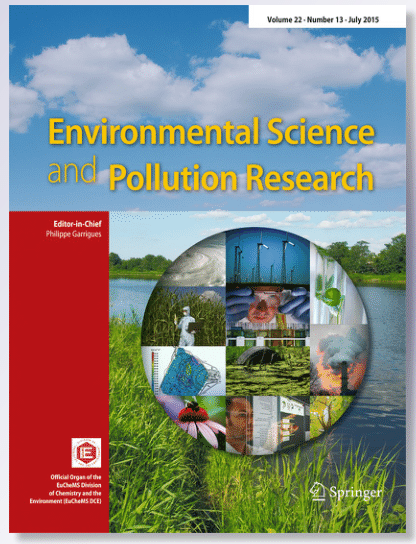
Environmental Science and Pollution Research (ESPR) serves the international community in all areas of Environmental Science and related subjects with emphasis on chemical compounds. This includes:
- Terrestrial Biology and Ecology
- Aquatic Biology and Ecology
- Atmospheric Chemistry
- Environmental Microbiology/Biobased Energy Sources
- Phytoremediation and Ecosystem Restoration
- Environmental Analyses and Monitoring
- Assessment of Risks and Interactions of Pollutants in the Environment
- Conservation Biology and Sustainable Agriculture
- Impact of Chemicals/Pollutants on Human and Animal Health
It reports from a broad interdisciplinary outlook.




 京公网安备 11010802042870号
京ICP备2023020795号-1
京公网安备 11010802042870号
京ICP备2023020795号-1

 分享
分享
 求助内容:
求助内容: 应助结果提醒方式:
 扫码关注我们
