{"title":"解离体验量表ⅱ的项目反应理论分析:日本成人心理测量特征和纵向稳定性的检验。","authors":"Tatsuya Ikeda, Yuhei Urano","doi":"10.1186/s12888-024-06465-w","DOIUrl":null,"url":null,"abstract":"<p><strong>Background: </strong>The Dissociative Experiences Scale (DES-II) is widely used globally. However, psychometric properties of the scale have not been adequately examined. The present study aimed to examine the psychometric properties and longitudinal stability of the DES-II.</p><p><strong>Method: </strong>We collected data at two time points, approximately three and a half years apart. At Time 1 (T1), 1029 participants (515 females, 514 males) with a mean age of 44.64 (± 14.02) responded to the survey. Out of the T1 participants, 210 individuals (105 females, 105 males) also responded to the T2 survey. We conducted item parameters of the DES-II with item response theory (IRT).</p><p><strong>Results: </strong>Our results showed that the DES-II is suitable for measuring strong dissociative traits, with all items displaying high discriminative power. The cut-off points for the DES-II were within a good range of measurement accuracy, and longitudinal stability over approximately three and a half years was adequate.</p><p><strong>Conclusion: </strong>In the present study, we applied item response theory (IRT) to the DES-II, which has traditionally been interpreted using classical test theory (CTT). Results suggested the need for item-focused assessment rather than relying solely on mean scores or cut-off points. Specifically, results suggested that the severity levels differed across item ratings, and to set cut-off points for each item based on the severity of the ratings. Furthermore, the possibility of cultural differences in response patterns of the DES-II was indicated. However, few studies have discussed cultural differences based on IRT; hence, further research should examine response patterns of the DES-II across various cultures. In conclusion, the DES-II is a valuable tool for assessing dissociative symptoms, with adequate psychometric properties from an item response theory perspective. Clinicians should consider item-specific responses in their assessments, and further research is needed to explore the scale's applicability across diverse populations.</p>","PeriodicalId":9029,"journal":{"name":"BMC Psychiatry","volume":"25 1","pages":"32"},"PeriodicalIF":3.4000,"publicationDate":"2025-01-09","publicationTypes":"Journal Article","fieldsOfStudy":null,"isOpenAccess":false,"openAccessPdf":"https://www.ncbi.nlm.nih.gov/pmc/articles/PMC11720897/pdf/","citationCount":"0","resultStr":"{\"title\":\"An item response theory analysis of the Dissociative Experiences Scale II: examining psychometric properties and longitudinal stability among Japanese adults.\",\"authors\":\"Tatsuya Ikeda, Yuhei Urano\",\"doi\":\"10.1186/s12888-024-06465-w\",\"DOIUrl\":null,\"url\":null,\"abstract\":\"<p><strong>Background: </strong>The Dissociative Experiences Scale (DES-II) is widely used globally. However, psychometric properties of the scale have not been adequately examined. The present study aimed to examine the psychometric properties and longitudinal stability of the DES-II.</p><p><strong>Method: </strong>We collected data at two time points, approximately three and a half years apart. At Time 1 (T1), 1029 participants (515 females, 514 males) with a mean age of 44.64 (± 14.02) responded to the survey. Out of the T1 participants, 210 individuals (105 females, 105 males) also responded to the T2 survey. We conducted item parameters of the DES-II with item response theory (IRT).</p><p><strong>Results: </strong>Our results showed that the DES-II is suitable for measuring strong dissociative traits, with all items displaying high discriminative power. The cut-off points for the DES-II were within a good range of measurement accuracy, and longitudinal stability over approximately three and a half years was adequate.</p><p><strong>Conclusion: </strong>In the present study, we applied item response theory (IRT) to the DES-II, which has traditionally been interpreted using classical test theory (CTT). Results suggested the need for item-focused assessment rather than relying solely on mean scores or cut-off points. Specifically, results suggested that the severity levels differed across item ratings, and to set cut-off points for each item based on the severity of the ratings. Furthermore, the possibility of cultural differences in response patterns of the DES-II was indicated. However, few studies have discussed cultural differences based on IRT; hence, further research should examine response patterns of the DES-II across various cultures. In conclusion, the DES-II is a valuable tool for assessing dissociative symptoms, with adequate psychometric properties from an item response theory perspective. Clinicians should consider item-specific responses in their assessments, and further research is needed to explore the scale's applicability across diverse populations.</p>\",\"PeriodicalId\":9029,\"journal\":{\"name\":\"BMC Psychiatry\",\"volume\":\"25 1\",\"pages\":\"32\"},\"PeriodicalIF\":3.4000,\"publicationDate\":\"2025-01-09\",\"publicationTypes\":\"Journal Article\",\"fieldsOfStudy\":null,\"isOpenAccess\":false,\"openAccessPdf\":\"https://www.ncbi.nlm.nih.gov/pmc/articles/PMC11720897/pdf/\",\"citationCount\":\"0\",\"resultStr\":null,\"platform\":\"Semanticscholar\",\"paperid\":null,\"PeriodicalName\":\"BMC Psychiatry\",\"FirstCategoryId\":\"3\",\"ListUrlMain\":\"https://doi.org/10.1186/s12888-024-06465-w\",\"RegionNum\":2,\"RegionCategory\":\"医学\",\"ArticlePicture\":[],\"TitleCN\":null,\"AbstractTextCN\":null,\"PMCID\":null,\"EPubDate\":\"\",\"PubModel\":\"\",\"JCR\":\"Q2\",\"JCRName\":\"PSYCHIATRY\",\"Score\":null,\"Total\":0}","platform":"Semanticscholar","paperid":null,"PeriodicalName":"BMC Psychiatry","FirstCategoryId":"3","ListUrlMain":"https://doi.org/10.1186/s12888-024-06465-w","RegionNum":2,"RegionCategory":"医学","ArticlePicture":[],"TitleCN":null,"AbstractTextCN":null,"PMCID":null,"EPubDate":"","PubModel":"","JCR":"Q2","JCRName":"PSYCHIATRY","Score":null,"Total":0}
An item response theory analysis of the Dissociative Experiences Scale II: examining psychometric properties and longitudinal stability among Japanese adults.
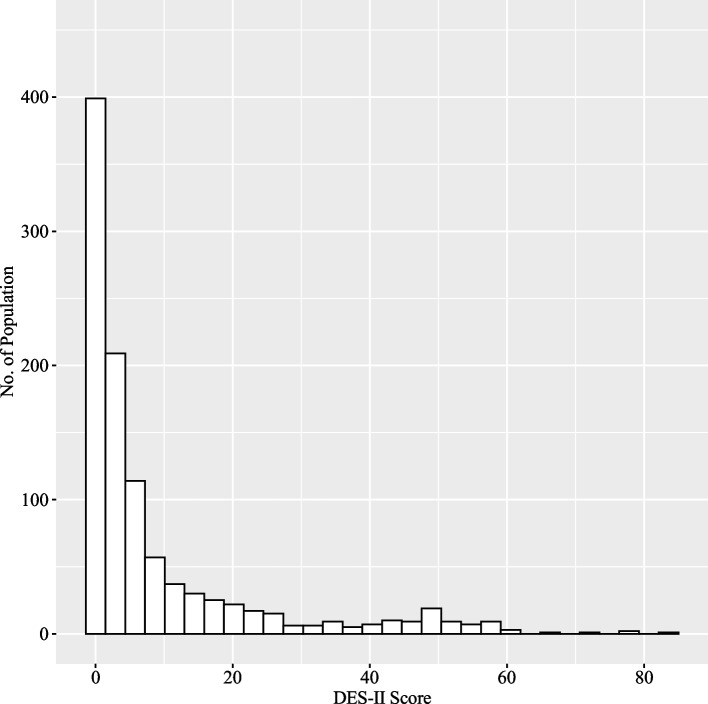
Background: The Dissociative Experiences Scale (DES-II) is widely used globally. However, psychometric properties of the scale have not been adequately examined. The present study aimed to examine the psychometric properties and longitudinal stability of the DES-II.
Method: We collected data at two time points, approximately three and a half years apart. At Time 1 (T1), 1029 participants (515 females, 514 males) with a mean age of 44.64 (± 14.02) responded to the survey. Out of the T1 participants, 210 individuals (105 females, 105 males) also responded to the T2 survey. We conducted item parameters of the DES-II with item response theory (IRT).
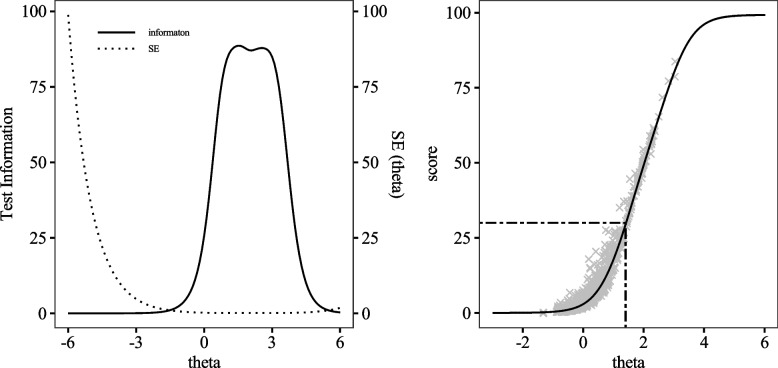
Results: Our results showed that the DES-II is suitable for measuring strong dissociative traits, with all items displaying high discriminative power. The cut-off points for the DES-II were within a good range of measurement accuracy, and longitudinal stability over approximately three and a half years was adequate.
Conclusion: In the present study, we applied item response theory (IRT) to the DES-II, which has traditionally been interpreted using classical test theory (CTT). Results suggested the need for item-focused assessment rather than relying solely on mean scores or cut-off points. Specifically, results suggested that the severity levels differed across item ratings, and to set cut-off points for each item based on the severity of the ratings. Furthermore, the possibility of cultural differences in response patterns of the DES-II was indicated. However, few studies have discussed cultural differences based on IRT; hence, further research should examine response patterns of the DES-II across various cultures. In conclusion, the DES-II is a valuable tool for assessing dissociative symptoms, with adequate psychometric properties from an item response theory perspective. Clinicians should consider item-specific responses in their assessments, and further research is needed to explore the scale's applicability across diverse populations.
期刊介绍:
BMC Psychiatry is an open access, peer-reviewed journal that considers articles on all aspects of the prevention, diagnosis and management of psychiatric disorders, as well as related molecular genetics, pathophysiology, and epidemiology.





 京公网安备 11010802042870号
京ICP备2023020795号-1
京公网安备 11010802042870号
京ICP备2023020795号-1

 分享
分享
 求助内容:
求助内容: 应助结果提醒方式:
 扫码关注我们
