{"title":"利用掺硼金刚石电极控制离子输运从CO2中连续生产甲酸","authors":"Sari Araki, Yasuaki Einaga","doi":"10.1021/acssuschemeng.4c06705","DOIUrl":null,"url":null,"abstract":"Boron-doped diamond (BDD) is an excellent functional electrode material used as a working electrode in the electrochemical reduction of CO<sub>2</sub>. Formic acid production with approximately 100% Faradaic efficiency has been achieved via CO<sub>2</sub> reduction using BDD electrodes. In this study, we investigated the production performance stability during long-term electrolysis by focusing on ion transport in the electrolyte during electrolysis. Initially, we investigated the behavior of potassium ions (K<sup>+</sup>) and pH during long-term electrolysis in detail. A relationship was observed between the change in ion concentrations and formic acid production, crucial in formic acid production. Based on this knowledge, we successfully achieved stable formic acid production for an extremely long time (1264 h) by controlling ion transport. In addition to utilizing the durability of BDD electrodes as stable electrode materials, controlling ion transport has paved the way for the industrialization of formic acid production via CO<sub>2</sub> reduction.","PeriodicalId":25,"journal":{"name":"ACS Sustainable Chemistry & Engineering","volume":"14 1","pages":""},"PeriodicalIF":7.6000,"publicationDate":"2025-01-10","publicationTypes":"Journal Article","fieldsOfStudy":null,"isOpenAccess":false,"openAccessPdf":"","citationCount":"0","resultStr":"{\"title\":\"Semipermanent Continuous Formic Acid Production from CO2 by Controlling Ion Transport Using Boron-Doped Diamond Electrodes\",\"authors\":\"Sari Araki, Yasuaki Einaga\",\"doi\":\"10.1021/acssuschemeng.4c06705\",\"DOIUrl\":null,\"url\":null,\"abstract\":\"Boron-doped diamond (BDD) is an excellent functional electrode material used as a working electrode in the electrochemical reduction of CO<sub>2</sub>. Formic acid production with approximately 100% Faradaic efficiency has been achieved via CO<sub>2</sub> reduction using BDD electrodes. In this study, we investigated the production performance stability during long-term electrolysis by focusing on ion transport in the electrolyte during electrolysis. Initially, we investigated the behavior of potassium ions (K<sup>+</sup>) and pH during long-term electrolysis in detail. A relationship was observed between the change in ion concentrations and formic acid production, crucial in formic acid production. Based on this knowledge, we successfully achieved stable formic acid production for an extremely long time (1264 h) by controlling ion transport. In addition to utilizing the durability of BDD electrodes as stable electrode materials, controlling ion transport has paved the way for the industrialization of formic acid production via CO<sub>2</sub> reduction.\",\"PeriodicalId\":25,\"journal\":{\"name\":\"ACS Sustainable Chemistry & Engineering\",\"volume\":\"14 1\",\"pages\":\"\"},\"PeriodicalIF\":7.6000,\"publicationDate\":\"2025-01-10\",\"publicationTypes\":\"Journal Article\",\"fieldsOfStudy\":null,\"isOpenAccess\":false,\"openAccessPdf\":\"\",\"citationCount\":\"0\",\"resultStr\":null,\"platform\":\"Semanticscholar\",\"paperid\":null,\"PeriodicalName\":\"ACS Sustainable Chemistry & Engineering\",\"FirstCategoryId\":\"92\",\"ListUrlMain\":\"https://doi.org/10.1021/acssuschemeng.4c06705\",\"RegionNum\":1,\"RegionCategory\":\"化学\",\"ArticlePicture\":[],\"TitleCN\":null,\"AbstractTextCN\":null,\"PMCID\":null,\"EPubDate\":\"\",\"PubModel\":\"\",\"JCR\":\"Q1\",\"JCRName\":\"CHEMISTRY, MULTIDISCIPLINARY\",\"Score\":null,\"Total\":0}","platform":"Semanticscholar","paperid":null,"PeriodicalName":"ACS Sustainable Chemistry & Engineering","FirstCategoryId":"92","ListUrlMain":"https://doi.org/10.1021/acssuschemeng.4c06705","RegionNum":1,"RegionCategory":"化学","ArticlePicture":[],"TitleCN":null,"AbstractTextCN":null,"PMCID":null,"EPubDate":"","PubModel":"","JCR":"Q1","JCRName":"CHEMISTRY, MULTIDISCIPLINARY","Score":null,"Total":0}
Semipermanent Continuous Formic Acid Production from CO2 by Controlling Ion Transport Using Boron-Doped Diamond Electrodes
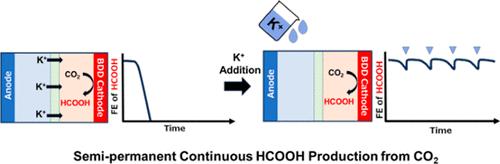
Boron-doped diamond (BDD) is an excellent functional electrode material used as a working electrode in the electrochemical reduction of CO2. Formic acid production with approximately 100% Faradaic efficiency has been achieved via CO2 reduction using BDD electrodes. In this study, we investigated the production performance stability during long-term electrolysis by focusing on ion transport in the electrolyte during electrolysis. Initially, we investigated the behavior of potassium ions (K+) and pH during long-term electrolysis in detail. A relationship was observed between the change in ion concentrations and formic acid production, crucial in formic acid production. Based on this knowledge, we successfully achieved stable formic acid production for an extremely long time (1264 h) by controlling ion transport. In addition to utilizing the durability of BDD electrodes as stable electrode materials, controlling ion transport has paved the way for the industrialization of formic acid production via CO2 reduction.
期刊介绍:
ACS Sustainable Chemistry & Engineering is a prestigious weekly peer-reviewed scientific journal published by the American Chemical Society. Dedicated to advancing the principles of green chemistry and green engineering, it covers a wide array of research topics including green chemistry, green engineering, biomass, alternative energy, and life cycle assessment.
The journal welcomes submissions in various formats, including Letters, Articles, Features, and Perspectives (Reviews), that address the challenges of sustainability in the chemical enterprise and contribute to the advancement of sustainable practices. Join us in shaping the future of sustainable chemistry and engineering.




 京公网安备 11010802042870号
京ICP备2023020795号-1
京公网安备 11010802042870号
京ICP备2023020795号-1

 分享
分享
 求助内容:
求助内容: 应助结果提醒方式:
 扫码关注我们
