{"title":"预切乳头状切开术与超声引导下胆道交会术治疗恶性胆道远端梗阻困难的随机比较。","authors":"Vinay Dhir, Vivek Kumar Singh, Ankit Dalal, Gaurav Kumar Patil, Amit Maydeo","doi":"10.1055/a-2515-1712","DOIUrl":null,"url":null,"abstract":"<p><strong>Background: </strong>Difficult biliary cannulation (DBC) is a marker for prolonged procedure time and a higher rate of adverse events (AEs) during endoscopic retrograde cholangiopancreatography (ERCP). We previously showed that endoscopic ultrasound-assisted rendezvous (EUS-RV) procedures had a higher single-session success rate than precut papillotomy (PCP) in cases of DBC. The present randomized study aimed to compare the technical success and AE rates of the two approaches.</p><p><strong>Methods: </strong>This was an open-label randomized controlled trial in a tertiary care setting. Patients with malignant distal biliary obstruction (MDBO) and DBC were enrolled. The patients were randomized to PCP with a needle-knife or EUS-RV. The primary outcome was technical success; secondary outcomes were the AE rate, procedure duration, and length of hospital stay (LOS).</p><p><strong>Results: </strong>208 patients were enrolled, 104 in each group. There were no statistically significant differences in technical success (93.3% PCP vs. 97.1% EUS-RV; P = 0.33; odds ratio [OR] 0.4, 95%CI 0.1–1.6) and overall AE rate (11.5% PCP vs. 5.8% EUS-RV; P=0.14; OR 0.5, 95%CI 0.8–5.9). Pancreatitis was higher in the PCP group (8.7% vs. 1.9%; P=0.06; OR 4.8, 95%CI 1.0–22.9). The mean duration of the procedure was significantly higher for EUS-RV (47 vs. 27 minutes; P<0.001). LOS was similar in the two groups (1.2 PCP vs. 1.1 days EUS-RV; P=0.25).</p><p><strong>Conclusion: </strong>Both PCP and EUS-RV have comparable rates of success, AEs, mortality, and LOS. EUS-RV could be used as an alternative to PCP in patients with MDBO and DBC.</p>","PeriodicalId":11516,"journal":{"name":"Endoscopy","volume":" ","pages":"1077-1084"},"PeriodicalIF":11.8000,"publicationDate":"2025-10-01","publicationTypes":"Journal Article","fieldsOfStudy":null,"isOpenAccess":false,"openAccessPdf":"","citationCount":"0","resultStr":"{\"title\":\"Randomized comparison of precut papillotomy versus an endoscopic ultrasound-guided rendezvous procedure for difficult biliary access in malignant distal biliary obstruction.\",\"authors\":\"Vinay Dhir, Vivek Kumar Singh, Ankit Dalal, Gaurav Kumar Patil, Amit Maydeo\",\"doi\":\"10.1055/a-2515-1712\",\"DOIUrl\":null,\"url\":null,\"abstract\":\"<p><strong>Background: </strong>Difficult biliary cannulation (DBC) is a marker for prolonged procedure time and a higher rate of adverse events (AEs) during endoscopic retrograde cholangiopancreatography (ERCP). We previously showed that endoscopic ultrasound-assisted rendezvous (EUS-RV) procedures had a higher single-session success rate than precut papillotomy (PCP) in cases of DBC. The present randomized study aimed to compare the technical success and AE rates of the two approaches.</p><p><strong>Methods: </strong>This was an open-label randomized controlled trial in a tertiary care setting. Patients with malignant distal biliary obstruction (MDBO) and DBC were enrolled. The patients were randomized to PCP with a needle-knife or EUS-RV. The primary outcome was technical success; secondary outcomes were the AE rate, procedure duration, and length of hospital stay (LOS).</p><p><strong>Results: </strong>208 patients were enrolled, 104 in each group. There were no statistically significant differences in technical success (93.3% PCP vs. 97.1% EUS-RV; P = 0.33; odds ratio [OR] 0.4, 95%CI 0.1–1.6) and overall AE rate (11.5% PCP vs. 5.8% EUS-RV; P=0.14; OR 0.5, 95%CI 0.8–5.9). Pancreatitis was higher in the PCP group (8.7% vs. 1.9%; P=0.06; OR 4.8, 95%CI 1.0–22.9). The mean duration of the procedure was significantly higher for EUS-RV (47 vs. 27 minutes; P<0.001). LOS was similar in the two groups (1.2 PCP vs. 1.1 days EUS-RV; P=0.25).</p><p><strong>Conclusion: </strong>Both PCP and EUS-RV have comparable rates of success, AEs, mortality, and LOS. EUS-RV could be used as an alternative to PCP in patients with MDBO and DBC.</p>\",\"PeriodicalId\":11516,\"journal\":{\"name\":\"Endoscopy\",\"volume\":\" \",\"pages\":\"1077-1084\"},\"PeriodicalIF\":11.8000,\"publicationDate\":\"2025-10-01\",\"publicationTypes\":\"Journal Article\",\"fieldsOfStudy\":null,\"isOpenAccess\":false,\"openAccessPdf\":\"\",\"citationCount\":\"0\",\"resultStr\":null,\"platform\":\"Semanticscholar\",\"paperid\":null,\"PeriodicalName\":\"Endoscopy\",\"FirstCategoryId\":\"3\",\"ListUrlMain\":\"https://doi.org/10.1055/a-2515-1712\",\"RegionNum\":1,\"RegionCategory\":\"医学\",\"ArticlePicture\":[],\"TitleCN\":null,\"AbstractTextCN\":null,\"PMCID\":null,\"EPubDate\":\"2025/1/12 0:00:00\",\"PubModel\":\"Epub\",\"JCR\":\"Q1\",\"JCRName\":\"GASTROENTEROLOGY & HEPATOLOGY\",\"Score\":null,\"Total\":0}","platform":"Semanticscholar","paperid":null,"PeriodicalName":"Endoscopy","FirstCategoryId":"3","ListUrlMain":"https://doi.org/10.1055/a-2515-1712","RegionNum":1,"RegionCategory":"医学","ArticlePicture":[],"TitleCN":null,"AbstractTextCN":null,"PMCID":null,"EPubDate":"2025/1/12 0:00:00","PubModel":"Epub","JCR":"Q1","JCRName":"GASTROENTEROLOGY & HEPATOLOGY","Score":null,"Total":0}
引用次数: 0
摘要
背景和目的:胆道插管困难(DBC)是内镜逆行胆管造影(ERCP)手术时间延长和不良事件发生率(AER)增加的标志。我们之前的研究表明,在DBC患者中,eus引导的会合手术(EUS-RV)比预切乳头切开术(PcP)有更高的单次成功率。本随机研究旨在比较两种方法的技术成功率和AER。方法:这是一项三级医疗机构的开放标签随机对照试验。纳入了恶性远端胆道梗阻和DBC的患者。患者随机分为针刀PcP组和EUS-RV组。主要结果是技术成功,次要结果是AER、手术时间和住院时间(LOS)。结果:共入组208例,每组104例。技术成功率(93.27% PcP vs 97.12% EUS-RV, p=0.33, 95%CI: 0.104-1.63)和总体AER (11.54% PcP vs 5.77% EUS-RV, p=0.14, 95%CI: 0.77-5.91)差异无统计学意义。PcP组胰腺炎发生率较高(8.65% vs 1.92%, p=0.058, OR= 4.83, 95%CI: 1.02-22.93)。EUS-RV的平均手术时间明显更长(47.15分钟vs 27.17分钟)。结论:PcP和EUS-RV的成功率、AER、死亡率和LOS相当。EUS - RV可作为恶性胆道远端梗阻和DBC患者PcP的替代方案。
Randomized comparison of precut papillotomy versus an endoscopic ultrasound-guided rendezvous procedure for difficult biliary access in malignant distal biliary obstruction.
Background: Difficult biliary cannulation (DBC) is a marker for prolonged procedure time and a higher rate of adverse events (AEs) during endoscopic retrograde cholangiopancreatography (ERCP). We previously showed that endoscopic ultrasound-assisted rendezvous (EUS-RV) procedures had a higher single-session success rate than precut papillotomy (PCP) in cases of DBC. The present randomized study aimed to compare the technical success and AE rates of the two approaches.
Methods: This was an open-label randomized controlled trial in a tertiary care setting. Patients with malignant distal biliary obstruction (MDBO) and DBC were enrolled. The patients were randomized to PCP with a needle-knife or EUS-RV. The primary outcome was technical success; secondary outcomes were the AE rate, procedure duration, and length of hospital stay (LOS).
Results: 208 patients were enrolled, 104 in each group. There were no statistically significant differences in technical success (93.3% PCP vs. 97.1% EUS-RV; P = 0.33; odds ratio [OR] 0.4, 95%CI 0.1–1.6) and overall AE rate (11.5% PCP vs. 5.8% EUS-RV; P=0.14; OR 0.5, 95%CI 0.8–5.9). Pancreatitis was higher in the PCP group (8.7% vs. 1.9%; P=0.06; OR 4.8, 95%CI 1.0–22.9). The mean duration of the procedure was significantly higher for EUS-RV (47 vs. 27 minutes; P<0.001). LOS was similar in the two groups (1.2 PCP vs. 1.1 days EUS-RV; P=0.25).
Conclusion: Both PCP and EUS-RV have comparable rates of success, AEs, mortality, and LOS. EUS-RV could be used as an alternative to PCP in patients with MDBO and DBC.
期刊介绍:
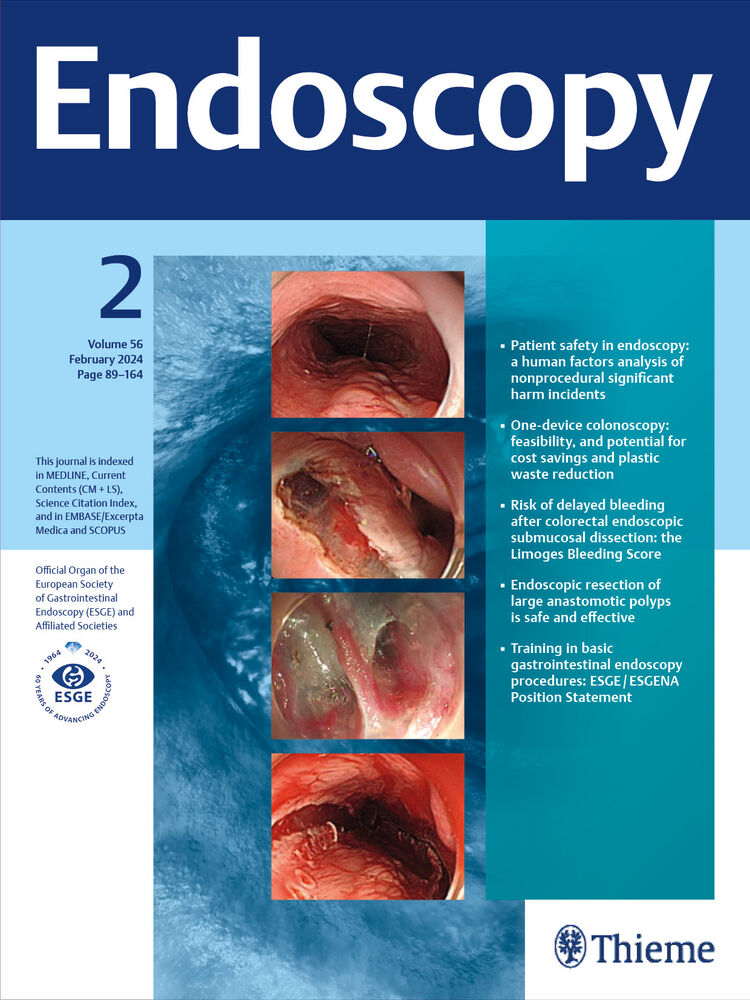
Endoscopy is a leading journal covering the latest technologies and global advancements in gastrointestinal endoscopy. With guidance from an international editorial board, it delivers high-quality content catering to the needs of endoscopists, surgeons, clinicians, and researchers worldwide. Publishing 12 issues each year, Endoscopy offers top-quality review articles, original contributions, prospective studies, surveys of diagnostic and therapeutic advances, and comprehensive coverage of key national and international meetings. Additionally, articles often include supplementary online video content.




 京公网安备 11010802042870号
京ICP备2023020795号-1
京公网安备 11010802042870号
京ICP备2023020795号-1

 分享
分享
 求助内容:
求助内容: 应助结果提醒方式:
 扫码关注我们
