Samantha Boggs , James Dayre McNally , Katie O’Hearn , Michael Del Bel , Jennifer Armstrong , Dennis Newhook , Anna-Theresa Lobos
{"title":"向外行人教授高质量儿科基础生命支持:虚拟模拟游戏的开发与评价。","authors":"Samantha Boggs , James Dayre McNally , Katie O’Hearn , Michael Del Bel , Jennifer Armstrong , Dennis Newhook , Anna-Theresa Lobos","doi":"10.1016/j.resplu.2024.100824","DOIUrl":null,"url":null,"abstract":"<div><h3>Background</h3><div>Self-directed training has been recognized as a reasonable alternative to traditional instructor-led formats to teach laypeople Basic Life Support (BLS). Virtual tools can facilitate high-quality self-directed resuscitation education; however, their role in teaching paediatric BLS remains unclear due to limited empiric evaluation and suboptimal design of existing tools.</div></div><div><h3>Aim</h3><div>We describe the development and evaluation of a virtual simulation game (VSG) designed to teach high-quality paediatric BLS using a self-directed, online format with integrated deliberate practice and feedback.</div></div><div><h3>Methods</h3><div>We conducted a pilot prospective single-arm cohort study examining the VSG’s impact on laypeople’s paediatric BLS self-efficacy, attitudes, and knowledge as well as learner reactions. Data was collected using online surveys immediately after VSG completion and was analysed using descriptive statistics.</div></div><div><h3>Results</h3><div>Fifty-five participants (median age 32 years, 76% female, 11% active certification in paediatric BLS) evaluated the VSG. Participants reported high self-efficacy, willingness to perform paediatric BLS, and high perceived knowledge after VSG completion. Fifty (91%) achieved a passing score (≥13/15) on the paediatric BLS knowledge assessment. Learner reactions were favourable with 98% of participants agreeing that VSG educational content was clear and helpful. Mean System Usability Scale score was 81.1 (standard deviation 12.6) with a Net Promoter Score of 32 indicating high levels of usability and likelihood to recommend to others.</div></div><div><h3>Conclusions</h3><div>The VSG was well-received by laypeople with positive effects observed on paediatric BLS self-efficacy, attitudes, and knowledge. Future studies should examine the impact of VSGs on skill performance through standalone or blended learning approaches.</div></div>","PeriodicalId":94192,"journal":{"name":"Resuscitation plus","volume":"21 ","pages":"Article 100824"},"PeriodicalIF":3.1000,"publicationDate":"2025-01-01","publicationTypes":"Journal Article","fieldsOfStudy":null,"isOpenAccess":false,"openAccessPdf":"https://www.ncbi.nlm.nih.gov/pmc/articles/PMC11728990/pdf/","citationCount":"0","resultStr":"{\"title\":\"Teaching high quality paediatric basic life support to laypeople: The development and evaluation of a virtual simulation game\",\"authors\":\"Samantha Boggs , James Dayre McNally , Katie O’Hearn , Michael Del Bel , Jennifer Armstrong , Dennis Newhook , Anna-Theresa Lobos\",\"doi\":\"10.1016/j.resplu.2024.100824\",\"DOIUrl\":null,\"url\":null,\"abstract\":\"<div><h3>Background</h3><div>Self-directed training has been recognized as a reasonable alternative to traditional instructor-led formats to teach laypeople Basic Life Support (BLS). Virtual tools can facilitate high-quality self-directed resuscitation education; however, their role in teaching paediatric BLS remains unclear due to limited empiric evaluation and suboptimal design of existing tools.</div></div><div><h3>Aim</h3><div>We describe the development and evaluation of a virtual simulation game (VSG) designed to teach high-quality paediatric BLS using a self-directed, online format with integrated deliberate practice and feedback.</div></div><div><h3>Methods</h3><div>We conducted a pilot prospective single-arm cohort study examining the VSG’s impact on laypeople’s paediatric BLS self-efficacy, attitudes, and knowledge as well as learner reactions. Data was collected using online surveys immediately after VSG completion and was analysed using descriptive statistics.</div></div><div><h3>Results</h3><div>Fifty-five participants (median age 32 years, 76% female, 11% active certification in paediatric BLS) evaluated the VSG. Participants reported high self-efficacy, willingness to perform paediatric BLS, and high perceived knowledge after VSG completion. Fifty (91%) achieved a passing score (≥13/15) on the paediatric BLS knowledge assessment. Learner reactions were favourable with 98% of participants agreeing that VSG educational content was clear and helpful. Mean System Usability Scale score was 81.1 (standard deviation 12.6) with a Net Promoter Score of 32 indicating high levels of usability and likelihood to recommend to others.</div></div><div><h3>Conclusions</h3><div>The VSG was well-received by laypeople with positive effects observed on paediatric BLS self-efficacy, attitudes, and knowledge. Future studies should examine the impact of VSGs on skill performance through standalone or blended learning approaches.</div></div>\",\"PeriodicalId\":94192,\"journal\":{\"name\":\"Resuscitation plus\",\"volume\":\"21 \",\"pages\":\"Article 100824\"},\"PeriodicalIF\":3.1000,\"publicationDate\":\"2025-01-01\",\"publicationTypes\":\"Journal Article\",\"fieldsOfStudy\":null,\"isOpenAccess\":false,\"openAccessPdf\":\"https://www.ncbi.nlm.nih.gov/pmc/articles/PMC11728990/pdf/\",\"citationCount\":\"0\",\"resultStr\":null,\"platform\":\"Semanticscholar\",\"paperid\":null,\"PeriodicalName\":\"Resuscitation plus\",\"FirstCategoryId\":\"1085\",\"ListUrlMain\":\"https://www.sciencedirect.com/science/article/pii/S2666520424002753\",\"RegionNum\":0,\"RegionCategory\":null,\"ArticlePicture\":[],\"TitleCN\":null,\"AbstractTextCN\":null,\"PMCID\":null,\"EPubDate\":\"2024/12/19 0:00:00\",\"PubModel\":\"Epub\",\"JCR\":\"Q3\",\"JCRName\":\"CRITICAL CARE MEDICINE\",\"Score\":null,\"Total\":0}","platform":"Semanticscholar","paperid":null,"PeriodicalName":"Resuscitation plus","FirstCategoryId":"1085","ListUrlMain":"https://www.sciencedirect.com/science/article/pii/S2666520424002753","RegionNum":0,"RegionCategory":null,"ArticlePicture":[],"TitleCN":null,"AbstractTextCN":null,"PMCID":null,"EPubDate":"2024/12/19 0:00:00","PubModel":"Epub","JCR":"Q3","JCRName":"CRITICAL CARE MEDICINE","Score":null,"Total":0}
Teaching high quality paediatric basic life support to laypeople: The development and evaluation of a virtual simulation game
Background
Self-directed training has been recognized as a reasonable alternative to traditional instructor-led formats to teach laypeople Basic Life Support (BLS). Virtual tools can facilitate high-quality self-directed resuscitation education; however, their role in teaching paediatric BLS remains unclear due to limited empiric evaluation and suboptimal design of existing tools.
Aim
We describe the development and evaluation of a virtual simulation game (VSG) designed to teach high-quality paediatric BLS using a self-directed, online format with integrated deliberate practice and feedback.
Methods
We conducted a pilot prospective single-arm cohort study examining the VSG’s impact on laypeople’s paediatric BLS self-efficacy, attitudes, and knowledge as well as learner reactions. Data was collected using online surveys immediately after VSG completion and was analysed using descriptive statistics.
Results
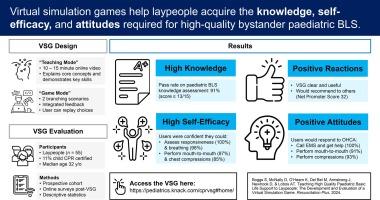
Fifty-five participants (median age 32 years, 76% female, 11% active certification in paediatric BLS) evaluated the VSG. Participants reported high self-efficacy, willingness to perform paediatric BLS, and high perceived knowledge after VSG completion. Fifty (91%) achieved a passing score (≥13/15) on the paediatric BLS knowledge assessment. Learner reactions were favourable with 98% of participants agreeing that VSG educational content was clear and helpful. Mean System Usability Scale score was 81.1 (standard deviation 12.6) with a Net Promoter Score of 32 indicating high levels of usability and likelihood to recommend to others.
Conclusions
The VSG was well-received by laypeople with positive effects observed on paediatric BLS self-efficacy, attitudes, and knowledge. Future studies should examine the impact of VSGs on skill performance through standalone or blended learning approaches.





 京公网安备 11010802042870号
京ICP备2023020795号-1
京公网安备 11010802042870号
京ICP备2023020795号-1

 分享
分享
 求助内容:
求助内容: 应助结果提醒方式:
 扫码关注我们
