{"title":"安非他酮与阿立哌唑增强治疗成人难治性抑郁症的疗效和安全性比较:韩国一项全国性队列研究","authors":"Dong Yun Lee, Rae Woong Park, Soo Min Jeon","doi":"10.1192/j.eurpsy.2024.1815","DOIUrl":null,"url":null,"abstract":"<p><strong>Background: </strong>Treatment-resistant depression (TRD) affects 10-30% of patients with major depressive disorder, leading to increased comorbidities, higher mortality, and significant economic and social burdens. This study aimed to compare the efficacy and safety of bupropion and aripiprazole as augmentation therapies for TRD.</p><p><strong>Methods: </strong>This population-based, retrospective cohort study included adults aged ≥18 years with a diagnosis of depressive disorder who met the criteria for TRD. Data were collected from a nationwide claims database in South Korea. Patients prescribed bupropion were matched 1:1 with those prescribed aripiprazole. Subgroup analyses were performed according to age. An as-treated analysis was performed as the primary analysis, and an intention-to-treat analysis was performed to identify different risk windows. The primary outcome was depression-related hospitalization, and the secondary outcomes were first-time diagnoses of movement disorder and seizure.</p><p><strong>Results: </strong>A total of 5,619 patients (bupropion: <i>n</i> = 1,568; aripiprazole: <i>n</i> = 4,051) were included in this study. Bupropion was associated with lower risks of hospitalization (hazard ratio [HR]: 0.51; 95% confidence interval [CI] 0.29-0.86) and movement disorders (HR: 0.56; 95% CI 0.36-0.85) than aripiprazole. No significant difference in seizure risk (HR: 0.65; 95% CI 0.30-1.31) was observed between the two treatments. The subgroup analysis of participants aged ≥60 years revealed no significant differences in the three outcomes between the two medications.</p><p><strong>Conclusions: </strong>Bupropion augmentation is associated with a significantly lower risk of depression-related re-hospitalization and movement disorders in patients with TRD. Therefore, bupropion augmentation can be a comprehensive treatment strategy for TRD.</p>","PeriodicalId":12155,"journal":{"name":"European Psychiatry","volume":" ","pages":"e22"},"PeriodicalIF":7.9000,"publicationDate":"2025-01-17","publicationTypes":"Journal Article","fieldsOfStudy":null,"isOpenAccess":false,"openAccessPdf":"https://www.ncbi.nlm.nih.gov/pmc/articles/PMC11823002/pdf/","citationCount":"0","resultStr":"{\"title\":\"Comparison of the efficacy and safety of bupropion versus aripiprazole augmentation in adults with treatment-resistant depression: a nationwide cohort study in South Korea.\",\"authors\":\"Dong Yun Lee, Rae Woong Park, Soo Min Jeon\",\"doi\":\"10.1192/j.eurpsy.2024.1815\",\"DOIUrl\":null,\"url\":null,\"abstract\":\"<p><strong>Background: </strong>Treatment-resistant depression (TRD) affects 10-30% of patients with major depressive disorder, leading to increased comorbidities, higher mortality, and significant economic and social burdens. This study aimed to compare the efficacy and safety of bupropion and aripiprazole as augmentation therapies for TRD.</p><p><strong>Methods: </strong>This population-based, retrospective cohort study included adults aged ≥18 years with a diagnosis of depressive disorder who met the criteria for TRD. Data were collected from a nationwide claims database in South Korea. Patients prescribed bupropion were matched 1:1 with those prescribed aripiprazole. Subgroup analyses were performed according to age. An as-treated analysis was performed as the primary analysis, and an intention-to-treat analysis was performed to identify different risk windows. The primary outcome was depression-related hospitalization, and the secondary outcomes were first-time diagnoses of movement disorder and seizure.</p><p><strong>Results: </strong>A total of 5,619 patients (bupropion: <i>n</i> = 1,568; aripiprazole: <i>n</i> = 4,051) were included in this study. Bupropion was associated with lower risks of hospitalization (hazard ratio [HR]: 0.51; 95% confidence interval [CI] 0.29-0.86) and movement disorders (HR: 0.56; 95% CI 0.36-0.85) than aripiprazole. No significant difference in seizure risk (HR: 0.65; 95% CI 0.30-1.31) was observed between the two treatments. The subgroup analysis of participants aged ≥60 years revealed no significant differences in the three outcomes between the two medications.</p><p><strong>Conclusions: </strong>Bupropion augmentation is associated with a significantly lower risk of depression-related re-hospitalization and movement disorders in patients with TRD. Therefore, bupropion augmentation can be a comprehensive treatment strategy for TRD.</p>\",\"PeriodicalId\":12155,\"journal\":{\"name\":\"European Psychiatry\",\"volume\":\" \",\"pages\":\"e22\"},\"PeriodicalIF\":7.9000,\"publicationDate\":\"2025-01-17\",\"publicationTypes\":\"Journal Article\",\"fieldsOfStudy\":null,\"isOpenAccess\":false,\"openAccessPdf\":\"https://www.ncbi.nlm.nih.gov/pmc/articles/PMC11823002/pdf/\",\"citationCount\":\"0\",\"resultStr\":null,\"platform\":\"Semanticscholar\",\"paperid\":null,\"PeriodicalName\":\"European Psychiatry\",\"FirstCategoryId\":\"3\",\"ListUrlMain\":\"https://doi.org/10.1192/j.eurpsy.2024.1815\",\"RegionNum\":2,\"RegionCategory\":\"医学\",\"ArticlePicture\":[],\"TitleCN\":null,\"AbstractTextCN\":null,\"PMCID\":null,\"EPubDate\":\"\",\"PubModel\":\"\",\"JCR\":\"Q1\",\"JCRName\":\"PSYCHIATRY\",\"Score\":null,\"Total\":0}","platform":"Semanticscholar","paperid":null,"PeriodicalName":"European Psychiatry","FirstCategoryId":"3","ListUrlMain":"https://doi.org/10.1192/j.eurpsy.2024.1815","RegionNum":2,"RegionCategory":"医学","ArticlePicture":[],"TitleCN":null,"AbstractTextCN":null,"PMCID":null,"EPubDate":"","PubModel":"","JCR":"Q1","JCRName":"PSYCHIATRY","Score":null,"Total":0}
引用次数: 0
摘要
背景:难治性抑郁症(TRD)影响10-30%的重度抑郁症患者,导致合并症增加、死亡率升高以及显著的经济和社会负担。本研究旨在比较安非他酮和阿立哌唑作为TRD辅助治疗的疗效和安全性。方法:这项以人群为基础的回顾性队列研究纳入了年龄≥18岁、诊断为抑郁症且符合TRD标准的成年人。数据是从韩国全国索赔数据库中收集的。服用安非他酮的患者与服用阿立哌唑的患者比例为1:1。按年龄进行亚组分析。进行治疗前分析作为主要分析,并进行意向治疗分析以确定不同的风险窗口。主要结局是与抑郁症相关的住院治疗,次要结局是首次诊断出运动障碍和癫痫发作。结果:共5619例患者(安非他酮:n = 1568;阿立哌唑(n = 4051)纳入本研究。安非他酮与较低的住院风险相关(危险比[HR]: 0.51;95%可信区间[CI] 0.29-0.86)和运动障碍(HR: 0.56;95% CI 0.36-0.85)优于阿立哌唑。癫痫发作风险无显著差异(HR: 0.65;95% CI 0.30-1.31)。年龄≥60岁受试者的亚组分析显示,两种药物的三个结局无显著差异。结论:安非他酮增强与TRD患者抑郁相关的再住院和运动障碍的风险显著降低相关。因此,安非他酮强化治疗可作为TRD的综合治疗策略。
Comparison of the efficacy and safety of bupropion versus aripiprazole augmentation in adults with treatment-resistant depression: a nationwide cohort study in South Korea.
Background: Treatment-resistant depression (TRD) affects 10-30% of patients with major depressive disorder, leading to increased comorbidities, higher mortality, and significant economic and social burdens. This study aimed to compare the efficacy and safety of bupropion and aripiprazole as augmentation therapies for TRD.
Methods: This population-based, retrospective cohort study included adults aged ≥18 years with a diagnosis of depressive disorder who met the criteria for TRD. Data were collected from a nationwide claims database in South Korea. Patients prescribed bupropion were matched 1:1 with those prescribed aripiprazole. Subgroup analyses were performed according to age. An as-treated analysis was performed as the primary analysis, and an intention-to-treat analysis was performed to identify different risk windows. The primary outcome was depression-related hospitalization, and the secondary outcomes were first-time diagnoses of movement disorder and seizure.
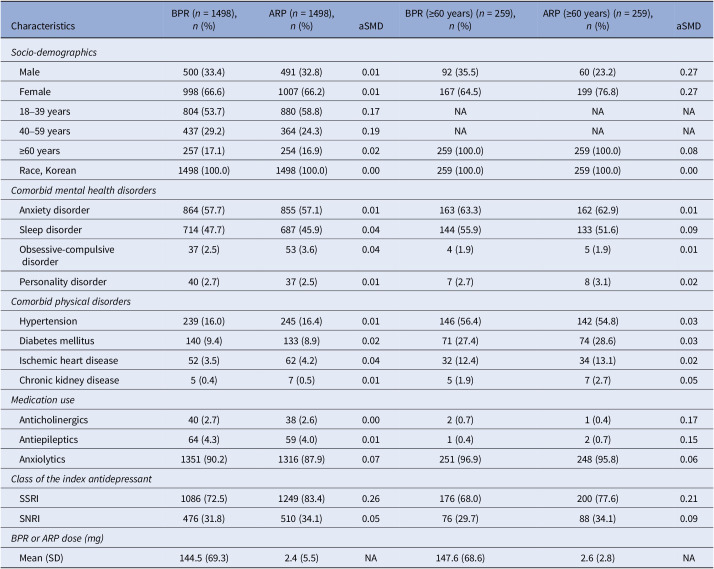
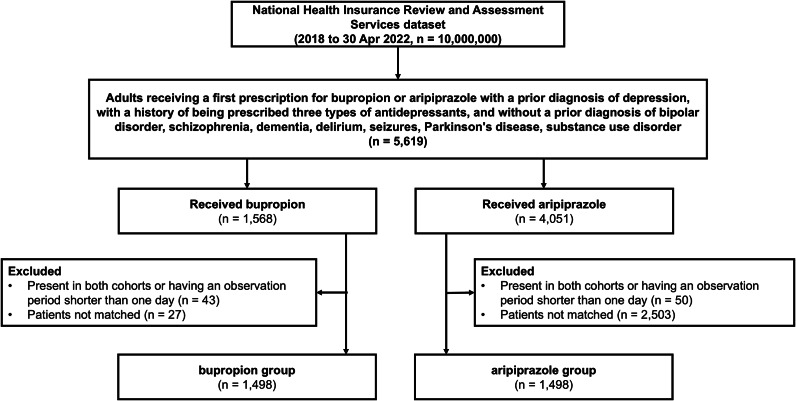
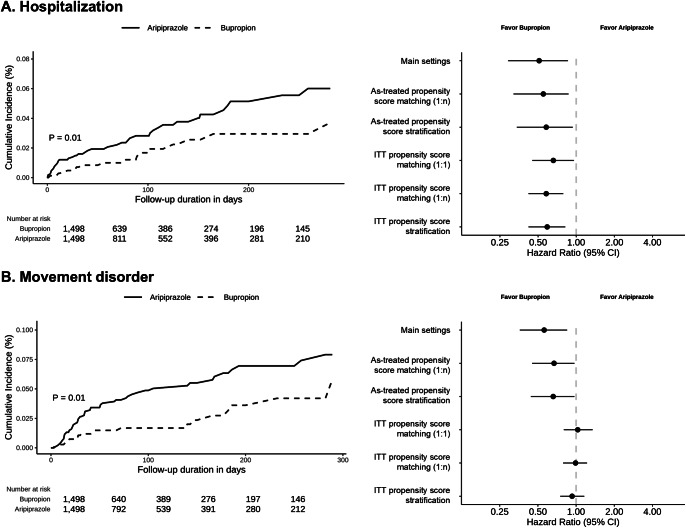
Results: A total of 5,619 patients (bupropion: n = 1,568; aripiprazole: n = 4,051) were included in this study. Bupropion was associated with lower risks of hospitalization (hazard ratio [HR]: 0.51; 95% confidence interval [CI] 0.29-0.86) and movement disorders (HR: 0.56; 95% CI 0.36-0.85) than aripiprazole. No significant difference in seizure risk (HR: 0.65; 95% CI 0.30-1.31) was observed between the two treatments. The subgroup analysis of participants aged ≥60 years revealed no significant differences in the three outcomes between the two medications.
Conclusions: Bupropion augmentation is associated with a significantly lower risk of depression-related re-hospitalization and movement disorders in patients with TRD. Therefore, bupropion augmentation can be a comprehensive treatment strategy for TRD.
期刊介绍:
European Psychiatry, the official journal of the European Psychiatric Association, is dedicated to sharing cutting-edge research, policy updates, and fostering dialogue among clinicians, researchers, and patient advocates in the fields of psychiatry, mental health, behavioral science, and neuroscience. This peer-reviewed, Open Access journal strives to publish the latest advancements across various mental health issues, including diagnostic and treatment breakthroughs, as well as advancements in understanding the biological foundations of mental, behavioral, and cognitive functions in both clinical and general population studies.




 京公网安备 11010802042870号
京ICP备2023020795号-1
京公网安备 11010802042870号
京ICP备2023020795号-1

 分享
分享
 求助内容:
求助内容: 应助结果提醒方式:
 扫码关注我们
