Mayssan Muftah MD, MPH , Davis A. Hartnett MD , Brent Hiramoto MD, MPH , Ryan Leung MBBS , Ryan Flanagan MD, MPH , Jennifer X. Cai MD, MPH , Wai-Kit Lo MD, MPH , Walter W. Chan MD, MPH
{"title":"食管活检对嗜酸性粒细胞性食管炎的诊断价值。","authors":"Mayssan Muftah MD, MPH , Davis A. Hartnett MD , Brent Hiramoto MD, MPH , Ryan Leung MBBS , Ryan Flanagan MD, MPH , Jennifer X. Cai MD, MPH , Wai-Kit Lo MD, MPH , Walter W. Chan MD, MPH","doi":"10.1016/j.gie.2025.01.018","DOIUrl":null,"url":null,"abstract":"<div><h3>Background and Aims</h3><div>The pattern of inflammation in eosinophilic esophagitis (EoE) is patchy, necessitating multiple biopsies to optimize diagnostic yield. Current consensus-based guidelines recommend 6 total biopsy samples at 2 sites, distal and either middle or proximal esophagus, although this recommendation is based on limited data. We aimed to determine whether this biopsy protocol sufficiently captures EoE diagnoses by evaluating the distribution of eosinophilia in a large EoE cohort.</div></div><div><h3>Methods</h3><div>This was a retrospective study of consecutive patients newly diagnosed with EoE with ≥2 esophageal segments biopsied. Demographic variables, clinical characteristics/history, endoscopic findings, and histologic results were manually reviewed. Distribution (proximal, middle, and/or distal) of eosinophilia (>15 eosinophils/high-power field [HPF]) was assessed. Predictors for non-distal disease (<15 eosinophils/HPF on distal biopsy samples) were evaluated by using multivariable logistic regression.</div></div><div><h3>Results</h3><div>A total of 511 patients newly diagnosed with EoE with ≥2 segments biopsied were included. All patients underwent distal esophageal biopsy. Overall, 286 (56.0%) had ≥1 site with <15 eosinophils/HPF, including 51 (10%) with non-distal disease. Among patients with 3 segments biopsied (n = 60), 19 (31.7%) had eosinophilia at only 1 site, including 6 (10%) with isolated midesophageal disease and no isolated proximal eosinophilia. Discordant mid and proximal biopsy results were found in 18 (30%) patients, with 17 of 18 (94.4%) having mid esophageal eosinophilia. On multivariable analysis, increasing age (odds ratio, 1.02; 95% CI, 1.002-1.04; <em>P</em> = .03) and male sex (odds ratio, 1.89; 95% CI, 1.002-3.55; <em>P</em> = .049) independently predict non-distal disease.</div></div><div><h3>Conclusions</h3><div>Isolated segmental eosinophilia is common in EoE, including up to 10% non-distal disease. Discordant mid and proximal biopsy findings are prevalent, with no isolated proximal eosinophilia. Standard protocol should include routine biopsies of both distal and middle esophagus to maximize diagnostic yield.</div></div>","PeriodicalId":12542,"journal":{"name":"Gastrointestinal endoscopy","volume":"102 2","pages":"Pages 194-201.e1"},"PeriodicalIF":8.0000,"publicationDate":"2025-08-01","publicationTypes":"Journal Article","fieldsOfStudy":null,"isOpenAccess":false,"openAccessPdf":"","citationCount":"0","resultStr":"{\"title\":\"Yield of esophageal biopsy patterns for the diagnosis of eosinophilic esophagitis\",\"authors\":\"Mayssan Muftah MD, MPH , Davis A. Hartnett MD , Brent Hiramoto MD, MPH , Ryan Leung MBBS , Ryan Flanagan MD, MPH , Jennifer X. Cai MD, MPH , Wai-Kit Lo MD, MPH , Walter W. Chan MD, MPH\",\"doi\":\"10.1016/j.gie.2025.01.018\",\"DOIUrl\":null,\"url\":null,\"abstract\":\"<div><h3>Background and Aims</h3><div>The pattern of inflammation in eosinophilic esophagitis (EoE) is patchy, necessitating multiple biopsies to optimize diagnostic yield. Current consensus-based guidelines recommend 6 total biopsy samples at 2 sites, distal and either middle or proximal esophagus, although this recommendation is based on limited data. We aimed to determine whether this biopsy protocol sufficiently captures EoE diagnoses by evaluating the distribution of eosinophilia in a large EoE cohort.</div></div><div><h3>Methods</h3><div>This was a retrospective study of consecutive patients newly diagnosed with EoE with ≥2 esophageal segments biopsied. Demographic variables, clinical characteristics/history, endoscopic findings, and histologic results were manually reviewed. Distribution (proximal, middle, and/or distal) of eosinophilia (>15 eosinophils/high-power field [HPF]) was assessed. Predictors for non-distal disease (<15 eosinophils/HPF on distal biopsy samples) were evaluated by using multivariable logistic regression.</div></div><div><h3>Results</h3><div>A total of 511 patients newly diagnosed with EoE with ≥2 segments biopsied were included. All patients underwent distal esophageal biopsy. Overall, 286 (56.0%) had ≥1 site with <15 eosinophils/HPF, including 51 (10%) with non-distal disease. Among patients with 3 segments biopsied (n = 60), 19 (31.7%) had eosinophilia at only 1 site, including 6 (10%) with isolated midesophageal disease and no isolated proximal eosinophilia. Discordant mid and proximal biopsy results were found in 18 (30%) patients, with 17 of 18 (94.4%) having mid esophageal eosinophilia. On multivariable analysis, increasing age (odds ratio, 1.02; 95% CI, 1.002-1.04; <em>P</em> = .03) and male sex (odds ratio, 1.89; 95% CI, 1.002-3.55; <em>P</em> = .049) independently predict non-distal disease.</div></div><div><h3>Conclusions</h3><div>Isolated segmental eosinophilia is common in EoE, including up to 10% non-distal disease. Discordant mid and proximal biopsy findings are prevalent, with no isolated proximal eosinophilia. Standard protocol should include routine biopsies of both distal and middle esophagus to maximize diagnostic yield.</div></div>\",\"PeriodicalId\":12542,\"journal\":{\"name\":\"Gastrointestinal endoscopy\",\"volume\":\"102 2\",\"pages\":\"Pages 194-201.e1\"},\"PeriodicalIF\":8.0000,\"publicationDate\":\"2025-08-01\",\"publicationTypes\":\"Journal Article\",\"fieldsOfStudy\":null,\"isOpenAccess\":false,\"openAccessPdf\":\"\",\"citationCount\":\"0\",\"resultStr\":null,\"platform\":\"Semanticscholar\",\"paperid\":null,\"PeriodicalName\":\"Gastrointestinal endoscopy\",\"FirstCategoryId\":\"3\",\"ListUrlMain\":\"https://www.sciencedirect.com/science/article/pii/S0016510725000434\",\"RegionNum\":1,\"RegionCategory\":\"医学\",\"ArticlePicture\":[],\"TitleCN\":null,\"AbstractTextCN\":null,\"PMCID\":null,\"EPubDate\":\"2025/1/18 0:00:00\",\"PubModel\":\"Epub\",\"JCR\":\"Q1\",\"JCRName\":\"GASTROENTEROLOGY & HEPATOLOGY\",\"Score\":null,\"Total\":0}","platform":"Semanticscholar","paperid":null,"PeriodicalName":"Gastrointestinal endoscopy","FirstCategoryId":"3","ListUrlMain":"https://www.sciencedirect.com/science/article/pii/S0016510725000434","RegionNum":1,"RegionCategory":"医学","ArticlePicture":[],"TitleCN":null,"AbstractTextCN":null,"PMCID":null,"EPubDate":"2025/1/18 0:00:00","PubModel":"Epub","JCR":"Q1","JCRName":"GASTROENTEROLOGY & HEPATOLOGY","Score":null,"Total":0}
Yield of esophageal biopsy patterns for the diagnosis of eosinophilic esophagitis
Background and Aims
The pattern of inflammation in eosinophilic esophagitis (EoE) is patchy, necessitating multiple biopsies to optimize diagnostic yield. Current consensus-based guidelines recommend 6 total biopsy samples at 2 sites, distal and either middle or proximal esophagus, although this recommendation is based on limited data. We aimed to determine whether this biopsy protocol sufficiently captures EoE diagnoses by evaluating the distribution of eosinophilia in a large EoE cohort.
Methods
This was a retrospective study of consecutive patients newly diagnosed with EoE with ≥2 esophageal segments biopsied. Demographic variables, clinical characteristics/history, endoscopic findings, and histologic results were manually reviewed. Distribution (proximal, middle, and/or distal) of eosinophilia (>15 eosinophils/high-power field [HPF]) was assessed. Predictors for non-distal disease (<15 eosinophils/HPF on distal biopsy samples) were evaluated by using multivariable logistic regression.
Results
A total of 511 patients newly diagnosed with EoE with ≥2 segments biopsied were included. All patients underwent distal esophageal biopsy. Overall, 286 (56.0%) had ≥1 site with <15 eosinophils/HPF, including 51 (10%) with non-distal disease. Among patients with 3 segments biopsied (n = 60), 19 (31.7%) had eosinophilia at only 1 site, including 6 (10%) with isolated midesophageal disease and no isolated proximal eosinophilia. Discordant mid and proximal biopsy results were found in 18 (30%) patients, with 17 of 18 (94.4%) having mid esophageal eosinophilia. On multivariable analysis, increasing age (odds ratio, 1.02; 95% CI, 1.002-1.04; P = .03) and male sex (odds ratio, 1.89; 95% CI, 1.002-3.55; P = .049) independently predict non-distal disease.
Conclusions
Isolated segmental eosinophilia is common in EoE, including up to 10% non-distal disease. Discordant mid and proximal biopsy findings are prevalent, with no isolated proximal eosinophilia. Standard protocol should include routine biopsies of both distal and middle esophagus to maximize diagnostic yield.
期刊介绍:
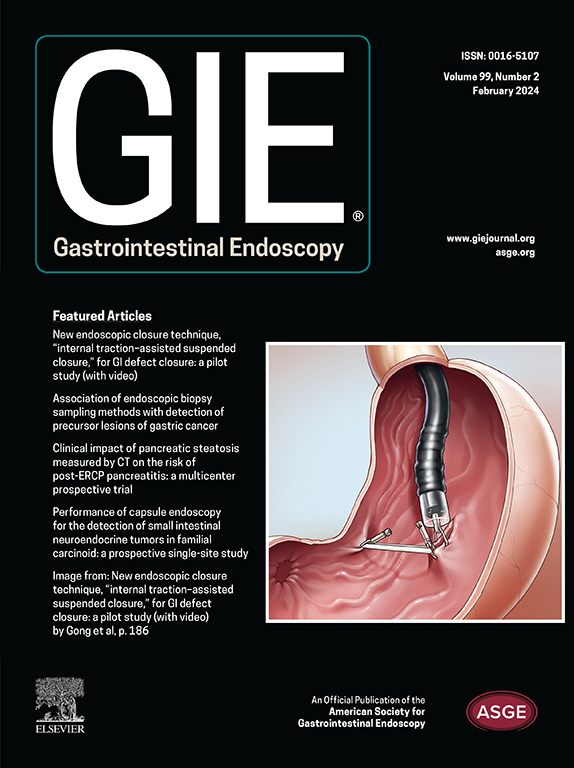
Gastrointestinal Endoscopy is a journal publishing original, peer-reviewed articles on endoscopic procedures for studying, diagnosing, and treating digestive diseases. It covers outcomes research, prospective studies, and controlled trials of new endoscopic instruments and treatment methods. The online features include full-text articles, video and audio clips, and MEDLINE links. The journal serves as an international forum for the latest developments in the specialty, offering challenging reports from authorities worldwide. It also publishes abstracts of significant articles from other clinical publications, accompanied by expert commentaries.




 京公网安备 11010802042870号
京ICP备2023020795号-1
京公网安备 11010802042870号
京ICP备2023020795号-1

 分享
分享
 求助内容:
求助内容: 应助结果提醒方式:
 扫码关注我们
