Salome Goglichidze, Wanjiang Wang, Louisa H Smith, David Ezekiel-Herrera, John D Heintzman, Miguel Marino, Jennifer A Lucas, Danielle M Crookes
{"title":"社区卫生中心患者的庇护政策和2型糖尿病药物处方趋势。","authors":"Salome Goglichidze, Wanjiang Wang, Louisa H Smith, David Ezekiel-Herrera, John D Heintzman, Miguel Marino, Jennifer A Lucas, Danielle M Crookes","doi":"10.1093/haschl/qxae178","DOIUrl":null,"url":null,"abstract":"<p><p>Immigrants in the United States are at increased risk of diabetes-related complications due to delayed diagnoses compared with US-born individuals. Immigration-related federal policies may support immigration enforcement activities and restrict some immigrants' access to health insurance and other publicly funded resources. Conversely, state and county-level sanctuary policies may reduce the fear of deportation and increase mobility in the community, improving the accessibility of essential pharmacological treatment for type 2 diabetes patients. This retrospective cohort study estimated the odds of receiving glucose-lowering medication prescriptions by the county's sanctuary policy environment for patients within a nationwide network of community health centers. We did not find statistically significant associations between sanctuary policies and annual prescription rates. The associations were not modified by nativity or race/ethnicity. Notably, compared to US-born patients, immigrants had higher odds of receiving prescriptions regardless of the sanctuary policy environment, emphasizing other potential influences on the receipt of anti-diabetes prescriptions for community health center patients.</p>","PeriodicalId":94025,"journal":{"name":"Health affairs scholar","volume":"3 1","pages":"qxae178"},"PeriodicalIF":2.7000,"publicationDate":"2025-01-21","publicationTypes":"Journal Article","fieldsOfStudy":null,"isOpenAccess":false,"openAccessPdf":"https://www.ncbi.nlm.nih.gov/pmc/articles/PMC11747669/pdf/","citationCount":"0","resultStr":"{\"title\":\"Sanctuary policies and type 2 diabetes medication prescription trends among community health center patients.\",\"authors\":\"Salome Goglichidze, Wanjiang Wang, Louisa H Smith, David Ezekiel-Herrera, John D Heintzman, Miguel Marino, Jennifer A Lucas, Danielle M Crookes\",\"doi\":\"10.1093/haschl/qxae178\",\"DOIUrl\":null,\"url\":null,\"abstract\":\"<p><p>Immigrants in the United States are at increased risk of diabetes-related complications due to delayed diagnoses compared with US-born individuals. Immigration-related federal policies may support immigration enforcement activities and restrict some immigrants' access to health insurance and other publicly funded resources. Conversely, state and county-level sanctuary policies may reduce the fear of deportation and increase mobility in the community, improving the accessibility of essential pharmacological treatment for type 2 diabetes patients. This retrospective cohort study estimated the odds of receiving glucose-lowering medication prescriptions by the county's sanctuary policy environment for patients within a nationwide network of community health centers. We did not find statistically significant associations between sanctuary policies and annual prescription rates. The associations were not modified by nativity or race/ethnicity. Notably, compared to US-born patients, immigrants had higher odds of receiving prescriptions regardless of the sanctuary policy environment, emphasizing other potential influences on the receipt of anti-diabetes prescriptions for community health center patients.</p>\",\"PeriodicalId\":94025,\"journal\":{\"name\":\"Health affairs scholar\",\"volume\":\"3 1\",\"pages\":\"qxae178\"},\"PeriodicalIF\":2.7000,\"publicationDate\":\"2025-01-21\",\"publicationTypes\":\"Journal Article\",\"fieldsOfStudy\":null,\"isOpenAccess\":false,\"openAccessPdf\":\"https://www.ncbi.nlm.nih.gov/pmc/articles/PMC11747669/pdf/\",\"citationCount\":\"0\",\"resultStr\":null,\"platform\":\"Semanticscholar\",\"paperid\":null,\"PeriodicalName\":\"Health affairs scholar\",\"FirstCategoryId\":\"1085\",\"ListUrlMain\":\"https://doi.org/10.1093/haschl/qxae178\",\"RegionNum\":0,\"RegionCategory\":null,\"ArticlePicture\":[],\"TitleCN\":null,\"AbstractTextCN\":null,\"PMCID\":null,\"EPubDate\":\"2025/1/1 0:00:00\",\"PubModel\":\"eCollection\",\"JCR\":\"\",\"JCRName\":\"\",\"Score\":null,\"Total\":0}","platform":"Semanticscholar","paperid":null,"PeriodicalName":"Health affairs scholar","FirstCategoryId":"1085","ListUrlMain":"https://doi.org/10.1093/haschl/qxae178","RegionNum":0,"RegionCategory":null,"ArticlePicture":[],"TitleCN":null,"AbstractTextCN":null,"PMCID":null,"EPubDate":"2025/1/1 0:00:00","PubModel":"eCollection","JCR":"","JCRName":"","Score":null,"Total":0}
Sanctuary policies and type 2 diabetes medication prescription trends among community health center patients.
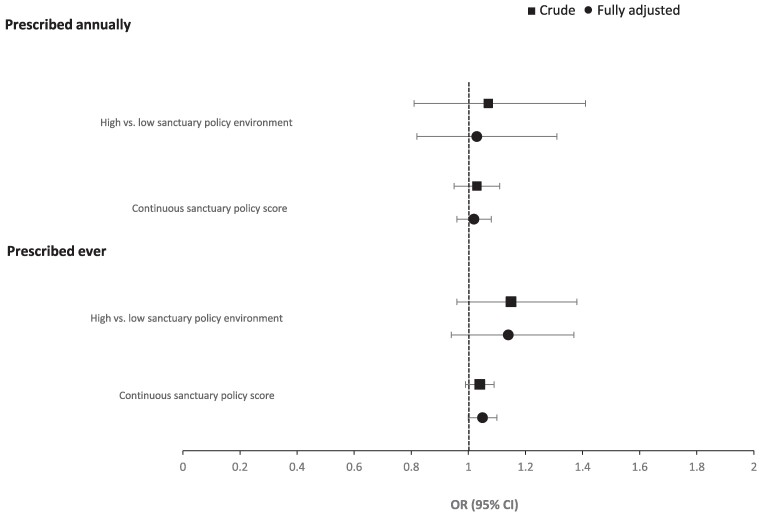
Immigrants in the United States are at increased risk of diabetes-related complications due to delayed diagnoses compared with US-born individuals. Immigration-related federal policies may support immigration enforcement activities and restrict some immigrants' access to health insurance and other publicly funded resources. Conversely, state and county-level sanctuary policies may reduce the fear of deportation and increase mobility in the community, improving the accessibility of essential pharmacological treatment for type 2 diabetes patients. This retrospective cohort study estimated the odds of receiving glucose-lowering medication prescriptions by the county's sanctuary policy environment for patients within a nationwide network of community health centers. We did not find statistically significant associations between sanctuary policies and annual prescription rates. The associations were not modified by nativity or race/ethnicity. Notably, compared to US-born patients, immigrants had higher odds of receiving prescriptions regardless of the sanctuary policy environment, emphasizing other potential influences on the receipt of anti-diabetes prescriptions for community health center patients.





 京公网安备 11010802042870号
京ICP备2023020795号-1
京公网安备 11010802042870号
京ICP备2023020795号-1

 分享
分享

 求助内容:
求助内容: 应助结果提醒方式:
 扫码关注我们
