O Grace Ehoche, Sai Krishna Arojju, M Z Zulfi Jahufer, Ruy Jauregui, Anna C Larking, Greig Cousins, Jennifer A Tate, Peter J Lockhart, Andrew G Griffiths
{"title":"基因组选择表明异源四倍体白三叶草农艺性状的预期遗传增益优于表型选择。","authors":"O Grace Ehoche, Sai Krishna Arojju, M Z Zulfi Jahufer, Ruy Jauregui, Anna C Larking, Greig Cousins, Jennifer A Tate, Peter J Lockhart, Andrew G Griffiths","doi":"10.1007/s00122-025-04819-w","DOIUrl":null,"url":null,"abstract":"<p><strong>Key message: </strong>Genomic selection using white clover multi-year-multi-site data showed predicted genetic gains through integrating among-half-sibling-family phenotypic selection and within-family genomic selection were up to 89% greater than half-sibling-family phenotypic selection alone. Genomic selection, an effective breeding tool used widely in plants and animals for improving low-heritability traits, has only recently been applied to forages. We explored the feasibility of implementing genomic selection in white clover (Trifolium repens L.), a key forage legume which has shown limited genetic improvement in dry matter yield (DMY) and persistence traits. We used data from a training population comprising 200 half-sibling (HS) families evaluated in a cattle-grazed field trial across three years and two locations. Combining phenotype and genotyping-by-sequencing (GBS) data, we assessed different two-stage genomic prediction models, including KGD-GBLUP developed for low-depth GBS data, on DMY, growth score, leaf size and stolon traits. Predictive abilities were similar among the models, ranging from -0.17 to 0.44 across traits, and remained stable for most traits when reducing model input to 100-120 HS families and 5500 markers, suggesting genomic selection is viable with fewer resources. Incorporating a correlated trait with a primary trait in multi-trait prediction models increased predictive ability by 28-124%. Deterministic modelling showed integrating among-HS-family phenotypic selection and within-family genomic selection at different selection pressures estimated up to 89% DMY genetic gain compared to phenotypic selection alone, despite a modest predictive ability of 0.3. This study demonstrates the potential benefits of combining genomic and phenotypic selection to boost genetic gains in white clover. Using cost-effective GBS paired with a prediction model optimized for low read-depth data, the approach can achieve prediction accuracies comparable to traditional models, providing a viable path for implementing genomic selection in white clover.</p>","PeriodicalId":22955,"journal":{"name":"Theoretical and Applied Genetics","volume":"138 1","pages":"34"},"PeriodicalIF":4.2000,"publicationDate":"2025-01-23","publicationTypes":"Journal Article","fieldsOfStudy":null,"isOpenAccess":false,"openAccessPdf":"https://www.ncbi.nlm.nih.gov/pmc/articles/PMC11757872/pdf/","citationCount":"0","resultStr":"{\"title\":\"Genomic selection shows improved expected genetic gain over phenotypic selection of agronomic traits in allotetraploid white clover.\",\"authors\":\"O Grace Ehoche, Sai Krishna Arojju, M Z Zulfi Jahufer, Ruy Jauregui, Anna C Larking, Greig Cousins, Jennifer A Tate, Peter J Lockhart, Andrew G Griffiths\",\"doi\":\"10.1007/s00122-025-04819-w\",\"DOIUrl\":null,\"url\":null,\"abstract\":\"<p><strong>Key message: </strong>Genomic selection using white clover multi-year-multi-site data showed predicted genetic gains through integrating among-half-sibling-family phenotypic selection and within-family genomic selection were up to 89% greater than half-sibling-family phenotypic selection alone. Genomic selection, an effective breeding tool used widely in plants and animals for improving low-heritability traits, has only recently been applied to forages. We explored the feasibility of implementing genomic selection in white clover (Trifolium repens L.), a key forage legume which has shown limited genetic improvement in dry matter yield (DMY) and persistence traits. We used data from a training population comprising 200 half-sibling (HS) families evaluated in a cattle-grazed field trial across three years and two locations. Combining phenotype and genotyping-by-sequencing (GBS) data, we assessed different two-stage genomic prediction models, including KGD-GBLUP developed for low-depth GBS data, on DMY, growth score, leaf size and stolon traits. Predictive abilities were similar among the models, ranging from -0.17 to 0.44 across traits, and remained stable for most traits when reducing model input to 100-120 HS families and 5500 markers, suggesting genomic selection is viable with fewer resources. Incorporating a correlated trait with a primary trait in multi-trait prediction models increased predictive ability by 28-124%. Deterministic modelling showed integrating among-HS-family phenotypic selection and within-family genomic selection at different selection pressures estimated up to 89% DMY genetic gain compared to phenotypic selection alone, despite a modest predictive ability of 0.3. This study demonstrates the potential benefits of combining genomic and phenotypic selection to boost genetic gains in white clover. Using cost-effective GBS paired with a prediction model optimized for low read-depth data, the approach can achieve prediction accuracies comparable to traditional models, providing a viable path for implementing genomic selection in white clover.</p>\",\"PeriodicalId\":22955,\"journal\":{\"name\":\"Theoretical and Applied Genetics\",\"volume\":\"138 1\",\"pages\":\"34\"},\"PeriodicalIF\":4.2000,\"publicationDate\":\"2025-01-23\",\"publicationTypes\":\"Journal Article\",\"fieldsOfStudy\":null,\"isOpenAccess\":false,\"openAccessPdf\":\"https://www.ncbi.nlm.nih.gov/pmc/articles/PMC11757872/pdf/\",\"citationCount\":\"0\",\"resultStr\":null,\"platform\":\"Semanticscholar\",\"paperid\":null,\"PeriodicalName\":\"Theoretical and Applied Genetics\",\"FirstCategoryId\":\"97\",\"ListUrlMain\":\"https://doi.org/10.1007/s00122-025-04819-w\",\"RegionNum\":1,\"RegionCategory\":\"农林科学\",\"ArticlePicture\":[],\"TitleCN\":null,\"AbstractTextCN\":null,\"PMCID\":null,\"EPubDate\":\"\",\"PubModel\":\"\",\"JCR\":\"Q1\",\"JCRName\":\"AGRONOMY\",\"Score\":null,\"Total\":0}","platform":"Semanticscholar","paperid":null,"PeriodicalName":"Theoretical and Applied Genetics","FirstCategoryId":"97","ListUrlMain":"https://doi.org/10.1007/s00122-025-04819-w","RegionNum":1,"RegionCategory":"农林科学","ArticlePicture":[],"TitleCN":null,"AbstractTextCN":null,"PMCID":null,"EPubDate":"","PubModel":"","JCR":"Q1","JCRName":"AGRONOMY","Score":null,"Total":0}
Genomic selection shows improved expected genetic gain over phenotypic selection of agronomic traits in allotetraploid white clover.
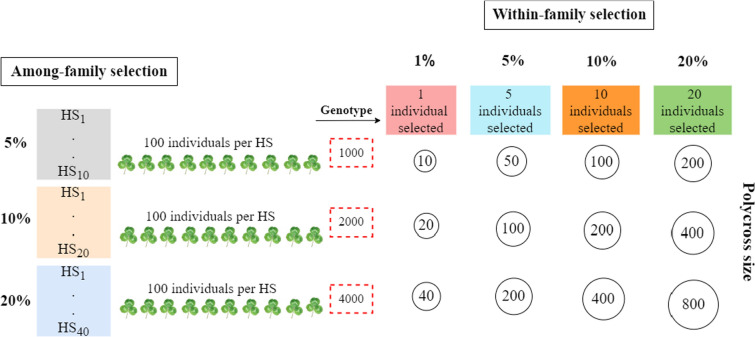
Key message: Genomic selection using white clover multi-year-multi-site data showed predicted genetic gains through integrating among-half-sibling-family phenotypic selection and within-family genomic selection were up to 89% greater than half-sibling-family phenotypic selection alone. Genomic selection, an effective breeding tool used widely in plants and animals for improving low-heritability traits, has only recently been applied to forages. We explored the feasibility of implementing genomic selection in white clover (Trifolium repens L.), a key forage legume which has shown limited genetic improvement in dry matter yield (DMY) and persistence traits. We used data from a training population comprising 200 half-sibling (HS) families evaluated in a cattle-grazed field trial across three years and two locations. Combining phenotype and genotyping-by-sequencing (GBS) data, we assessed different two-stage genomic prediction models, including KGD-GBLUP developed for low-depth GBS data, on DMY, growth score, leaf size and stolon traits. Predictive abilities were similar among the models, ranging from -0.17 to 0.44 across traits, and remained stable for most traits when reducing model input to 100-120 HS families and 5500 markers, suggesting genomic selection is viable with fewer resources. Incorporating a correlated trait with a primary trait in multi-trait prediction models increased predictive ability by 28-124%. Deterministic modelling showed integrating among-HS-family phenotypic selection and within-family genomic selection at different selection pressures estimated up to 89% DMY genetic gain compared to phenotypic selection alone, despite a modest predictive ability of 0.3. This study demonstrates the potential benefits of combining genomic and phenotypic selection to boost genetic gains in white clover. Using cost-effective GBS paired with a prediction model optimized for low read-depth data, the approach can achieve prediction accuracies comparable to traditional models, providing a viable path for implementing genomic selection in white clover.
期刊介绍:
Theoretical and Applied Genetics publishes original research and review articles in all key areas of modern plant genetics, plant genomics and plant biotechnology. All work needs to have a clear genetic component and significant impact on plant breeding. Theoretical considerations are only accepted in combination with new experimental data and/or if they indicate a relevant application in plant genetics or breeding. Emphasizing the practical, the journal focuses on research into leading crop plants and articles presenting innovative approaches.






 京公网安备 11010802042870号
京ICP备2023020795号-1
京公网安备 11010802042870号
京ICP备2023020795号-1

 分享
分享
 求助内容:
求助内容: 应助结果提醒方式:
 扫码关注我们
