Aditi Gupta, Ethan Hillis, Inez Y Oh, Stephanie M Morris, Zach Abrams, Randi E Foraker, David H Gutmann, Philip R O Payne
{"title":"评估1型神经纤维瘤病患者合并症预测模型的降维性","authors":"Aditi Gupta, Ethan Hillis, Inez Y Oh, Stephanie M Morris, Zach Abrams, Randi E Foraker, David H Gutmann, Philip R O Payne","doi":"10.1093/jamiaopen/ooae157","DOIUrl":null,"url":null,"abstract":"<p><strong>Objective: </strong>Dimensionality reduction techniques aim to enhance the performance of machine learning (ML) models by reducing noise and mitigating overfitting. We sought to compare the effect of different dimensionality reduction methods for comorbidity features extracted from electronic health records (EHRs) on the performance of ML models for predicting the development of various sub-phenotypes in children with Neurofibromatosis type 1 (NF1).</p><p><strong>Materials and methods: </strong>EHR-derived data from pediatric subjects with a confirmed clinical diagnosis of NF1 were used to create 10 unique comorbidities code-derived feature sets by incorporating dimensionality reduction techniques using raw International Classification of Diseases codes, Clinical Classifications Software Refined, and Phecode mapping schemes. We compared the performance of logistic regression, XGBoost, and random forest models utilizing each feature set.</p><p><strong>Results: </strong>XGBoost-based predictive models were most successful at predicting NF1 sub-phenotypes. Overall, features based on domain knowledge-informed mapping schema performed better than unsupervised feature reduction methods. High-level features exhibited the worst performance across models and outcomes, suggesting excessive information loss with over-aggregation of features.</p><p><strong>Discussion: </strong>Model performance is significantly impacted by dimensionality reduction techniques and varies by specific ML algorithm and outcome being predicted. Automated methods using existing knowledge and ontology databases can effectively aggregate features extracted from EHRs.</p><p><strong>Conclusion: </strong>Dimensionality reduction through feature aggregation can enhance the performance of ML models, particularly in high-dimensional datasets with small sample sizes, commonly found in EHRs health applications. However, if not carefully optimized, it can lead to information loss and data oversimplification, potentially adversely affecting model performance.</p>","PeriodicalId":36278,"journal":{"name":"JAMIA Open","volume":"8 1","pages":"ooae157"},"PeriodicalIF":4.7000,"publicationDate":"2025-01-22","publicationTypes":"Journal Article","fieldsOfStudy":null,"isOpenAccess":false,"openAccessPdf":"https://www.ncbi.nlm.nih.gov/pmc/articles/PMC11752863/pdf/","citationCount":"0","resultStr":"{\"title\":\"Evaluating dimensionality reduction of comorbidities for predictive modeling in individuals with neurofibromatosis type 1.\",\"authors\":\"Aditi Gupta, Ethan Hillis, Inez Y Oh, Stephanie M Morris, Zach Abrams, Randi E Foraker, David H Gutmann, Philip R O Payne\",\"doi\":\"10.1093/jamiaopen/ooae157\",\"DOIUrl\":null,\"url\":null,\"abstract\":\"<p><strong>Objective: </strong>Dimensionality reduction techniques aim to enhance the performance of machine learning (ML) models by reducing noise and mitigating overfitting. We sought to compare the effect of different dimensionality reduction methods for comorbidity features extracted from electronic health records (EHRs) on the performance of ML models for predicting the development of various sub-phenotypes in children with Neurofibromatosis type 1 (NF1).</p><p><strong>Materials and methods: </strong>EHR-derived data from pediatric subjects with a confirmed clinical diagnosis of NF1 were used to create 10 unique comorbidities code-derived feature sets by incorporating dimensionality reduction techniques using raw International Classification of Diseases codes, Clinical Classifications Software Refined, and Phecode mapping schemes. We compared the performance of logistic regression, XGBoost, and random forest models utilizing each feature set.</p><p><strong>Results: </strong>XGBoost-based predictive models were most successful at predicting NF1 sub-phenotypes. Overall, features based on domain knowledge-informed mapping schema performed better than unsupervised feature reduction methods. High-level features exhibited the worst performance across models and outcomes, suggesting excessive information loss with over-aggregation of features.</p><p><strong>Discussion: </strong>Model performance is significantly impacted by dimensionality reduction techniques and varies by specific ML algorithm and outcome being predicted. Automated methods using existing knowledge and ontology databases can effectively aggregate features extracted from EHRs.</p><p><strong>Conclusion: </strong>Dimensionality reduction through feature aggregation can enhance the performance of ML models, particularly in high-dimensional datasets with small sample sizes, commonly found in EHRs health applications. However, if not carefully optimized, it can lead to information loss and data oversimplification, potentially adversely affecting model performance.</p>\",\"PeriodicalId\":36278,\"journal\":{\"name\":\"JAMIA Open\",\"volume\":\"8 1\",\"pages\":\"ooae157\"},\"PeriodicalIF\":4.7000,\"publicationDate\":\"2025-01-22\",\"publicationTypes\":\"Journal Article\",\"fieldsOfStudy\":null,\"isOpenAccess\":false,\"openAccessPdf\":\"https://www.ncbi.nlm.nih.gov/pmc/articles/PMC11752863/pdf/\",\"citationCount\":\"0\",\"resultStr\":null,\"platform\":\"Semanticscholar\",\"paperid\":null,\"PeriodicalName\":\"JAMIA Open\",\"FirstCategoryId\":\"1085\",\"ListUrlMain\":\"https://doi.org/10.1093/jamiaopen/ooae157\",\"RegionNum\":0,\"RegionCategory\":null,\"ArticlePicture\":[],\"TitleCN\":null,\"AbstractTextCN\":null,\"PMCID\":null,\"EPubDate\":\"2025/2/1 0:00:00\",\"PubModel\":\"eCollection\",\"JCR\":\"Q2\",\"JCRName\":\"HEALTH CARE SCIENCES & SERVICES\",\"Score\":null,\"Total\":0}","platform":"Semanticscholar","paperid":null,"PeriodicalName":"JAMIA Open","FirstCategoryId":"1085","ListUrlMain":"https://doi.org/10.1093/jamiaopen/ooae157","RegionNum":0,"RegionCategory":null,"ArticlePicture":[],"TitleCN":null,"AbstractTextCN":null,"PMCID":null,"EPubDate":"2025/2/1 0:00:00","PubModel":"eCollection","JCR":"Q2","JCRName":"HEALTH CARE SCIENCES & SERVICES","Score":null,"Total":0}
Evaluating dimensionality reduction of comorbidities for predictive modeling in individuals with neurofibromatosis type 1.
Objective: Dimensionality reduction techniques aim to enhance the performance of machine learning (ML) models by reducing noise and mitigating overfitting. We sought to compare the effect of different dimensionality reduction methods for comorbidity features extracted from electronic health records (EHRs) on the performance of ML models for predicting the development of various sub-phenotypes in children with Neurofibromatosis type 1 (NF1).
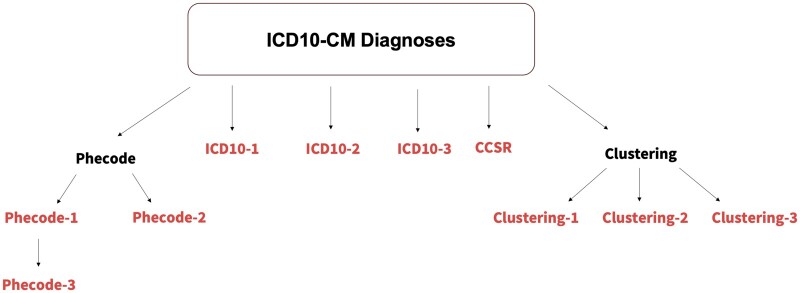
Materials and methods: EHR-derived data from pediatric subjects with a confirmed clinical diagnosis of NF1 were used to create 10 unique comorbidities code-derived feature sets by incorporating dimensionality reduction techniques using raw International Classification of Diseases codes, Clinical Classifications Software Refined, and Phecode mapping schemes. We compared the performance of logistic regression, XGBoost, and random forest models utilizing each feature set.
Results: XGBoost-based predictive models were most successful at predicting NF1 sub-phenotypes. Overall, features based on domain knowledge-informed mapping schema performed better than unsupervised feature reduction methods. High-level features exhibited the worst performance across models and outcomes, suggesting excessive information loss with over-aggregation of features.
Discussion: Model performance is significantly impacted by dimensionality reduction techniques and varies by specific ML algorithm and outcome being predicted. Automated methods using existing knowledge and ontology databases can effectively aggregate features extracted from EHRs.
Conclusion: Dimensionality reduction through feature aggregation can enhance the performance of ML models, particularly in high-dimensional datasets with small sample sizes, commonly found in EHRs health applications. However, if not carefully optimized, it can lead to information loss and data oversimplification, potentially adversely affecting model performance.







 京公网安备 11010802042870号
京ICP备2023020795号-1
京公网安备 11010802042870号
京ICP备2023020795号-1

 分享
分享
 求助内容:
求助内容: 应助结果提醒方式:
 扫码关注我们
