Karolina Nowak, Agnieszka Chłopaś-Konowałek, Paweł Szpot, Marcin Zawadzki
{"title":"以莫达非尼为例的“聪明药”问题:证据和生物样本的毒理学分析。","authors":"Karolina Nowak, Agnieszka Chłopaś-Konowałek, Paweł Szpot, Marcin Zawadzki","doi":"10.3390/jox15010015","DOIUrl":null,"url":null,"abstract":"<p><p>Cognitive enhancement through stimulants such as modafinil is becoming increasingly popular, with many individuals using prescription stimulants for non-medical purposes to improve alertness, attention, and mood. The misuse of such substances has raised concerns, particularly in forensic toxicology. The UHPLC-QqQ-MS/MS method was developed to quantify modafinil in evidentiary samples and biological materials. Additionally, the authors noted the presence of sodium adducts during the analysis of samples with high concentrations of modafinil. The method was validated for accuracy, precision, and linearity, with a concentration range of 0.1-10.0 µg/mL for the evidences and 1.0-100.0 ng/mL for blood. The method successfully detected modafinil as the sole substance in all evidences, with concentrations ranging from 90.7 to 120.8 mg, corresponding to 45.5% to 80.5% of the labeled dose. The method was applied to real post-mortem human cases, where, among others, the concentration of modafinil in blood was 110 ng/mL, whereas, in another case, the concentration of modafinil in the putrefaction fluid exceeded 1000 ng/mL. The developed UHPLC-QqQ-MS/MS method is effective for the quantification of modafinil in evidentiary samples and biological materials, offering a reliable tool for forensic toxicology applications. This method can be used to evaluate modafinil use in both legal and illicit contexts, including cases of overdose or misuse.</p>","PeriodicalId":42356,"journal":{"name":"Journal of Xenobiotics","volume":"15 1","pages":""},"PeriodicalIF":4.4000,"publicationDate":"2025-01-17","publicationTypes":"Journal Article","fieldsOfStudy":null,"isOpenAccess":false,"openAccessPdf":"https://www.ncbi.nlm.nih.gov/pmc/articles/PMC11755661/pdf/","citationCount":"0","resultStr":"{\"title\":\"The Issue of \\\"Smart Drugs\\\" on the Example of Modafinil: Toxicological Analysis of Evidences and Biological Samples.\",\"authors\":\"Karolina Nowak, Agnieszka Chłopaś-Konowałek, Paweł Szpot, Marcin Zawadzki\",\"doi\":\"10.3390/jox15010015\",\"DOIUrl\":null,\"url\":null,\"abstract\":\"<p><p>Cognitive enhancement through stimulants such as modafinil is becoming increasingly popular, with many individuals using prescription stimulants for non-medical purposes to improve alertness, attention, and mood. The misuse of such substances has raised concerns, particularly in forensic toxicology. The UHPLC-QqQ-MS/MS method was developed to quantify modafinil in evidentiary samples and biological materials. Additionally, the authors noted the presence of sodium adducts during the analysis of samples with high concentrations of modafinil. The method was validated for accuracy, precision, and linearity, with a concentration range of 0.1-10.0 µg/mL for the evidences and 1.0-100.0 ng/mL for blood. The method successfully detected modafinil as the sole substance in all evidences, with concentrations ranging from 90.7 to 120.8 mg, corresponding to 45.5% to 80.5% of the labeled dose. The method was applied to real post-mortem human cases, where, among others, the concentration of modafinil in blood was 110 ng/mL, whereas, in another case, the concentration of modafinil in the putrefaction fluid exceeded 1000 ng/mL. The developed UHPLC-QqQ-MS/MS method is effective for the quantification of modafinil in evidentiary samples and biological materials, offering a reliable tool for forensic toxicology applications. This method can be used to evaluate modafinil use in both legal and illicit contexts, including cases of overdose or misuse.</p>\",\"PeriodicalId\":42356,\"journal\":{\"name\":\"Journal of Xenobiotics\",\"volume\":\"15 1\",\"pages\":\"\"},\"PeriodicalIF\":4.4000,\"publicationDate\":\"2025-01-17\",\"publicationTypes\":\"Journal Article\",\"fieldsOfStudy\":null,\"isOpenAccess\":false,\"openAccessPdf\":\"https://www.ncbi.nlm.nih.gov/pmc/articles/PMC11755661/pdf/\",\"citationCount\":\"0\",\"resultStr\":null,\"platform\":\"Semanticscholar\",\"paperid\":null,\"PeriodicalName\":\"Journal of Xenobiotics\",\"FirstCategoryId\":\"1085\",\"ListUrlMain\":\"https://doi.org/10.3390/jox15010015\",\"RegionNum\":0,\"RegionCategory\":null,\"ArticlePicture\":[],\"TitleCN\":null,\"AbstractTextCN\":null,\"PMCID\":null,\"EPubDate\":\"\",\"PubModel\":\"\",\"JCR\":\"Q1\",\"JCRName\":\"TOXICOLOGY\",\"Score\":null,\"Total\":0}","platform":"Semanticscholar","paperid":null,"PeriodicalName":"Journal of Xenobiotics","FirstCategoryId":"1085","ListUrlMain":"https://doi.org/10.3390/jox15010015","RegionNum":0,"RegionCategory":null,"ArticlePicture":[],"TitleCN":null,"AbstractTextCN":null,"PMCID":null,"EPubDate":"","PubModel":"","JCR":"Q1","JCRName":"TOXICOLOGY","Score":null,"Total":0}
The Issue of "Smart Drugs" on the Example of Modafinil: Toxicological Analysis of Evidences and Biological Samples.
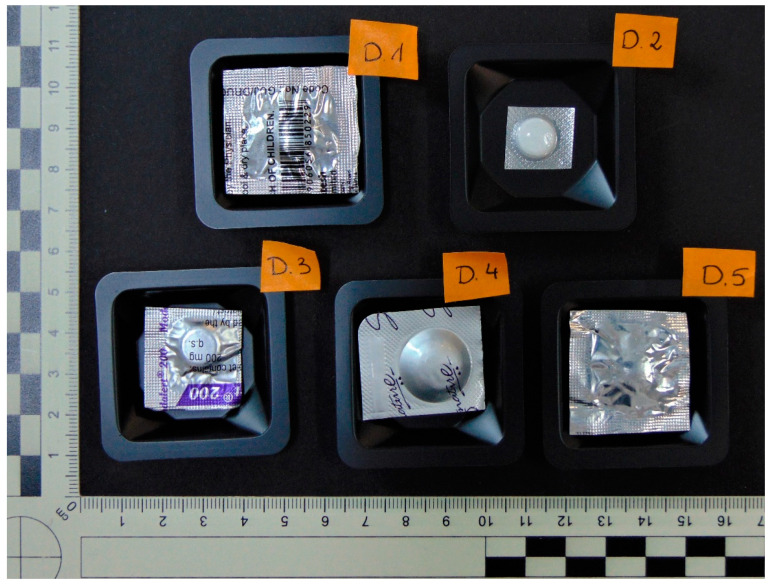
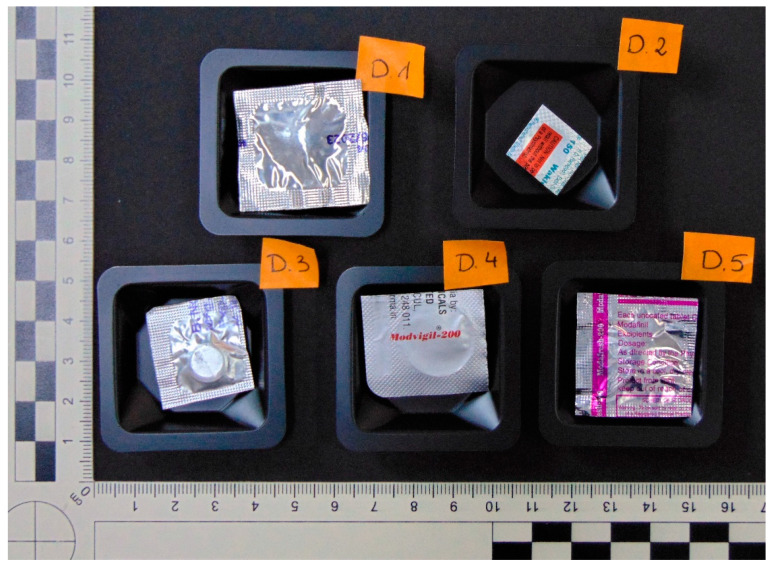
Cognitive enhancement through stimulants such as modafinil is becoming increasingly popular, with many individuals using prescription stimulants for non-medical purposes to improve alertness, attention, and mood. The misuse of such substances has raised concerns, particularly in forensic toxicology. The UHPLC-QqQ-MS/MS method was developed to quantify modafinil in evidentiary samples and biological materials. Additionally, the authors noted the presence of sodium adducts during the analysis of samples with high concentrations of modafinil. The method was validated for accuracy, precision, and linearity, with a concentration range of 0.1-10.0 µg/mL for the evidences and 1.0-100.0 ng/mL for blood. The method successfully detected modafinil as the sole substance in all evidences, with concentrations ranging from 90.7 to 120.8 mg, corresponding to 45.5% to 80.5% of the labeled dose. The method was applied to real post-mortem human cases, where, among others, the concentration of modafinil in blood was 110 ng/mL, whereas, in another case, the concentration of modafinil in the putrefaction fluid exceeded 1000 ng/mL. The developed UHPLC-QqQ-MS/MS method is effective for the quantification of modafinil in evidentiary samples and biological materials, offering a reliable tool for forensic toxicology applications. This method can be used to evaluate modafinil use in both legal and illicit contexts, including cases of overdose or misuse.
期刊介绍:
The Journal of Xenobiotics publishes original studies concerning the beneficial (pharmacology) and detrimental effects (toxicology) of xenobiotics in all organisms. A xenobiotic (“stranger to life”) is defined as a chemical that is not usually found at significant concentrations or expected to reside for long periods in organisms. In addition to man-made chemicals, natural products could also be of interest if they have potent biological properties, special medicinal properties or that a given organism is at risk of exposure in the environment. Topics dealing with abiotic- and biotic-based transformations in various media (xenobiochemistry) and environmental toxicology are also of interest. Areas of interests include the identification of key physical and chemical properties of molecules that predict biological effects and persistence in the environment; the molecular mode of action of xenobiotics; biochemical and physiological interactions leading to change in organism health; pathophysiological interactions of natural and synthetic chemicals; development of biochemical indicators including new “-omics” approaches to identify biomarkers of exposure or effects for xenobiotics.





 京公网安备 11010802042870号
京ICP备2023020795号-1
京公网安备 11010802042870号
京ICP备2023020795号-1

 分享
分享
 求助内容:
求助内容: 应助结果提醒方式:
 扫码关注我们
