Stijntje W Dijk, Maurice Korf, Jeremy A Labrecque, Ankur Pandya, Bart S Ferket, Lára R Hallsson, John B Wong, Uwe Siebert, M G Myriam Hunink
{"title":"决策分析建模中的有向无环图:连接医疗决策中的因果推理和有效模型设计。","authors":"Stijntje W Dijk, Maurice Korf, Jeremy A Labrecque, Ankur Pandya, Bart S Ferket, Lára R Hallsson, John B Wong, Uwe Siebert, M G Myriam Hunink","doi":"10.1177/0272989X241310898","DOIUrl":null,"url":null,"abstract":"<p><p>Decision-analytic models (DAMs) are essentially informative yet complex tools for solving questions in medical decision making. When their complexity grows, the need for causal inference techniques becomes evident as causal relationships between variables become unclear. In this methodological commentary, we argue that graphical representations of assumptions on such relationships, directed acyclic graphs (DAGs), can enhance the transparency of decision models and aid in parameter selection and estimation through visually specifying backdoor paths (i.e., potential biases in parameter estimates) and visually clarifying structural modeling choices of frontdoor paths (i.e., the effect of the model structure on the outcome). This commentary discusses the benefit of integrating DAGs and DAMs in medical decision making and in particular health economics with 2 applications: the first examines statin use for prevention of cardiovascular disease, and the second considers mindfulness-based interventions for students' stress. Despite the potential application of DAGs in the decision science framework, challenges remain, including simplicity, defining the scope of a DAG, unmeasured confounding, noncausal aspects, and limited data availability or quality. Broader adoption of DAGs in decision science requires full-model applications and further debate.HighlightsOur commentary proposes the application of directed acyclic graphs (DAGs) in the design of decision-analytic models, offering researchers a valuable and structured tool to enhance transparency and accuracy by bridging the gap between causal inference and model design in medical decision making.The practical examples in this article showcase the transformative effect DAGs can have on model structure, parameter selection, and the resulting conclusions on effectiveness and cost-effectiveness.This methodological article invites a broader conversation on decision-modeling choices grounded in causal assumptions.</p>","PeriodicalId":49839,"journal":{"name":"Medical Decision Making","volume":" ","pages":"223-231"},"PeriodicalIF":3.1000,"publicationDate":"2025-04-01","publicationTypes":"Journal Article","fieldsOfStudy":null,"isOpenAccess":false,"openAccessPdf":"https://www.ncbi.nlm.nih.gov/pmc/articles/PMC11894903/pdf/","citationCount":"0","resultStr":"{\"title\":\"Directed Acyclic Graphs in Decision-Analytic Modeling: Bridging Causal Inference and Effective Model Design in Medical Decision Making.\",\"authors\":\"Stijntje W Dijk, Maurice Korf, Jeremy A Labrecque, Ankur Pandya, Bart S Ferket, Lára R Hallsson, John B Wong, Uwe Siebert, M G Myriam Hunink\",\"doi\":\"10.1177/0272989X241310898\",\"DOIUrl\":null,\"url\":null,\"abstract\":\"<p><p>Decision-analytic models (DAMs) are essentially informative yet complex tools for solving questions in medical decision making. When their complexity grows, the need for causal inference techniques becomes evident as causal relationships between variables become unclear. In this methodological commentary, we argue that graphical representations of assumptions on such relationships, directed acyclic graphs (DAGs), can enhance the transparency of decision models and aid in parameter selection and estimation through visually specifying backdoor paths (i.e., potential biases in parameter estimates) and visually clarifying structural modeling choices of frontdoor paths (i.e., the effect of the model structure on the outcome). This commentary discusses the benefit of integrating DAGs and DAMs in medical decision making and in particular health economics with 2 applications: the first examines statin use for prevention of cardiovascular disease, and the second considers mindfulness-based interventions for students' stress. Despite the potential application of DAGs in the decision science framework, challenges remain, including simplicity, defining the scope of a DAG, unmeasured confounding, noncausal aspects, and limited data availability or quality. Broader adoption of DAGs in decision science requires full-model applications and further debate.HighlightsOur commentary proposes the application of directed acyclic graphs (DAGs) in the design of decision-analytic models, offering researchers a valuable and structured tool to enhance transparency and accuracy by bridging the gap between causal inference and model design in medical decision making.The practical examples in this article showcase the transformative effect DAGs can have on model structure, parameter selection, and the resulting conclusions on effectiveness and cost-effectiveness.This methodological article invites a broader conversation on decision-modeling choices grounded in causal assumptions.</p>\",\"PeriodicalId\":49839,\"journal\":{\"name\":\"Medical Decision Making\",\"volume\":\" \",\"pages\":\"223-231\"},\"PeriodicalIF\":3.1000,\"publicationDate\":\"2025-04-01\",\"publicationTypes\":\"Journal Article\",\"fieldsOfStudy\":null,\"isOpenAccess\":false,\"openAccessPdf\":\"https://www.ncbi.nlm.nih.gov/pmc/articles/PMC11894903/pdf/\",\"citationCount\":\"0\",\"resultStr\":null,\"platform\":\"Semanticscholar\",\"paperid\":null,\"PeriodicalName\":\"Medical Decision Making\",\"FirstCategoryId\":\"3\",\"ListUrlMain\":\"https://doi.org/10.1177/0272989X241310898\",\"RegionNum\":3,\"RegionCategory\":\"医学\",\"ArticlePicture\":[],\"TitleCN\":null,\"AbstractTextCN\":null,\"PMCID\":null,\"EPubDate\":\"2025/1/23 0:00:00\",\"PubModel\":\"Epub\",\"JCR\":\"Q2\",\"JCRName\":\"HEALTH CARE SCIENCES & SERVICES\",\"Score\":null,\"Total\":0}","platform":"Semanticscholar","paperid":null,"PeriodicalName":"Medical Decision Making","FirstCategoryId":"3","ListUrlMain":"https://doi.org/10.1177/0272989X241310898","RegionNum":3,"RegionCategory":"医学","ArticlePicture":[],"TitleCN":null,"AbstractTextCN":null,"PMCID":null,"EPubDate":"2025/1/23 0:00:00","PubModel":"Epub","JCR":"Q2","JCRName":"HEALTH CARE SCIENCES & SERVICES","Score":null,"Total":0}
Directed Acyclic Graphs in Decision-Analytic Modeling: Bridging Causal Inference and Effective Model Design in Medical Decision Making.
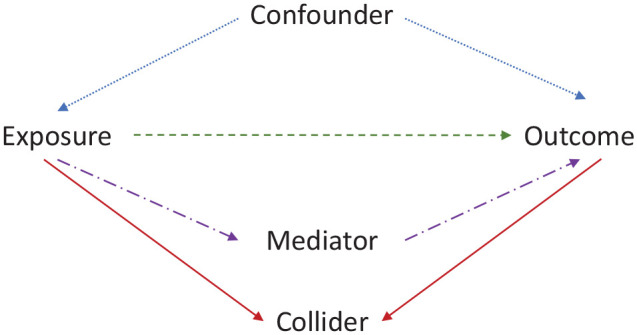
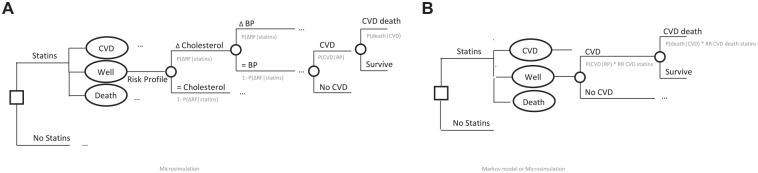
Decision-analytic models (DAMs) are essentially informative yet complex tools for solving questions in medical decision making. When their complexity grows, the need for causal inference techniques becomes evident as causal relationships between variables become unclear. In this methodological commentary, we argue that graphical representations of assumptions on such relationships, directed acyclic graphs (DAGs), can enhance the transparency of decision models and aid in parameter selection and estimation through visually specifying backdoor paths (i.e., potential biases in parameter estimates) and visually clarifying structural modeling choices of frontdoor paths (i.e., the effect of the model structure on the outcome). This commentary discusses the benefit of integrating DAGs and DAMs in medical decision making and in particular health economics with 2 applications: the first examines statin use for prevention of cardiovascular disease, and the second considers mindfulness-based interventions for students' stress. Despite the potential application of DAGs in the decision science framework, challenges remain, including simplicity, defining the scope of a DAG, unmeasured confounding, noncausal aspects, and limited data availability or quality. Broader adoption of DAGs in decision science requires full-model applications and further debate.HighlightsOur commentary proposes the application of directed acyclic graphs (DAGs) in the design of decision-analytic models, offering researchers a valuable and structured tool to enhance transparency and accuracy by bridging the gap between causal inference and model design in medical decision making.The practical examples in this article showcase the transformative effect DAGs can have on model structure, parameter selection, and the resulting conclusions on effectiveness and cost-effectiveness.This methodological article invites a broader conversation on decision-modeling choices grounded in causal assumptions.
期刊介绍:
Medical Decision Making offers rigorous and systematic approaches to decision making that are designed to improve the health and clinical care of individuals and to assist with health care policy development. Using the fundamentals of decision analysis and theory, economic evaluation, and evidence based quality assessment, Medical Decision Making presents both theoretical and practical statistical and modeling techniques and methods from a variety of disciplines.





 京公网安备 11010802042870号
京ICP备2023020795号-1
京公网安备 11010802042870号
京ICP备2023020795号-1

 分享
分享
 求助内容:
求助内容: 应助结果提醒方式:
 扫码关注我们
