{"title":"睡眠呼吸暂停-低通气综合征的长期治疗:持续气道正压治疗的疗效和挑战。","authors":"Zishan Rahman, Ahsan Nazim, Palvi Mroke, Khansa Ali, M D Parbej Allam, Aakash Mahato, Mahveer Maheshwari, Camila Sanchez Cruz, Imran Baig, Ernesto Calderon Martinez","doi":"10.3390/medsci13010004","DOIUrl":null,"url":null,"abstract":"<p><p>Sleep apnea-hypopnea syndrome (SAHS) is a respiratory disorder characterized by cessation of breathing during sleep, resulting in daytime somnolence and various comorbidities. SAHS encompasses obstructive sleep apnea (OSA), caused by upper airway obstruction, and central sleep apnea (CSA), resulting from lack of brainstem signaling for respiration. Continuous positive airway pressure (CPAP) therapy is the gold standard treatment for SAHS, reducing apnea and hypopnea episodes by providing continuous airflow. CPAP enhances sleep quality and improves overall health by reducing the risk of comorbidities such as hypertension, type 2 diabetes mellitus, cardiovascular disease and stroke. CPAP nonadherence leads to health deterioration and occurs due to mask discomfort, unsupportive partners, upper respiratory dryness, and claustrophobia. Technological advancements such as auto-titrating positive airway pressure (APAP) systems, smart fit mask interface systems, and telemonitoring devices offer patients greater comfort and enhance adherence. Future research should focus on new technological developments, such as artificial intelligence, which may detect treatment failure and alert providers to intervene accordingly.</p>","PeriodicalId":74152,"journal":{"name":"Medical sciences (Basel, Switzerland)","volume":"13 1","pages":""},"PeriodicalIF":4.4000,"publicationDate":"2024-12-30","publicationTypes":"Journal Article","fieldsOfStudy":null,"isOpenAccess":false,"openAccessPdf":"https://www.ncbi.nlm.nih.gov/pmc/articles/PMC11755547/pdf/","citationCount":"0","resultStr":"{\"title\":\"Long-Term Management of Sleep Apnea-Hypopnea Syndrome: Efficacy and Challenges of Continuous Positive Airway Pressure Therapy-A Narrative Review.\",\"authors\":\"Zishan Rahman, Ahsan Nazim, Palvi Mroke, Khansa Ali, M D Parbej Allam, Aakash Mahato, Mahveer Maheshwari, Camila Sanchez Cruz, Imran Baig, Ernesto Calderon Martinez\",\"doi\":\"10.3390/medsci13010004\",\"DOIUrl\":null,\"url\":null,\"abstract\":\"<p><p>Sleep apnea-hypopnea syndrome (SAHS) is a respiratory disorder characterized by cessation of breathing during sleep, resulting in daytime somnolence and various comorbidities. SAHS encompasses obstructive sleep apnea (OSA), caused by upper airway obstruction, and central sleep apnea (CSA), resulting from lack of brainstem signaling for respiration. Continuous positive airway pressure (CPAP) therapy is the gold standard treatment for SAHS, reducing apnea and hypopnea episodes by providing continuous airflow. CPAP enhances sleep quality and improves overall health by reducing the risk of comorbidities such as hypertension, type 2 diabetes mellitus, cardiovascular disease and stroke. CPAP nonadherence leads to health deterioration and occurs due to mask discomfort, unsupportive partners, upper respiratory dryness, and claustrophobia. Technological advancements such as auto-titrating positive airway pressure (APAP) systems, smart fit mask interface systems, and telemonitoring devices offer patients greater comfort and enhance adherence. Future research should focus on new technological developments, such as artificial intelligence, which may detect treatment failure and alert providers to intervene accordingly.</p>\",\"PeriodicalId\":74152,\"journal\":{\"name\":\"Medical sciences (Basel, Switzerland)\",\"volume\":\"13 1\",\"pages\":\"\"},\"PeriodicalIF\":4.4000,\"publicationDate\":\"2024-12-30\",\"publicationTypes\":\"Journal Article\",\"fieldsOfStudy\":null,\"isOpenAccess\":false,\"openAccessPdf\":\"https://www.ncbi.nlm.nih.gov/pmc/articles/PMC11755547/pdf/\",\"citationCount\":\"0\",\"resultStr\":null,\"platform\":\"Semanticscholar\",\"paperid\":null,\"PeriodicalName\":\"Medical sciences (Basel, Switzerland)\",\"FirstCategoryId\":\"1085\",\"ListUrlMain\":\"https://doi.org/10.3390/medsci13010004\",\"RegionNum\":0,\"RegionCategory\":null,\"ArticlePicture\":[],\"TitleCN\":null,\"AbstractTextCN\":null,\"PMCID\":null,\"EPubDate\":\"\",\"PubModel\":\"\",\"JCR\":\"Q1\",\"JCRName\":\"Medicine\",\"Score\":null,\"Total\":0}","platform":"Semanticscholar","paperid":null,"PeriodicalName":"Medical sciences (Basel, Switzerland)","FirstCategoryId":"1085","ListUrlMain":"https://doi.org/10.3390/medsci13010004","RegionNum":0,"RegionCategory":null,"ArticlePicture":[],"TitleCN":null,"AbstractTextCN":null,"PMCID":null,"EPubDate":"","PubModel":"","JCR":"Q1","JCRName":"Medicine","Score":null,"Total":0}
Long-Term Management of Sleep Apnea-Hypopnea Syndrome: Efficacy and Challenges of Continuous Positive Airway Pressure Therapy-A Narrative Review.
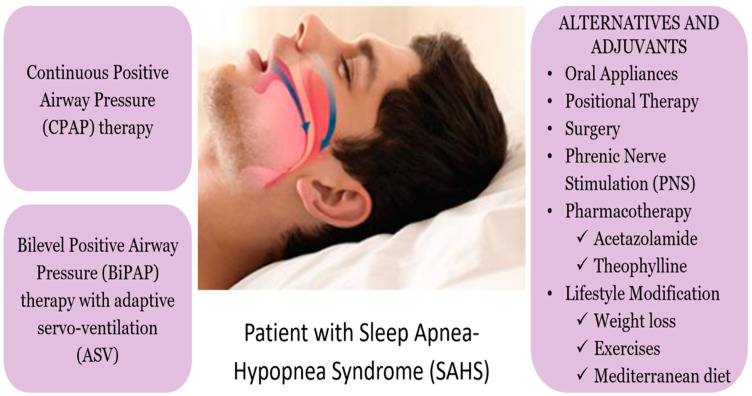
Sleep apnea-hypopnea syndrome (SAHS) is a respiratory disorder characterized by cessation of breathing during sleep, resulting in daytime somnolence and various comorbidities. SAHS encompasses obstructive sleep apnea (OSA), caused by upper airway obstruction, and central sleep apnea (CSA), resulting from lack of brainstem signaling for respiration. Continuous positive airway pressure (CPAP) therapy is the gold standard treatment for SAHS, reducing apnea and hypopnea episodes by providing continuous airflow. CPAP enhances sleep quality and improves overall health by reducing the risk of comorbidities such as hypertension, type 2 diabetes mellitus, cardiovascular disease and stroke. CPAP nonadherence leads to health deterioration and occurs due to mask discomfort, unsupportive partners, upper respiratory dryness, and claustrophobia. Technological advancements such as auto-titrating positive airway pressure (APAP) systems, smart fit mask interface systems, and telemonitoring devices offer patients greater comfort and enhance adherence. Future research should focus on new technological developments, such as artificial intelligence, which may detect treatment failure and alert providers to intervene accordingly.




 京公网安备 11010802042870号
京ICP备2023020795号-1
京公网安备 11010802042870号
京ICP备2023020795号-1

 分享
分享

 求助内容:
求助内容: 应助结果提醒方式:
 扫码关注我们
