Shiyi Chen , Guo-Dong Wu , Tongfu Li , Jiacheng Jiang , Yuqing Zhong , Dong Sun , Feng Qian , Long Shuang Huang
{"title":"JX06靶向GSDMD抑制PANoptosis和多器官损伤。","authors":"Shiyi Chen , Guo-Dong Wu , Tongfu Li , Jiacheng Jiang , Yuqing Zhong , Dong Sun , Feng Qian , Long Shuang Huang","doi":"10.1016/j.bcp.2025.116765","DOIUrl":null,"url":null,"abstract":"<div><div>Multiple organ dysfunction syndrome (MODS) is the major cause of mortality of patients in intensive care units. The elusive mechanisms of tissue damage in MODS and limited therapeutic options encourage us to seek effective therapies to MODS. PANoptosis has recently been proven to be the key player in both heat stress and sepsis-mediated MODS. Therefore, we initially investigated the role of gasdermin D (GSDMD) in heat stress and sepsis-induced MODS. We found that GSDMD deficiency attenuates heat stress or sepsis mediated cell death, tissue inflammation and severe multiple organ injury (MOI). Next, we screened out and proved that JX06 effectively inhibited GSDMD-NT mediated cell death, by covalently modifying the Cys39/192 residue in GSDMD, inhibiting the accumulation of GSDMD-NT and pore formation in cell membrane. In vivo, JX06 administration attenuated heat stress and sepsis-mediated cell death, inflammation, MODS and animal mortality via suppressing GSDMD-mediated PANoptosis. Overall, our results indicated that GSDMD is critical for MODS by executing PANoptosis; administrating its inhibitor, JX06, effectively suppresses MODS by inhibiting PANoptosis, and suggesting that JX06 would be an effective drug candidate for MODS and related death.</div></div>","PeriodicalId":8806,"journal":{"name":"Biochemical pharmacology","volume":"233 ","pages":"Article 116765"},"PeriodicalIF":5.6000,"publicationDate":"2025-03-01","publicationTypes":"Journal Article","fieldsOfStudy":null,"isOpenAccess":false,"openAccessPdf":"","citationCount":"0","resultStr":"{\"title\":\"Targeting GSDMD JX06 inhibits PANoptosis and multiple organ injury\",\"authors\":\"Shiyi Chen , Guo-Dong Wu , Tongfu Li , Jiacheng Jiang , Yuqing Zhong , Dong Sun , Feng Qian , Long Shuang Huang\",\"doi\":\"10.1016/j.bcp.2025.116765\",\"DOIUrl\":null,\"url\":null,\"abstract\":\"<div><div>Multiple organ dysfunction syndrome (MODS) is the major cause of mortality of patients in intensive care units. The elusive mechanisms of tissue damage in MODS and limited therapeutic options encourage us to seek effective therapies to MODS. PANoptosis has recently been proven to be the key player in both heat stress and sepsis-mediated MODS. Therefore, we initially investigated the role of gasdermin D (GSDMD) in heat stress and sepsis-induced MODS. We found that GSDMD deficiency attenuates heat stress or sepsis mediated cell death, tissue inflammation and severe multiple organ injury (MOI). Next, we screened out and proved that JX06 effectively inhibited GSDMD-NT mediated cell death, by covalently modifying the Cys39/192 residue in GSDMD, inhibiting the accumulation of GSDMD-NT and pore formation in cell membrane. In vivo, JX06 administration attenuated heat stress and sepsis-mediated cell death, inflammation, MODS and animal mortality via suppressing GSDMD-mediated PANoptosis. Overall, our results indicated that GSDMD is critical for MODS by executing PANoptosis; administrating its inhibitor, JX06, effectively suppresses MODS by inhibiting PANoptosis, and suggesting that JX06 would be an effective drug candidate for MODS and related death.</div></div>\",\"PeriodicalId\":8806,\"journal\":{\"name\":\"Biochemical pharmacology\",\"volume\":\"233 \",\"pages\":\"Article 116765\"},\"PeriodicalIF\":5.6000,\"publicationDate\":\"2025-03-01\",\"publicationTypes\":\"Journal Article\",\"fieldsOfStudy\":null,\"isOpenAccess\":false,\"openAccessPdf\":\"\",\"citationCount\":\"0\",\"resultStr\":null,\"platform\":\"Semanticscholar\",\"paperid\":null,\"PeriodicalName\":\"Biochemical pharmacology\",\"FirstCategoryId\":\"3\",\"ListUrlMain\":\"https://www.sciencedirect.com/science/article/pii/S0006295225000279\",\"RegionNum\":2,\"RegionCategory\":\"医学\",\"ArticlePicture\":[],\"TitleCN\":null,\"AbstractTextCN\":null,\"PMCID\":null,\"EPubDate\":\"2025/1/21 0:00:00\",\"PubModel\":\"Epub\",\"JCR\":\"Q1\",\"JCRName\":\"PHARMACOLOGY & PHARMACY\",\"Score\":null,\"Total\":0}","platform":"Semanticscholar","paperid":null,"PeriodicalName":"Biochemical pharmacology","FirstCategoryId":"3","ListUrlMain":"https://www.sciencedirect.com/science/article/pii/S0006295225000279","RegionNum":2,"RegionCategory":"医学","ArticlePicture":[],"TitleCN":null,"AbstractTextCN":null,"PMCID":null,"EPubDate":"2025/1/21 0:00:00","PubModel":"Epub","JCR":"Q1","JCRName":"PHARMACOLOGY & PHARMACY","Score":null,"Total":0}
Targeting GSDMD JX06 inhibits PANoptosis and multiple organ injury
Multiple organ dysfunction syndrome (MODS) is the major cause of mortality of patients in intensive care units. The elusive mechanisms of tissue damage in MODS and limited therapeutic options encourage us to seek effective therapies to MODS. PANoptosis has recently been proven to be the key player in both heat stress and sepsis-mediated MODS. Therefore, we initially investigated the role of gasdermin D (GSDMD) in heat stress and sepsis-induced MODS. We found that GSDMD deficiency attenuates heat stress or sepsis mediated cell death, tissue inflammation and severe multiple organ injury (MOI). Next, we screened out and proved that JX06 effectively inhibited GSDMD-NT mediated cell death, by covalently modifying the Cys39/192 residue in GSDMD, inhibiting the accumulation of GSDMD-NT and pore formation in cell membrane. In vivo, JX06 administration attenuated heat stress and sepsis-mediated cell death, inflammation, MODS and animal mortality via suppressing GSDMD-mediated PANoptosis. Overall, our results indicated that GSDMD is critical for MODS by executing PANoptosis; administrating its inhibitor, JX06, effectively suppresses MODS by inhibiting PANoptosis, and suggesting that JX06 would be an effective drug candidate for MODS and related death.
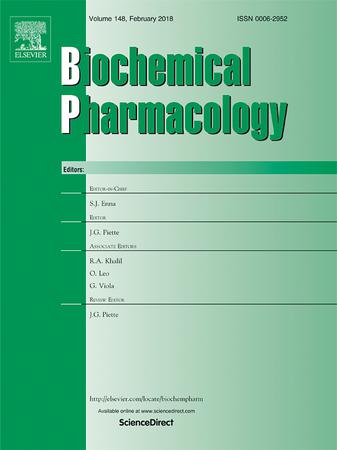
期刊介绍:
Biochemical Pharmacology publishes original research findings, Commentaries and review articles related to the elucidation of cellular and tissue function(s) at the biochemical and molecular levels, the modification of cellular phenotype(s) by genetic, transcriptional/translational or drug/compound-induced modifications, as well as the pharmacodynamics and pharmacokinetics of xenobiotics and drugs, the latter including both small molecules and biologics.
The journal''s target audience includes scientists engaged in the identification and study of the mechanisms of action of xenobiotics, biologics and drugs and in the drug discovery and development process.
All areas of cellular biology and cellular, tissue/organ and whole animal pharmacology fall within the scope of the journal. Drug classes covered include anti-infectives, anti-inflammatory agents, chemotherapeutics, cardiovascular, endocrinological, immunological, metabolic, neurological and psychiatric drugs, as well as research on drug metabolism and kinetics. While medicinal chemistry is a topic of complimentary interest, manuscripts in this area must contain sufficient biological data to characterize pharmacologically the compounds reported. Submissions describing work focused predominately on chemical synthesis and molecular modeling will not be considered for review.
While particular emphasis is placed on reporting the results of molecular and biochemical studies, research involving the use of tissue and animal models of human pathophysiology and toxicology is of interest to the extent that it helps define drug mechanisms of action, safety and efficacy.





 京公网安备 11010802042870号
京ICP备2023020795号-1
京公网安备 11010802042870号
京ICP备2023020795号-1

 分享
分享
 求助内容:
求助内容: 应助结果提醒方式:
 扫码关注我们
