{"title":"通用胶粘剂短牙本质腐蚀:对粘结强度和龈缘适应的影响。","authors":"Hoda Saleh Ismail, Hanan Ahmed Nabil Soliman","doi":"10.1186/s12903-025-05490-9","DOIUrl":null,"url":null,"abstract":"<p><strong>Background: </strong>Short dentin etching, a relatively recent technique, aims to improve resin-dentin bonding by preserving hydroxyapatite crystals within the collagen spaces. This study explores short dentin etching's potential in mitigating over-etching issues in deep proximal dentin/cementum margins, an aspect not previously investigated. This study evaluates the microtensile bond strength (μTBS) and marginal adaptation of two universal adhesives using different etch-and-rinse strategies (15-second and 3-second etching) and self-etch strategies, both immediate and post-thermal cycling and mechanical loading.</p><p><strong>Methods: </strong>Eighty-four molars underwent μTBS testing, categorized by the universal adhesive type (Tetric Uni and Prime&Bond Uni) (n = 42) and adhesive strategy (n = 14) with half tested after 24 h and the rest post aging. Forty-two molars received occluso-mesial preparations with proximal margins in dentin/cementum and were restored accordingly. Scanning electron microscope (SEM) examination of epoxy replicas for the restoration/gingival dentin interfaces was conducted after 24 h and aging. Dentin etching patterns were assessed using SEM. A three-way ANOVA evaluated μTBS data, while a two-way ANOVA and paired sample t-test analyzed marginal adaptation data (significance level is α = 0.05).</p><p><strong>Results: </strong>Adhesive type, strategy, and aging significantly influenced μTBS. After aging, Tetric Uni subgroups displayed higher bond strength compared to Prime&Bond Uni subgroups. Marginal adaptation was unaffected by adhesive type or strategy, although aging reduced bond strength and adaptation for both adhesives.</p><p><strong>Conclusions: </strong>The etch-and-rinse protocol yielded higher μTBS results for the HEMA-free isopropanol-based adhesive (Prime&Bond Uni). Marginal integrity was similar for both adhesives. The 3-second and 15-second etching times produced consistent results in all tests and for both adhesives.</p><p><strong>Clinical significance: </strong>The adhesive protocol for bonding universal adhesives to dentin is contingent on the adhesive composition.</p>","PeriodicalId":9072,"journal":{"name":"BMC Oral Health","volume":"25 1","pages":"128"},"PeriodicalIF":3.8000,"publicationDate":"2025-01-23","publicationTypes":"Journal Article","fieldsOfStudy":null,"isOpenAccess":false,"openAccessPdf":"https://www.ncbi.nlm.nih.gov/pmc/articles/PMC11760696/pdf/","citationCount":"0","resultStr":"{\"title\":\"Short dentin etching with universal adhesives: effect on bond strength and gingival margin adaptation.\",\"authors\":\"Hoda Saleh Ismail, Hanan Ahmed Nabil Soliman\",\"doi\":\"10.1186/s12903-025-05490-9\",\"DOIUrl\":null,\"url\":null,\"abstract\":\"<p><strong>Background: </strong>Short dentin etching, a relatively recent technique, aims to improve resin-dentin bonding by preserving hydroxyapatite crystals within the collagen spaces. This study explores short dentin etching's potential in mitigating over-etching issues in deep proximal dentin/cementum margins, an aspect not previously investigated. This study evaluates the microtensile bond strength (μTBS) and marginal adaptation of two universal adhesives using different etch-and-rinse strategies (15-second and 3-second etching) and self-etch strategies, both immediate and post-thermal cycling and mechanical loading.</p><p><strong>Methods: </strong>Eighty-four molars underwent μTBS testing, categorized by the universal adhesive type (Tetric Uni and Prime&Bond Uni) (n = 42) and adhesive strategy (n = 14) with half tested after 24 h and the rest post aging. Forty-two molars received occluso-mesial preparations with proximal margins in dentin/cementum and were restored accordingly. Scanning electron microscope (SEM) examination of epoxy replicas for the restoration/gingival dentin interfaces was conducted after 24 h and aging. Dentin etching patterns were assessed using SEM. A three-way ANOVA evaluated μTBS data, while a two-way ANOVA and paired sample t-test analyzed marginal adaptation data (significance level is α = 0.05).</p><p><strong>Results: </strong>Adhesive type, strategy, and aging significantly influenced μTBS. After aging, Tetric Uni subgroups displayed higher bond strength compared to Prime&Bond Uni subgroups. Marginal adaptation was unaffected by adhesive type or strategy, although aging reduced bond strength and adaptation for both adhesives.</p><p><strong>Conclusions: </strong>The etch-and-rinse protocol yielded higher μTBS results for the HEMA-free isopropanol-based adhesive (Prime&Bond Uni). Marginal integrity was similar for both adhesives. The 3-second and 15-second etching times produced consistent results in all tests and for both adhesives.</p><p><strong>Clinical significance: </strong>The adhesive protocol for bonding universal adhesives to dentin is contingent on the adhesive composition.</p>\",\"PeriodicalId\":9072,\"journal\":{\"name\":\"BMC Oral Health\",\"volume\":\"25 1\",\"pages\":\"128\"},\"PeriodicalIF\":3.8000,\"publicationDate\":\"2025-01-23\",\"publicationTypes\":\"Journal Article\",\"fieldsOfStudy\":null,\"isOpenAccess\":false,\"openAccessPdf\":\"https://www.ncbi.nlm.nih.gov/pmc/articles/PMC11760696/pdf/\",\"citationCount\":\"0\",\"resultStr\":null,\"platform\":\"Semanticscholar\",\"paperid\":null,\"PeriodicalName\":\"BMC Oral Health\",\"FirstCategoryId\":\"3\",\"ListUrlMain\":\"https://doi.org/10.1186/s12903-025-05490-9\",\"RegionNum\":2,\"RegionCategory\":\"医学\",\"ArticlePicture\":[],\"TitleCN\":null,\"AbstractTextCN\":null,\"PMCID\":null,\"EPubDate\":\"\",\"PubModel\":\"\",\"JCR\":\"Q1\",\"JCRName\":\"DENTISTRY, ORAL SURGERY & MEDICINE\",\"Score\":null,\"Total\":0}","platform":"Semanticscholar","paperid":null,"PeriodicalName":"BMC Oral Health","FirstCategoryId":"3","ListUrlMain":"https://doi.org/10.1186/s12903-025-05490-9","RegionNum":2,"RegionCategory":"医学","ArticlePicture":[],"TitleCN":null,"AbstractTextCN":null,"PMCID":null,"EPubDate":"","PubModel":"","JCR":"Q1","JCRName":"DENTISTRY, ORAL SURGERY & MEDICINE","Score":null,"Total":0}
Short dentin etching with universal adhesives: effect on bond strength and gingival margin adaptation.
Background: Short dentin etching, a relatively recent technique, aims to improve resin-dentin bonding by preserving hydroxyapatite crystals within the collagen spaces. This study explores short dentin etching's potential in mitigating over-etching issues in deep proximal dentin/cementum margins, an aspect not previously investigated. This study evaluates the microtensile bond strength (μTBS) and marginal adaptation of two universal adhesives using different etch-and-rinse strategies (15-second and 3-second etching) and self-etch strategies, both immediate and post-thermal cycling and mechanical loading.
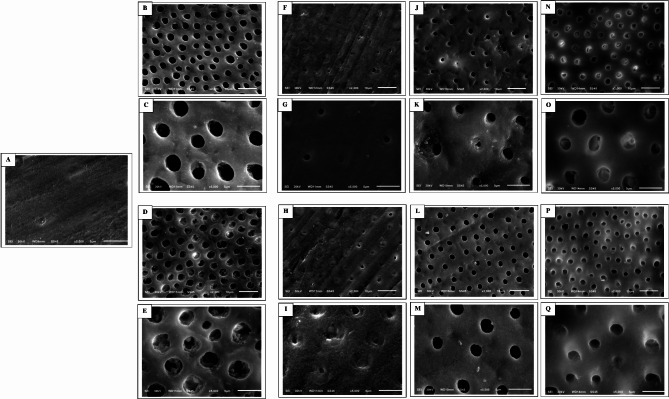
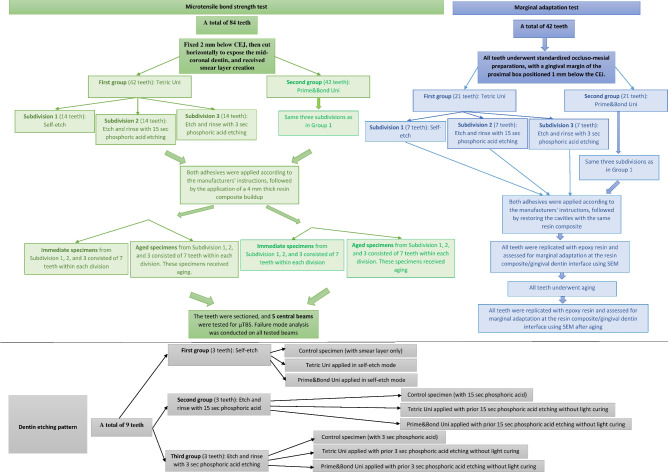
Methods: Eighty-four molars underwent μTBS testing, categorized by the universal adhesive type (Tetric Uni and Prime&Bond Uni) (n = 42) and adhesive strategy (n = 14) with half tested after 24 h and the rest post aging. Forty-two molars received occluso-mesial preparations with proximal margins in dentin/cementum and were restored accordingly. Scanning electron microscope (SEM) examination of epoxy replicas for the restoration/gingival dentin interfaces was conducted after 24 h and aging. Dentin etching patterns were assessed using SEM. A three-way ANOVA evaluated μTBS data, while a two-way ANOVA and paired sample t-test analyzed marginal adaptation data (significance level is α = 0.05).
Results: Adhesive type, strategy, and aging significantly influenced μTBS. After aging, Tetric Uni subgroups displayed higher bond strength compared to Prime&Bond Uni subgroups. Marginal adaptation was unaffected by adhesive type or strategy, although aging reduced bond strength and adaptation for both adhesives.
Conclusions: The etch-and-rinse protocol yielded higher μTBS results for the HEMA-free isopropanol-based adhesive (Prime&Bond Uni). Marginal integrity was similar for both adhesives. The 3-second and 15-second etching times produced consistent results in all tests and for both adhesives.
Clinical significance: The adhesive protocol for bonding universal adhesives to dentin is contingent on the adhesive composition.
期刊介绍:
BMC Oral Health is an open access, peer-reviewed journal that considers articles on all aspects of the prevention, diagnosis and management of disorders of the mouth, teeth and gums, as well as related molecular genetics, pathophysiology, and epidemiology.





 京公网安备 11010802042870号
京ICP备2023020795号-1
京公网安备 11010802042870号
京ICP备2023020795号-1

 分享
分享
 求助内容:
求助内容: 应助结果提醒方式:
 扫码关注我们
