Wenjuan Zhao, Jiayi Xin, Xin Yu, Zhifang Li, Nan Li
{"title":"赖氨酸乳酸化在原核和真核生物中的研究进展。","authors":"Wenjuan Zhao, Jiayi Xin, Xin Yu, Zhifang Li, Nan Li","doi":"10.3389/fmolb.2024.1510975","DOIUrl":null,"url":null,"abstract":"<p><p>Lysine lactylation is a newly discovered protein post-translational modification that plays regulatory roles in cell metabolism, growth, reprogramming, and tumor progression. It utilizes lactate as the modification precursor, which is an end product of glycolysis while functioning as a signaling molecule in cells. Unlike previous reviews focused primarily on eukaryotes, this review aims to provide a comprehensive summary of recent knowledge about lysine lactylation in prokaryotes and eukaryotes. The current identification and enrichment strategies for lysine lactylation are introduced, and the known readers, writers, and erasers of this modification are summarized. In addition, the physiological and pathological implications of lysine lactylation are reviewed for different organisms, especially in prokaryotic cells. Finally, we end with a discussion of the limitations of the studies so far and propose future directions for lysine lactylation investigations.</p>","PeriodicalId":12465,"journal":{"name":"Frontiers in Molecular Biosciences","volume":"11 ","pages":"1510975"},"PeriodicalIF":4.4000,"publicationDate":"2025-01-09","publicationTypes":"Journal Article","fieldsOfStudy":null,"isOpenAccess":false,"openAccessPdf":"https://www.ncbi.nlm.nih.gov/pmc/articles/PMC11754067/pdf/","citationCount":"0","resultStr":"{\"title\":\"Recent advances of lysine lactylation in prokaryotes and eukaryotes.\",\"authors\":\"Wenjuan Zhao, Jiayi Xin, Xin Yu, Zhifang Li, Nan Li\",\"doi\":\"10.3389/fmolb.2024.1510975\",\"DOIUrl\":null,\"url\":null,\"abstract\":\"<p><p>Lysine lactylation is a newly discovered protein post-translational modification that plays regulatory roles in cell metabolism, growth, reprogramming, and tumor progression. It utilizes lactate as the modification precursor, which is an end product of glycolysis while functioning as a signaling molecule in cells. Unlike previous reviews focused primarily on eukaryotes, this review aims to provide a comprehensive summary of recent knowledge about lysine lactylation in prokaryotes and eukaryotes. The current identification and enrichment strategies for lysine lactylation are introduced, and the known readers, writers, and erasers of this modification are summarized. In addition, the physiological and pathological implications of lysine lactylation are reviewed for different organisms, especially in prokaryotic cells. Finally, we end with a discussion of the limitations of the studies so far and propose future directions for lysine lactylation investigations.</p>\",\"PeriodicalId\":12465,\"journal\":{\"name\":\"Frontiers in Molecular Biosciences\",\"volume\":\"11 \",\"pages\":\"1510975\"},\"PeriodicalIF\":4.4000,\"publicationDate\":\"2025-01-09\",\"publicationTypes\":\"Journal Article\",\"fieldsOfStudy\":null,\"isOpenAccess\":false,\"openAccessPdf\":\"https://www.ncbi.nlm.nih.gov/pmc/articles/PMC11754067/pdf/\",\"citationCount\":\"0\",\"resultStr\":null,\"platform\":\"Semanticscholar\",\"paperid\":null,\"PeriodicalName\":\"Frontiers in Molecular Biosciences\",\"FirstCategoryId\":\"99\",\"ListUrlMain\":\"https://doi.org/10.3389/fmolb.2024.1510975\",\"RegionNum\":3,\"RegionCategory\":\"生物学\",\"ArticlePicture\":[],\"TitleCN\":null,\"AbstractTextCN\":null,\"PMCID\":null,\"EPubDate\":\"2024/1/1 0:00:00\",\"PubModel\":\"eCollection\",\"JCR\":\"Q2\",\"JCRName\":\"BIOCHEMISTRY & MOLECULAR BIOLOGY\",\"Score\":null,\"Total\":0}","platform":"Semanticscholar","paperid":null,"PeriodicalName":"Frontiers in Molecular Biosciences","FirstCategoryId":"99","ListUrlMain":"https://doi.org/10.3389/fmolb.2024.1510975","RegionNum":3,"RegionCategory":"生物学","ArticlePicture":[],"TitleCN":null,"AbstractTextCN":null,"PMCID":null,"EPubDate":"2024/1/1 0:00:00","PubModel":"eCollection","JCR":"Q2","JCRName":"BIOCHEMISTRY & MOLECULAR BIOLOGY","Score":null,"Total":0}
Recent advances of lysine lactylation in prokaryotes and eukaryotes.
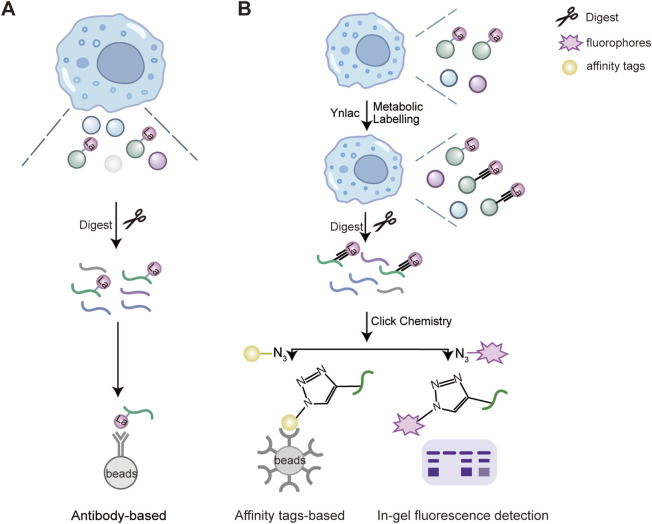
Lysine lactylation is a newly discovered protein post-translational modification that plays regulatory roles in cell metabolism, growth, reprogramming, and tumor progression. It utilizes lactate as the modification precursor, which is an end product of glycolysis while functioning as a signaling molecule in cells. Unlike previous reviews focused primarily on eukaryotes, this review aims to provide a comprehensive summary of recent knowledge about lysine lactylation in prokaryotes and eukaryotes. The current identification and enrichment strategies for lysine lactylation are introduced, and the known readers, writers, and erasers of this modification are summarized. In addition, the physiological and pathological implications of lysine lactylation are reviewed for different organisms, especially in prokaryotic cells. Finally, we end with a discussion of the limitations of the studies so far and propose future directions for lysine lactylation investigations.
期刊介绍:
Much of contemporary investigation in the life sciences is devoted to the molecular-scale understanding of the relationships between genes and the environment — in particular, dynamic alterations in the levels, modifications, and interactions of cellular effectors, including proteins. Frontiers in Molecular Biosciences offers an international publication platform for basic as well as applied research; we encourage contributions spanning both established and emerging areas of biology. To this end, the journal draws from empirical disciplines such as structural biology, enzymology, biochemistry, and biophysics, capitalizing as well on the technological advancements that have enabled metabolomics and proteomics measurements in massively parallel throughput, and the development of robust and innovative computational biology strategies. We also recognize influences from medicine and technology, welcoming studies in molecular genetics, molecular diagnostics and therapeutics, and nanotechnology.
Our ultimate objective is the comprehensive illustration of the molecular mechanisms regulating proteins, nucleic acids, carbohydrates, lipids, and small metabolites in organisms across all branches of life.
In addition to interesting new findings, techniques, and applications, Frontiers in Molecular Biosciences will consider new testable hypotheses to inspire different perspectives and stimulate scientific dialogue. The integration of in silico, in vitro, and in vivo approaches will benefit endeavors across all domains of the life sciences.






 京公网安备 11010802042870号
京ICP备2023020795号-1
京公网安备 11010802042870号
京ICP备2023020795号-1

 分享
分享
 求助内容:
求助内容: 应助结果提醒方式:
 扫码关注我们
