Alison R Bamford, Georgia M Parkin, Jody Corey-Bloom, Elizabeth A Thomas
{"title":"神经退行性疾病生物标志物在亨廷顿病患者不同生物体液中的比较","authors":"Alison R Bamford, Georgia M Parkin, Jody Corey-Bloom, Elizabeth A Thomas","doi":"10.1007/s00415-024-12785-4","DOIUrl":null,"url":null,"abstract":"<p><p>Fluid biomarkers play important roles in many aspects of neurodegenerative diseases, such as Huntington's disease (HD). However, a main question relates to how well levels of biomarkers measured in CSF are correlated with those measured in peripheral fluids, such as blood or saliva. In this study, we quantified levels of four neurodegenerative disease-related proteins, neurofilament light (NfL), total tau (t-tau), glial fibrillary acidic protein (GFAP) and YKL-40 in matched CSF, plasma and saliva samples from Huntingtin (HTT) gene-positive individuals (n = 21) using electrochemiluminescence assays. In addition, salivary levels of NfL, t-tau, and GFAP were quantified from a larger cohort (n = 95). We found both positive and negative correlations in the levels of these biomarkers among different biofluids. Most notably, in contrast to the significant positive correlations observed between CSF and plasma levels for NfL and GFAP, we detected significant negative correlations between the CSF and saliva levels of NfL and GFAP. With regard to clinical measures, both plasma and CSF levels of NfL were significantly positively correlated with Total Motor Score and chorea, whereas saliva levels of NfL showed significant correlations in the opposite direction. Additional correlations between salivary biomarkers with clinical data, adjusting for age, sex and CAG repeat length, confirmed that salivary NfL was significantly negatively associated with chorea scores in manifest HD, but not premanifest (PM), individuals. In contrast, salivary t-tau was positively associated with measures of cognition in PM participants. These findings suggest that salivary levels of NfL and t-tau proteins may exemplify non-invasive biomarkers for disease symptoms at different stages of illness. Further, these findings highlight the notion that different forms of disease proteins exist in different biological fluids.</p>","PeriodicalId":16558,"journal":{"name":"Journal of Neurology","volume":"272 2","pages":"158"},"PeriodicalIF":5.4000,"publicationDate":"2025-01-23","publicationTypes":"Journal Article","fieldsOfStudy":null,"isOpenAccess":false,"openAccessPdf":"https://www.ncbi.nlm.nih.gov/pmc/articles/PMC11759467/pdf/","citationCount":"0","resultStr":"{\"title\":\"Comparisons of neurodegenerative disease biomarkers across different biological fluids from patients with Huntington's disease.\",\"authors\":\"Alison R Bamford, Georgia M Parkin, Jody Corey-Bloom, Elizabeth A Thomas\",\"doi\":\"10.1007/s00415-024-12785-4\",\"DOIUrl\":null,\"url\":null,\"abstract\":\"<p><p>Fluid biomarkers play important roles in many aspects of neurodegenerative diseases, such as Huntington's disease (HD). However, a main question relates to how well levels of biomarkers measured in CSF are correlated with those measured in peripheral fluids, such as blood or saliva. In this study, we quantified levels of four neurodegenerative disease-related proteins, neurofilament light (NfL), total tau (t-tau), glial fibrillary acidic protein (GFAP) and YKL-40 in matched CSF, plasma and saliva samples from Huntingtin (HTT) gene-positive individuals (n = 21) using electrochemiluminescence assays. In addition, salivary levels of NfL, t-tau, and GFAP were quantified from a larger cohort (n = 95). We found both positive and negative correlations in the levels of these biomarkers among different biofluids. Most notably, in contrast to the significant positive correlations observed between CSF and plasma levels for NfL and GFAP, we detected significant negative correlations between the CSF and saliva levels of NfL and GFAP. With regard to clinical measures, both plasma and CSF levels of NfL were significantly positively correlated with Total Motor Score and chorea, whereas saliva levels of NfL showed significant correlations in the opposite direction. Additional correlations between salivary biomarkers with clinical data, adjusting for age, sex and CAG repeat length, confirmed that salivary NfL was significantly negatively associated with chorea scores in manifest HD, but not premanifest (PM), individuals. In contrast, salivary t-tau was positively associated with measures of cognition in PM participants. These findings suggest that salivary levels of NfL and t-tau proteins may exemplify non-invasive biomarkers for disease symptoms at different stages of illness. Further, these findings highlight the notion that different forms of disease proteins exist in different biological fluids.</p>\",\"PeriodicalId\":16558,\"journal\":{\"name\":\"Journal of Neurology\",\"volume\":\"272 2\",\"pages\":\"158\"},\"PeriodicalIF\":5.4000,\"publicationDate\":\"2025-01-23\",\"publicationTypes\":\"Journal Article\",\"fieldsOfStudy\":null,\"isOpenAccess\":false,\"openAccessPdf\":\"https://www.ncbi.nlm.nih.gov/pmc/articles/PMC11759467/pdf/\",\"citationCount\":\"0\",\"resultStr\":null,\"platform\":\"Semanticscholar\",\"paperid\":null,\"PeriodicalName\":\"Journal of Neurology\",\"FirstCategoryId\":\"3\",\"ListUrlMain\":\"https://doi.org/10.1007/s00415-024-12785-4\",\"RegionNum\":2,\"RegionCategory\":\"医学\",\"ArticlePicture\":[],\"TitleCN\":null,\"AbstractTextCN\":null,\"PMCID\":null,\"EPubDate\":\"\",\"PubModel\":\"\",\"JCR\":\"Q1\",\"JCRName\":\"CLINICAL NEUROLOGY\",\"Score\":null,\"Total\":0}","platform":"Semanticscholar","paperid":null,"PeriodicalName":"Journal of Neurology","FirstCategoryId":"3","ListUrlMain":"https://doi.org/10.1007/s00415-024-12785-4","RegionNum":2,"RegionCategory":"医学","ArticlePicture":[],"TitleCN":null,"AbstractTextCN":null,"PMCID":null,"EPubDate":"","PubModel":"","JCR":"Q1","JCRName":"CLINICAL NEUROLOGY","Score":null,"Total":0}
引用次数: 0
摘要
液体生物标志物在神经退行性疾病,如亨廷顿舞蹈病(HD)的许多方面发挥重要作用。然而,一个主要的问题是脑脊液中测量的生物标志物水平与外周液体(如血液或唾液)中测量的生物标志物水平的相关性如何。在这项研究中,我们使用电化学发光法定量了亨廷顿蛋白(HTT)基因阳性个体(n = 21)匹配脑脊液、血浆和唾液样本中的四种神经退行性疾病相关蛋白,神经丝光(NfL)、总tau (t-tau)、胶质纤维酸性蛋白(GFAP)和YKL-40的水平。此外,从一个更大的队列(n = 95)中量化唾液中NfL、t-tau和GFAP的水平。我们发现这些生物标志物在不同生物流体中的水平存在正相关和负相关。最值得注意的是,与脑脊液中NfL和GFAP与血浆水平显著正相关相反,我们发现脑脊液中NfL和GFAP与唾液水平显著负相关。在临床测量中,血浆和脑脊液中NfL水平与Total Motor Score和舞蹈病呈显著正相关,而唾液中NfL水平与Total Motor Score和舞蹈病呈显著正相关。唾液生物标志物与临床数据之间的其他相关性,调整了年龄、性别和CAG重复长度,证实了唾液NfL与显性HD个体的chorea评分呈显著负相关,但与预显(PM)个体无关。相比之下,唾液t-tau与PM参与者的认知测量呈正相关。这些发现表明,唾液中NfL和t-tau蛋白的水平可能是疾病不同阶段疾病症状的非侵入性生物标志物。此外,这些发现强调了不同形式的疾病蛋白存在于不同生物液体中的概念。
Comparisons of neurodegenerative disease biomarkers across different biological fluids from patients with Huntington's disease.
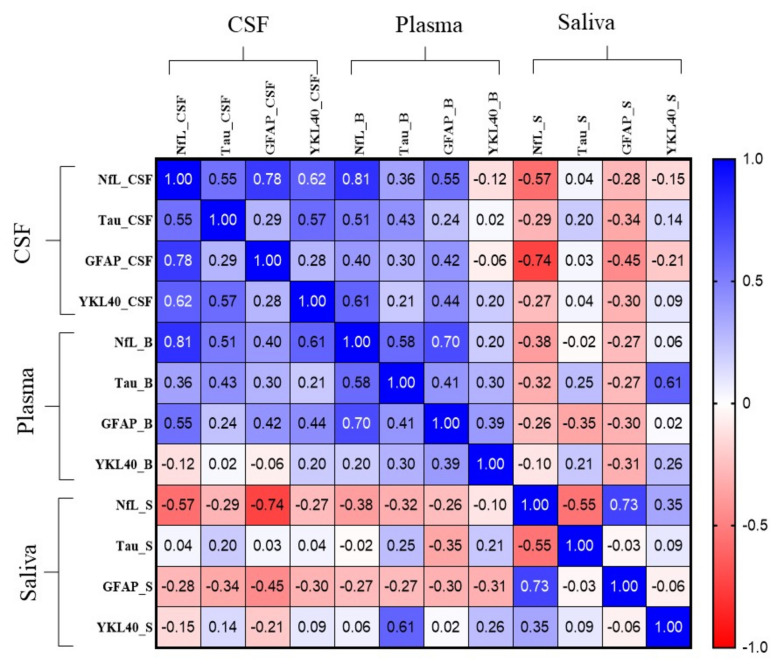
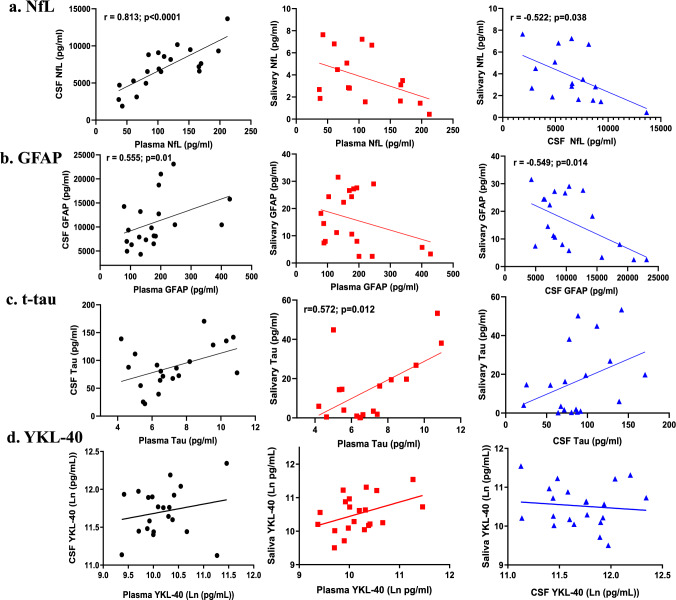
Fluid biomarkers play important roles in many aspects of neurodegenerative diseases, such as Huntington's disease (HD). However, a main question relates to how well levels of biomarkers measured in CSF are correlated with those measured in peripheral fluids, such as blood or saliva. In this study, we quantified levels of four neurodegenerative disease-related proteins, neurofilament light (NfL), total tau (t-tau), glial fibrillary acidic protein (GFAP) and YKL-40 in matched CSF, plasma and saliva samples from Huntingtin (HTT) gene-positive individuals (n = 21) using electrochemiluminescence assays. In addition, salivary levels of NfL, t-tau, and GFAP were quantified from a larger cohort (n = 95). We found both positive and negative correlations in the levels of these biomarkers among different biofluids. Most notably, in contrast to the significant positive correlations observed between CSF and plasma levels for NfL and GFAP, we detected significant negative correlations between the CSF and saliva levels of NfL and GFAP. With regard to clinical measures, both plasma and CSF levels of NfL were significantly positively correlated with Total Motor Score and chorea, whereas saliva levels of NfL showed significant correlations in the opposite direction. Additional correlations between salivary biomarkers with clinical data, adjusting for age, sex and CAG repeat length, confirmed that salivary NfL was significantly negatively associated with chorea scores in manifest HD, but not premanifest (PM), individuals. In contrast, salivary t-tau was positively associated with measures of cognition in PM participants. These findings suggest that salivary levels of NfL and t-tau proteins may exemplify non-invasive biomarkers for disease symptoms at different stages of illness. Further, these findings highlight the notion that different forms of disease proteins exist in different biological fluids.
期刊介绍:
The Journal of Neurology is an international peer-reviewed journal which provides a source for publishing original communications and reviews on clinical neurology covering the whole field.
In addition, Letters to the Editors serve as a forum for clinical cases and the exchange of ideas which highlight important new findings. A section on Neurological progress serves to summarise the major findings in certain fields of neurology. Commentaries on new developments in clinical neuroscience, which may be commissioned or submitted, are published as editorials.
Every neurologist interested in the current diagnosis and treatment of neurological disorders needs access to the information contained in this valuable journal.





 京公网安备 11010802042870号
京ICP备2023020795号-1
京公网安备 11010802042870号
京ICP备2023020795号-1

 分享
分享
 求助内容:
求助内容: 应助结果提醒方式:
 扫码关注我们
