Fengyao Sun, Wen Li, Ruihang Du, Mingchan Liu, Yi Cheng, Jianxing Ma, Siyuan Yan
{"title":"糖酵解酶和代谢物在肿瘤发生和治疗中调节DNA损伤修复的作用。","authors":"Fengyao Sun, Wen Li, Ruihang Du, Mingchan Liu, Yi Cheng, Jianxing Ma, Siyuan Yan","doi":"10.1186/s12964-025-02047-9","DOIUrl":null,"url":null,"abstract":"<p><p>Initially, it was believed that glycolysis and DNA damage repair (DDR) were two distinct biological processes that independently regulate tumor progression. The former metabolic reprogramming rapidly generates energy and generous intermediate metabolites, supporting the synthetic metabolism and proliferation of tumor cells. While the DDR plays a pivotal role in preserving genomic stability, thus resisting cellular senescence and cell death under both physiological and radio-chemotherapy conditions. Recently, an increasing number of studies have shown closely correlation between these two biological processes, and then promoting tumor progression. For instance, lactic acid, the product of glycolysis, maintains an acidic tumor microenvironment that not only fosters cell proliferation and invasion but also facilitates DDR by enhancing AKT activity. Here, we provide a comprehensive overview of the enzymes and metabolites involved in glycolysis, along with the primary methods for DDR. Meanwhile, this review explores existing knowledge of glycolysis enzymes and metabolites in regulating DDR. Moreover, considering the significant roles of glycolysis and DDR in tumor development and radio-chemotherapy resistance, the present review discusses effective direct or indirect therapeutic strategies targeted to glycolysis and DDR.</p>","PeriodicalId":55268,"journal":{"name":"Cell Communication and Signaling","volume":"23 1","pages":"44"},"PeriodicalIF":11.6000,"publicationDate":"2025-01-23","publicationTypes":"Journal Article","fieldsOfStudy":null,"isOpenAccess":false,"openAccessPdf":"https://www.ncbi.nlm.nih.gov/pmc/articles/PMC11760674/pdf/","citationCount":"0","resultStr":"{\"title\":\"Impact of glycolysis enzymes and metabolites in regulating DNA damage repair in tumorigenesis and therapy.\",\"authors\":\"Fengyao Sun, Wen Li, Ruihang Du, Mingchan Liu, Yi Cheng, Jianxing Ma, Siyuan Yan\",\"doi\":\"10.1186/s12964-025-02047-9\",\"DOIUrl\":null,\"url\":null,\"abstract\":\"<p><p>Initially, it was believed that glycolysis and DNA damage repair (DDR) were two distinct biological processes that independently regulate tumor progression. The former metabolic reprogramming rapidly generates energy and generous intermediate metabolites, supporting the synthetic metabolism and proliferation of tumor cells. While the DDR plays a pivotal role in preserving genomic stability, thus resisting cellular senescence and cell death under both physiological and radio-chemotherapy conditions. Recently, an increasing number of studies have shown closely correlation between these two biological processes, and then promoting tumor progression. For instance, lactic acid, the product of glycolysis, maintains an acidic tumor microenvironment that not only fosters cell proliferation and invasion but also facilitates DDR by enhancing AKT activity. Here, we provide a comprehensive overview of the enzymes and metabolites involved in glycolysis, along with the primary methods for DDR. Meanwhile, this review explores existing knowledge of glycolysis enzymes and metabolites in regulating DDR. Moreover, considering the significant roles of glycolysis and DDR in tumor development and radio-chemotherapy resistance, the present review discusses effective direct or indirect therapeutic strategies targeted to glycolysis and DDR.</p>\",\"PeriodicalId\":55268,\"journal\":{\"name\":\"Cell Communication and Signaling\",\"volume\":\"23 1\",\"pages\":\"44\"},\"PeriodicalIF\":11.6000,\"publicationDate\":\"2025-01-23\",\"publicationTypes\":\"Journal Article\",\"fieldsOfStudy\":null,\"isOpenAccess\":false,\"openAccessPdf\":\"https://www.ncbi.nlm.nih.gov/pmc/articles/PMC11760674/pdf/\",\"citationCount\":\"0\",\"resultStr\":null,\"platform\":\"Semanticscholar\",\"paperid\":null,\"PeriodicalName\":\"Cell Communication and Signaling\",\"FirstCategoryId\":\"99\",\"ListUrlMain\":\"https://doi.org/10.1186/s12964-025-02047-9\",\"RegionNum\":2,\"RegionCategory\":\"生物学\",\"ArticlePicture\":[],\"TitleCN\":null,\"AbstractTextCN\":null,\"PMCID\":null,\"EPubDate\":\"\",\"PubModel\":\"\",\"JCR\":\"Q1\",\"JCRName\":\"CELL BIOLOGY\",\"Score\":null,\"Total\":0}","platform":"Semanticscholar","paperid":null,"PeriodicalName":"Cell Communication and Signaling","FirstCategoryId":"99","ListUrlMain":"https://doi.org/10.1186/s12964-025-02047-9","RegionNum":2,"RegionCategory":"生物学","ArticlePicture":[],"TitleCN":null,"AbstractTextCN":null,"PMCID":null,"EPubDate":"","PubModel":"","JCR":"Q1","JCRName":"CELL BIOLOGY","Score":null,"Total":0}
Impact of glycolysis enzymes and metabolites in regulating DNA damage repair in tumorigenesis and therapy.
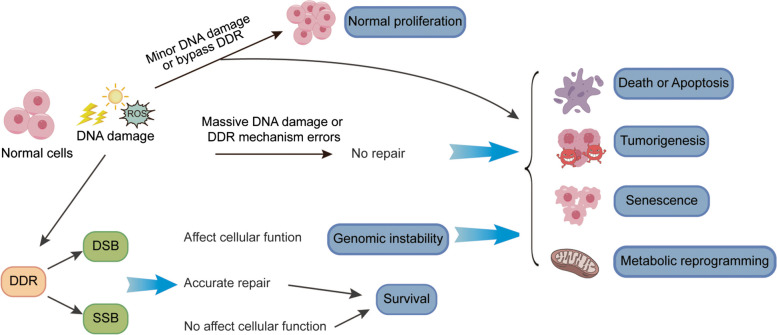
Initially, it was believed that glycolysis and DNA damage repair (DDR) were two distinct biological processes that independently regulate tumor progression. The former metabolic reprogramming rapidly generates energy and generous intermediate metabolites, supporting the synthetic metabolism and proliferation of tumor cells. While the DDR plays a pivotal role in preserving genomic stability, thus resisting cellular senescence and cell death under both physiological and radio-chemotherapy conditions. Recently, an increasing number of studies have shown closely correlation between these two biological processes, and then promoting tumor progression. For instance, lactic acid, the product of glycolysis, maintains an acidic tumor microenvironment that not only fosters cell proliferation and invasion but also facilitates DDR by enhancing AKT activity. Here, we provide a comprehensive overview of the enzymes and metabolites involved in glycolysis, along with the primary methods for DDR. Meanwhile, this review explores existing knowledge of glycolysis enzymes and metabolites in regulating DDR. Moreover, considering the significant roles of glycolysis and DDR in tumor development and radio-chemotherapy resistance, the present review discusses effective direct or indirect therapeutic strategies targeted to glycolysis and DDR.
期刊介绍:
Cell Communication and Signaling (CCS) is a peer-reviewed, open-access scientific journal that focuses on cellular signaling pathways in both normal and pathological conditions. It publishes original research, reviews, and commentaries, welcoming studies that utilize molecular, morphological, biochemical, structural, and cell biology approaches. CCS also encourages interdisciplinary work and innovative models, including in silico, in vitro, and in vivo approaches, to facilitate investigations of cell signaling pathways, networks, and behavior.
Starting from January 2019, CCS is proud to announce its affiliation with the International Cell Death Society. The journal now encourages submissions covering all aspects of cell death, including apoptotic and non-apoptotic mechanisms, cell death in model systems, autophagy, clearance of dying cells, and the immunological and pathological consequences of dying cells in the tissue microenvironment.






 京公网安备 11010802042870号
京ICP备2023020795号-1
京公网安备 11010802042870号
京ICP备2023020795号-1

 分享
分享
 求助内容:
求助内容: 应助结果提醒方式:
 扫码关注我们
