Samaneh Hajjarzadeh, Mehdi Zarei, Shahram Rafie, Davood Shalilahmadi, Majid Karandish
{"title":"补充左旋肉碱对急性缺血性脑卒中患者人体测量和营养不良状况的影响:一项三盲随机临床试验。","authors":"Samaneh Hajjarzadeh, Mehdi Zarei, Shahram Rafie, Davood Shalilahmadi, Majid Karandish","doi":"10.1186/s40795-025-01008-2","DOIUrl":null,"url":null,"abstract":"<p><strong>Background: </strong>Malnutrition is a significant challenge in stroke patients, affecting both rehabilitation and independence. This study aims to evaluate whether early L-carnitine supplementation can effectively improve anthropometric parameters and malnutrition status in acute-phase ischemic stroke patients to mitigate the catabolic state.</p><p><strong>Methods: </strong>Eighty-two first-ever ischemic stroke patients were randomly assigned to either the L-carnitine group (1000 mg three times/day for seven consecutive days) or the matching placebo group. The study outcomes based on intention-to-treat analyses included changes in weight, body mass index, triceps skinfold thickness, mid-arm circumference, mid-arm muscle circumference, arm muscle area, calf circumference, serum ALB and malnutrition status over the seven-day treatment protocol. Malnutrition was assessed based on the serum ALB concentration, mid-arm muscle circumference, and triceps skinfold thickness. Analysis of covariance (ANCOVA) was applied for assessing the between-group changes along with adjusting the baseline mean value effect.</p><p><strong>Results: </strong>Patients receiving L-carnitine had significantly lower changes in terms of weight, body mass index, triceps skinfold thickness, mid-arm circumference, mid-arm muscle circumference, and calf circumference than did those in the placebo group. After the intervention, the placebo group experienced a significantly greater reduction in the mid-arm muscle circumference indicator (P < 0.001). The between-group change in the serum ALB concentration significantly increased in the L-carnitine group (P = 0.001). Moreover, the L-carnitine group was less malnourished than the placebo group [17 (41.5%) vs. 30 (73.2%), respectively; P = 0.01], after the intrvention. The \"recovery\" frequency was significantly greater in the L-carnitine group (18 (43.9%) vs. 3 (7.3%), P < 0.001) than the placebo group.</p><p><strong>Conclusions: </strong>Early L-carnitine supplementation effectively improves anthropometric indices and malnutrition, muscle wasting, and rapid weight loss in acute ischemic stroke patients, highlighting its potential as a supportive nutritional therapy during stroke rehabilitation.</p><p><strong>Trial registration: </strong>The current clinical trial study was registered in the Iranian Registry of Clinical Trials (registration code: IRCT20221206056734N1) at 2023-02-11.</p>","PeriodicalId":36422,"journal":{"name":"BMC Nutrition","volume":"11 1","pages":"20"},"PeriodicalIF":2.2000,"publicationDate":"2025-01-23","publicationTypes":"Journal Article","fieldsOfStudy":null,"isOpenAccess":false,"openAccessPdf":"https://www.ncbi.nlm.nih.gov/pmc/articles/PMC11758746/pdf/","citationCount":"0","resultStr":"{\"title\":\"The effect of L-carnitine supplementation on anthropometric and malnutrition status in acute ischemic stroke patients: a triple-blinded randomized clinical trial.\",\"authors\":\"Samaneh Hajjarzadeh, Mehdi Zarei, Shahram Rafie, Davood Shalilahmadi, Majid Karandish\",\"doi\":\"10.1186/s40795-025-01008-2\",\"DOIUrl\":null,\"url\":null,\"abstract\":\"<p><strong>Background: </strong>Malnutrition is a significant challenge in stroke patients, affecting both rehabilitation and independence. This study aims to evaluate whether early L-carnitine supplementation can effectively improve anthropometric parameters and malnutrition status in acute-phase ischemic stroke patients to mitigate the catabolic state.</p><p><strong>Methods: </strong>Eighty-two first-ever ischemic stroke patients were randomly assigned to either the L-carnitine group (1000 mg three times/day for seven consecutive days) or the matching placebo group. The study outcomes based on intention-to-treat analyses included changes in weight, body mass index, triceps skinfold thickness, mid-arm circumference, mid-arm muscle circumference, arm muscle area, calf circumference, serum ALB and malnutrition status over the seven-day treatment protocol. Malnutrition was assessed based on the serum ALB concentration, mid-arm muscle circumference, and triceps skinfold thickness. Analysis of covariance (ANCOVA) was applied for assessing the between-group changes along with adjusting the baseline mean value effect.</p><p><strong>Results: </strong>Patients receiving L-carnitine had significantly lower changes in terms of weight, body mass index, triceps skinfold thickness, mid-arm circumference, mid-arm muscle circumference, and calf circumference than did those in the placebo group. After the intervention, the placebo group experienced a significantly greater reduction in the mid-arm muscle circumference indicator (P < 0.001). The between-group change in the serum ALB concentration significantly increased in the L-carnitine group (P = 0.001). Moreover, the L-carnitine group was less malnourished than the placebo group [17 (41.5%) vs. 30 (73.2%), respectively; P = 0.01], after the intrvention. The \\\"recovery\\\" frequency was significantly greater in the L-carnitine group (18 (43.9%) vs. 3 (7.3%), P < 0.001) than the placebo group.</p><p><strong>Conclusions: </strong>Early L-carnitine supplementation effectively improves anthropometric indices and malnutrition, muscle wasting, and rapid weight loss in acute ischemic stroke patients, highlighting its potential as a supportive nutritional therapy during stroke rehabilitation.</p><p><strong>Trial registration: </strong>The current clinical trial study was registered in the Iranian Registry of Clinical Trials (registration code: IRCT20221206056734N1) at 2023-02-11.</p>\",\"PeriodicalId\":36422,\"journal\":{\"name\":\"BMC Nutrition\",\"volume\":\"11 1\",\"pages\":\"20\"},\"PeriodicalIF\":2.2000,\"publicationDate\":\"2025-01-23\",\"publicationTypes\":\"Journal Article\",\"fieldsOfStudy\":null,\"isOpenAccess\":false,\"openAccessPdf\":\"https://www.ncbi.nlm.nih.gov/pmc/articles/PMC11758746/pdf/\",\"citationCount\":\"0\",\"resultStr\":null,\"platform\":\"Semanticscholar\",\"paperid\":null,\"PeriodicalName\":\"BMC Nutrition\",\"FirstCategoryId\":\"1085\",\"ListUrlMain\":\"https://doi.org/10.1186/s40795-025-01008-2\",\"RegionNum\":0,\"RegionCategory\":null,\"ArticlePicture\":[],\"TitleCN\":null,\"AbstractTextCN\":null,\"PMCID\":null,\"EPubDate\":\"\",\"PubModel\":\"\",\"JCR\":\"Q3\",\"JCRName\":\"NUTRITION & DIETETICS\",\"Score\":null,\"Total\":0}","platform":"Semanticscholar","paperid":null,"PeriodicalName":"BMC Nutrition","FirstCategoryId":"1085","ListUrlMain":"https://doi.org/10.1186/s40795-025-01008-2","RegionNum":0,"RegionCategory":null,"ArticlePicture":[],"TitleCN":null,"AbstractTextCN":null,"PMCID":null,"EPubDate":"","PubModel":"","JCR":"Q3","JCRName":"NUTRITION & DIETETICS","Score":null,"Total":0}
The effect of L-carnitine supplementation on anthropometric and malnutrition status in acute ischemic stroke patients: a triple-blinded randomized clinical trial.
Background: Malnutrition is a significant challenge in stroke patients, affecting both rehabilitation and independence. This study aims to evaluate whether early L-carnitine supplementation can effectively improve anthropometric parameters and malnutrition status in acute-phase ischemic stroke patients to mitigate the catabolic state.
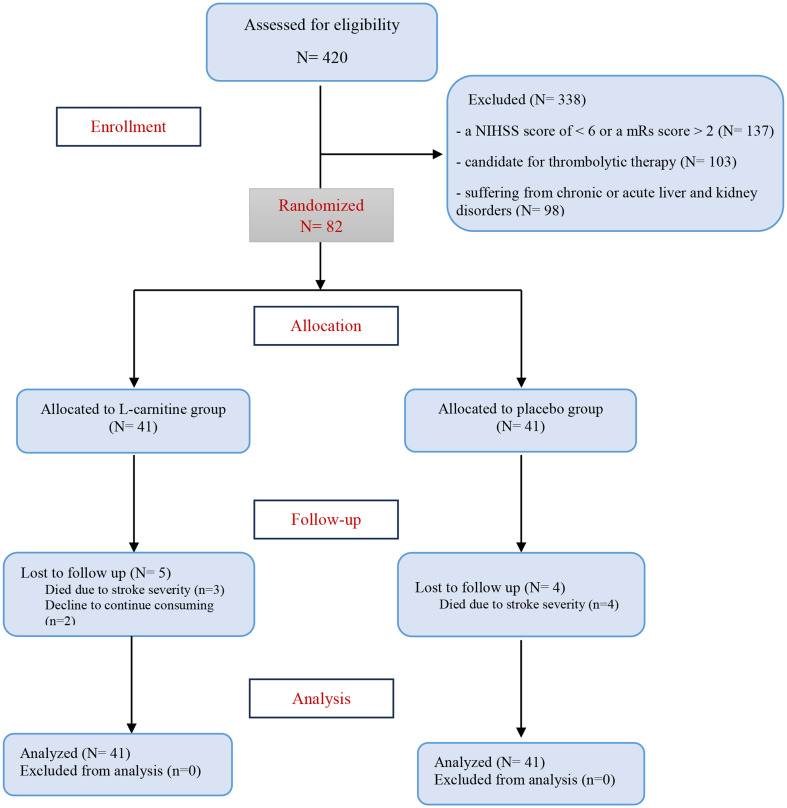
Methods: Eighty-two first-ever ischemic stroke patients were randomly assigned to either the L-carnitine group (1000 mg three times/day for seven consecutive days) or the matching placebo group. The study outcomes based on intention-to-treat analyses included changes in weight, body mass index, triceps skinfold thickness, mid-arm circumference, mid-arm muscle circumference, arm muscle area, calf circumference, serum ALB and malnutrition status over the seven-day treatment protocol. Malnutrition was assessed based on the serum ALB concentration, mid-arm muscle circumference, and triceps skinfold thickness. Analysis of covariance (ANCOVA) was applied for assessing the between-group changes along with adjusting the baseline mean value effect.
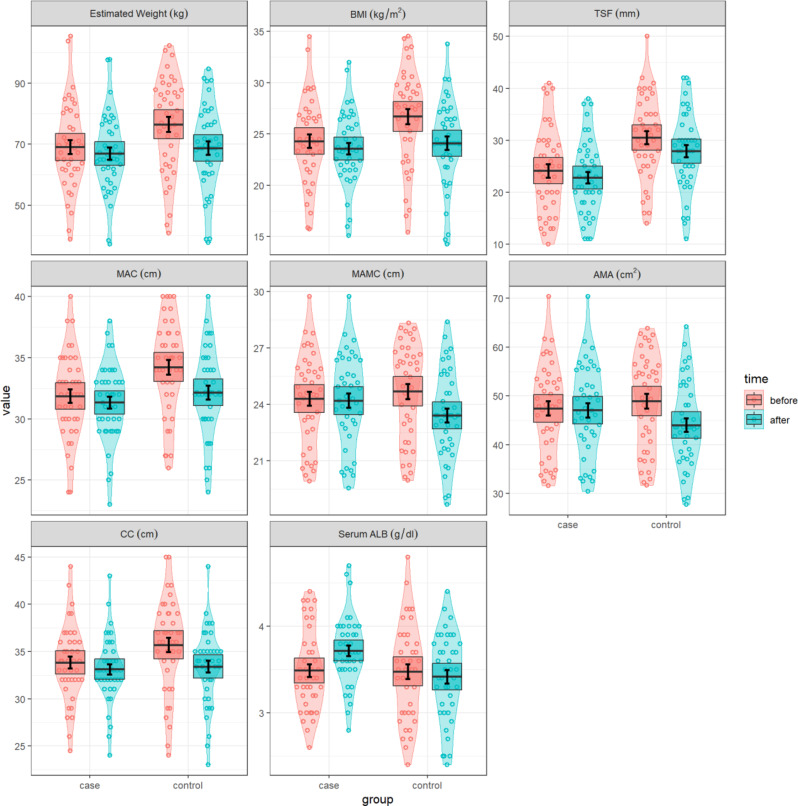
Results: Patients receiving L-carnitine had significantly lower changes in terms of weight, body mass index, triceps skinfold thickness, mid-arm circumference, mid-arm muscle circumference, and calf circumference than did those in the placebo group. After the intervention, the placebo group experienced a significantly greater reduction in the mid-arm muscle circumference indicator (P < 0.001). The between-group change in the serum ALB concentration significantly increased in the L-carnitine group (P = 0.001). Moreover, the L-carnitine group was less malnourished than the placebo group [17 (41.5%) vs. 30 (73.2%), respectively; P = 0.01], after the intrvention. The "recovery" frequency was significantly greater in the L-carnitine group (18 (43.9%) vs. 3 (7.3%), P < 0.001) than the placebo group.
Conclusions: Early L-carnitine supplementation effectively improves anthropometric indices and malnutrition, muscle wasting, and rapid weight loss in acute ischemic stroke patients, highlighting its potential as a supportive nutritional therapy during stroke rehabilitation.
Trial registration: The current clinical trial study was registered in the Iranian Registry of Clinical Trials (registration code: IRCT20221206056734N1) at 2023-02-11.




 京公网安备 11010802042870号
京ICP备2023020795号-1
京公网安备 11010802042870号
京ICP备2023020795号-1

 分享
分享
 求助内容:
求助内容: 应助结果提醒方式:
 扫码关注我们
