{"title":"基于自我调节的心力衰竭自我护理程序的护士主导的常识模型的开发和试点测试。","authors":"Zehao Huang, Sek Ying Chair","doi":"10.1186/s12912-025-02722-9","DOIUrl":null,"url":null,"abstract":"<p><strong>Background: </strong>Self-care practices among people with heart failure (HF) remain suboptimal. Nurse-led self-care interventions hold promise in managing this condition. The Common-Sense Model (CSM) of Self-Regulation is a widely adopted theoretical framework that promotes behavior change and improves disease prognosis among patients. Therefore, this study aimed to describe the development and pilot testing of a nurse-led CSM of Self-Regulation-based self-care intervention among people with HF.</p><p><strong>Methods: </strong>Intervention development was informed by a comprehensive review of the relevant literature, the CSM of self-regulation, international and national guidelines, and findings from our previous systematic reviews. The pilot study utilized a single-blinded, two-arm, parallel group, randomized controlled trial (RCT) design, adhering to the CONSORT Statement. Eligible participants were randomly assigned at a 1:1 ratio to either the intervention group or the control group. Data were collected at baseline and immediately after the intervention, with a focus on evaluating feasibility, acceptability, and potential effects.</p><p><strong>Results: </strong>We developed and validated a nurse-led, theory-driven, evidence-based, and need-oriented HF self-care program. A total of 26 participants were enrolled in the pilot study, achieving an eligibility of 79.4%, a recruitment rate of 96.3%, and a retention rate of 92.3%. Most participants (83.3%) recognized the benefits of the intervention. The intervention significantly improved illness perceptions, self-care self-efficacy, and self-care behaviors among people with HF.</p><p><strong>Conclusion: </strong>The nurse-led CSM of Self-Regulation-based self-care intervention is feasible, acceptable, and potentially beneficial for people with HF. A full-scale mixed-method RCT is recommended to further examine the intervention's effectiveness.</p><p><strong>Trial registration: </strong>Chinese Clinical Trial Registry (No., ChiCTR2300068156; February 9, 2023).</p>","PeriodicalId":48580,"journal":{"name":"BMC Nursing","volume":"24 1","pages":"85"},"PeriodicalIF":3.9000,"publicationDate":"2025-01-23","publicationTypes":"Journal Article","fieldsOfStudy":null,"isOpenAccess":false,"openAccessPdf":"https://www.ncbi.nlm.nih.gov/pmc/articles/PMC11758749/pdf/","citationCount":"0","resultStr":"{\"title\":\"Development and pilot testing of a nurse-led common-sense model of self-regulation-based heart failure self-care program.\",\"authors\":\"Zehao Huang, Sek Ying Chair\",\"doi\":\"10.1186/s12912-025-02722-9\",\"DOIUrl\":null,\"url\":null,\"abstract\":\"<p><strong>Background: </strong>Self-care practices among people with heart failure (HF) remain suboptimal. Nurse-led self-care interventions hold promise in managing this condition. The Common-Sense Model (CSM) of Self-Regulation is a widely adopted theoretical framework that promotes behavior change and improves disease prognosis among patients. Therefore, this study aimed to describe the development and pilot testing of a nurse-led CSM of Self-Regulation-based self-care intervention among people with HF.</p><p><strong>Methods: </strong>Intervention development was informed by a comprehensive review of the relevant literature, the CSM of self-regulation, international and national guidelines, and findings from our previous systematic reviews. The pilot study utilized a single-blinded, two-arm, parallel group, randomized controlled trial (RCT) design, adhering to the CONSORT Statement. Eligible participants were randomly assigned at a 1:1 ratio to either the intervention group or the control group. Data were collected at baseline and immediately after the intervention, with a focus on evaluating feasibility, acceptability, and potential effects.</p><p><strong>Results: </strong>We developed and validated a nurse-led, theory-driven, evidence-based, and need-oriented HF self-care program. A total of 26 participants were enrolled in the pilot study, achieving an eligibility of 79.4%, a recruitment rate of 96.3%, and a retention rate of 92.3%. Most participants (83.3%) recognized the benefits of the intervention. The intervention significantly improved illness perceptions, self-care self-efficacy, and self-care behaviors among people with HF.</p><p><strong>Conclusion: </strong>The nurse-led CSM of Self-Regulation-based self-care intervention is feasible, acceptable, and potentially beneficial for people with HF. A full-scale mixed-method RCT is recommended to further examine the intervention's effectiveness.</p><p><strong>Trial registration: </strong>Chinese Clinical Trial Registry (No., ChiCTR2300068156; February 9, 2023).</p>\",\"PeriodicalId\":48580,\"journal\":{\"name\":\"BMC Nursing\",\"volume\":\"24 1\",\"pages\":\"85\"},\"PeriodicalIF\":3.9000,\"publicationDate\":\"2025-01-23\",\"publicationTypes\":\"Journal Article\",\"fieldsOfStudy\":null,\"isOpenAccess\":false,\"openAccessPdf\":\"https://www.ncbi.nlm.nih.gov/pmc/articles/PMC11758749/pdf/\",\"citationCount\":\"0\",\"resultStr\":null,\"platform\":\"Semanticscholar\",\"paperid\":null,\"PeriodicalName\":\"BMC Nursing\",\"FirstCategoryId\":\"3\",\"ListUrlMain\":\"https://doi.org/10.1186/s12912-025-02722-9\",\"RegionNum\":2,\"RegionCategory\":\"医学\",\"ArticlePicture\":[],\"TitleCN\":null,\"AbstractTextCN\":null,\"PMCID\":null,\"EPubDate\":\"\",\"PubModel\":\"\",\"JCR\":\"Q1\",\"JCRName\":\"NURSING\",\"Score\":null,\"Total\":0}","platform":"Semanticscholar","paperid":null,"PeriodicalName":"BMC Nursing","FirstCategoryId":"3","ListUrlMain":"https://doi.org/10.1186/s12912-025-02722-9","RegionNum":2,"RegionCategory":"医学","ArticlePicture":[],"TitleCN":null,"AbstractTextCN":null,"PMCID":null,"EPubDate":"","PubModel":"","JCR":"Q1","JCRName":"NURSING","Score":null,"Total":0}
Development and pilot testing of a nurse-led common-sense model of self-regulation-based heart failure self-care program.
Background: Self-care practices among people with heart failure (HF) remain suboptimal. Nurse-led self-care interventions hold promise in managing this condition. The Common-Sense Model (CSM) of Self-Regulation is a widely adopted theoretical framework that promotes behavior change and improves disease prognosis among patients. Therefore, this study aimed to describe the development and pilot testing of a nurse-led CSM of Self-Regulation-based self-care intervention among people with HF.
Methods: Intervention development was informed by a comprehensive review of the relevant literature, the CSM of self-regulation, international and national guidelines, and findings from our previous systematic reviews. The pilot study utilized a single-blinded, two-arm, parallel group, randomized controlled trial (RCT) design, adhering to the CONSORT Statement. Eligible participants were randomly assigned at a 1:1 ratio to either the intervention group or the control group. Data were collected at baseline and immediately after the intervention, with a focus on evaluating feasibility, acceptability, and potential effects.
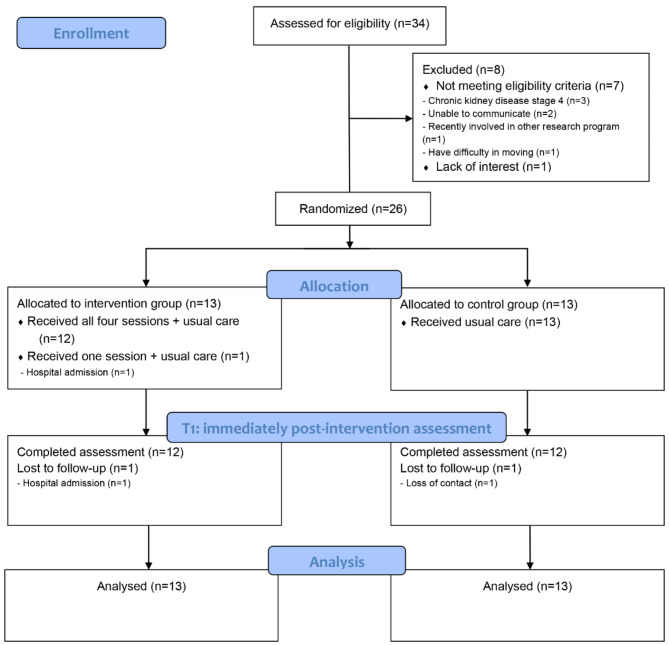
Results: We developed and validated a nurse-led, theory-driven, evidence-based, and need-oriented HF self-care program. A total of 26 participants were enrolled in the pilot study, achieving an eligibility of 79.4%, a recruitment rate of 96.3%, and a retention rate of 92.3%. Most participants (83.3%) recognized the benefits of the intervention. The intervention significantly improved illness perceptions, self-care self-efficacy, and self-care behaviors among people with HF.
Conclusion: The nurse-led CSM of Self-Regulation-based self-care intervention is feasible, acceptable, and potentially beneficial for people with HF. A full-scale mixed-method RCT is recommended to further examine the intervention's effectiveness.
Trial registration: Chinese Clinical Trial Registry (No., ChiCTR2300068156; February 9, 2023).
期刊介绍:
BMC Nursing is an open access, peer-reviewed journal that considers articles on all aspects of nursing research, training, education and practice.




 京公网安备 11010802042870号
京ICP备2023020795号-1
京公网安备 11010802042870号
京ICP备2023020795号-1

 分享
分享
 求助内容:
求助内容: 应助结果提醒方式:
 扫码关注我们
