Yeye Kuang , Yijian Yu , Chan Wang , Hui Li , Yiru Zhou , Lijuan Pan , Yi Zhang , Xiaoqing Cheng , Zhinong Jiang , Xiaotong Hu
{"title":"FOXS1经常因启动子甲基化而失活,它通过自噬-溶酶体途径促进TGFBI降解,从而抑制结直肠癌细胞生长","authors":"Yeye Kuang , Yijian Yu , Chan Wang , Hui Li , Yiru Zhou , Lijuan Pan , Yi Zhang , Xiaoqing Cheng , Zhinong Jiang , Xiaotong Hu","doi":"10.1016/j.jare.2025.01.037","DOIUrl":null,"url":null,"abstract":"<div><h3>Introduction</h3><div>Tumor suppressor gene (TSG) inactivation by epigenetic modifications contributes to the carcinogenesis and progression of colorectal cancer (CRC). Expression profiling and CpG methylomics revealed that a forkhead-box transcriptional factor, FOXS1, is downregulated and methylated in CRC.</div></div><div><h3>Objectives</h3><div>To assess the biological functions and underlying mechanisms of FOXS1 in colorectal cancer<strong>.</strong></div></div><div><h3>Methods</h3><div>Public databases, semi-quantitative RT-PCR, immunohistochemistry, MSP, and BGS were used to analyze FOXS1 expression and promoter methylation in CRC. Stable FOXS1-overexpressing or knockdown cell lines were established. Cell growth, colony formation, flow cytometry, GFP-LC3 puncta detection, Ad-mCherry-GFP-LC3B, qPCR, <em>in vivo</em> subcutaneous tumor model, RNA-seq, western blotting, immunofluorescence, Co-IP assays, and protein stability analysis were performed to investigate the underlying molecular mechanisms of FOXS1.</div></div><div><h3>Results</h3><div>In CRC, FOXS1 was frequently downregulated due to promoter CpG methylation, acting as an independent prognostic marker. Moreover, FOXS1 exerts inhibitory effects on the growth of CRC cells <em>in vitro</em> and <em>in vivo</em>, while concurrently promoting CRC cell autophagy. Intriguingly, we found that FOXS1 interacted with transforming growth factor beta induced (TGFBI) and FOXS1 promoted TGFBI degradation through the autophagy–lysosome pathway rather than the ubiquitin–proteasome system. FOXS1 was also found to facilitate the interaction between TGFBI and lysosomal associated membrane protein 2A (LAMP2A), leading to the translocation of TGFBI into lysosomes for degradation. Additionally, FOXS1 regulates AKT phosphorylation and FOXO3a nuclear translocation, promoting the transcription of autophagy-related genes downstream of FOXO3a. Restoration of TGFBI expression reversed the suppressive effect exerted by FOXS1 on the growth of colorectal cancer cells.</div></div><div><h3>Conclusion</h3><div>FOXS1 functions as a tumor suppressor that is methylated in CRC and promotes the lysosomal degradation of TGFBI, regulates cell growth and promotes autophagy in CRC through the TGFBI/AKT/FOXO3a signaling pathway. These findings indicate that FOXS1 exhibits potential as a promising biomarker and therapeutic target for colorectal cancer.</div></div>","PeriodicalId":14952,"journal":{"name":"Journal of Advanced Research","volume":"77 ","pages":"Pages 623-636"},"PeriodicalIF":17.1000,"publicationDate":"2025-11-01","publicationTypes":"Journal Article","fieldsOfStudy":null,"isOpenAccess":false,"openAccessPdf":"","citationCount":"0","resultStr":"{\"title\":\"FOXS1, frequently inactivated by promoter methylation, inhibited colorectal cancer cell growth by promoting TGFBI degradation through autophagy-lysosome pathway\",\"authors\":\"Yeye Kuang , Yijian Yu , Chan Wang , Hui Li , Yiru Zhou , Lijuan Pan , Yi Zhang , Xiaoqing Cheng , Zhinong Jiang , Xiaotong Hu\",\"doi\":\"10.1016/j.jare.2025.01.037\",\"DOIUrl\":null,\"url\":null,\"abstract\":\"<div><h3>Introduction</h3><div>Tumor suppressor gene (TSG) inactivation by epigenetic modifications contributes to the carcinogenesis and progression of colorectal cancer (CRC). Expression profiling and CpG methylomics revealed that a forkhead-box transcriptional factor, FOXS1, is downregulated and methylated in CRC.</div></div><div><h3>Objectives</h3><div>To assess the biological functions and underlying mechanisms of FOXS1 in colorectal cancer<strong>.</strong></div></div><div><h3>Methods</h3><div>Public databases, semi-quantitative RT-PCR, immunohistochemistry, MSP, and BGS were used to analyze FOXS1 expression and promoter methylation in CRC. Stable FOXS1-overexpressing or knockdown cell lines were established. Cell growth, colony formation, flow cytometry, GFP-LC3 puncta detection, Ad-mCherry-GFP-LC3B, qPCR, <em>in vivo</em> subcutaneous tumor model, RNA-seq, western blotting, immunofluorescence, Co-IP assays, and protein stability analysis were performed to investigate the underlying molecular mechanisms of FOXS1.</div></div><div><h3>Results</h3><div>In CRC, FOXS1 was frequently downregulated due to promoter CpG methylation, acting as an independent prognostic marker. Moreover, FOXS1 exerts inhibitory effects on the growth of CRC cells <em>in vitro</em> and <em>in vivo</em>, while concurrently promoting CRC cell autophagy. Intriguingly, we found that FOXS1 interacted with transforming growth factor beta induced (TGFBI) and FOXS1 promoted TGFBI degradation through the autophagy–lysosome pathway rather than the ubiquitin–proteasome system. FOXS1 was also found to facilitate the interaction between TGFBI and lysosomal associated membrane protein 2A (LAMP2A), leading to the translocation of TGFBI into lysosomes for degradation. Additionally, FOXS1 regulates AKT phosphorylation and FOXO3a nuclear translocation, promoting the transcription of autophagy-related genes downstream of FOXO3a. Restoration of TGFBI expression reversed the suppressive effect exerted by FOXS1 on the growth of colorectal cancer cells.</div></div><div><h3>Conclusion</h3><div>FOXS1 functions as a tumor suppressor that is methylated in CRC and promotes the lysosomal degradation of TGFBI, regulates cell growth and promotes autophagy in CRC through the TGFBI/AKT/FOXO3a signaling pathway. These findings indicate that FOXS1 exhibits potential as a promising biomarker and therapeutic target for colorectal cancer.</div></div>\",\"PeriodicalId\":14952,\"journal\":{\"name\":\"Journal of Advanced Research\",\"volume\":\"77 \",\"pages\":\"Pages 623-636\"},\"PeriodicalIF\":17.1000,\"publicationDate\":\"2025-11-01\",\"publicationTypes\":\"Journal Article\",\"fieldsOfStudy\":null,\"isOpenAccess\":false,\"openAccessPdf\":\"\",\"citationCount\":\"0\",\"resultStr\":null,\"platform\":\"Semanticscholar\",\"paperid\":null,\"PeriodicalName\":\"Journal of Advanced Research\",\"FirstCategoryId\":\"103\",\"ListUrlMain\":\"https://www.sciencedirect.com/science/article/pii/S2090123225000566\",\"RegionNum\":1,\"RegionCategory\":\"综合性期刊\",\"ArticlePicture\":[],\"TitleCN\":null,\"AbstractTextCN\":null,\"PMCID\":null,\"EPubDate\":\"2025/1/24 0:00:00\",\"PubModel\":\"Epub\",\"JCR\":\"Q1\",\"JCRName\":\"MULTIDISCIPLINARY SCIENCES\",\"Score\":null,\"Total\":0}","platform":"Semanticscholar","paperid":null,"PeriodicalName":"Journal of Advanced Research","FirstCategoryId":"103","ListUrlMain":"https://www.sciencedirect.com/science/article/pii/S2090123225000566","RegionNum":1,"RegionCategory":"综合性期刊","ArticlePicture":[],"TitleCN":null,"AbstractTextCN":null,"PMCID":null,"EPubDate":"2025/1/24 0:00:00","PubModel":"Epub","JCR":"Q1","JCRName":"MULTIDISCIPLINARY SCIENCES","Score":null,"Total":0}
FOXS1, frequently inactivated by promoter methylation, inhibited colorectal cancer cell growth by promoting TGFBI degradation through autophagy-lysosome pathway
Introduction
Tumor suppressor gene (TSG) inactivation by epigenetic modifications contributes to the carcinogenesis and progression of colorectal cancer (CRC). Expression profiling and CpG methylomics revealed that a forkhead-box transcriptional factor, FOXS1, is downregulated and methylated in CRC.
Objectives
To assess the biological functions and underlying mechanisms of FOXS1 in colorectal cancer.
Methods
Public databases, semi-quantitative RT-PCR, immunohistochemistry, MSP, and BGS were used to analyze FOXS1 expression and promoter methylation in CRC. Stable FOXS1-overexpressing or knockdown cell lines were established. Cell growth, colony formation, flow cytometry, GFP-LC3 puncta detection, Ad-mCherry-GFP-LC3B, qPCR, in vivo subcutaneous tumor model, RNA-seq, western blotting, immunofluorescence, Co-IP assays, and protein stability analysis were performed to investigate the underlying molecular mechanisms of FOXS1.
Results
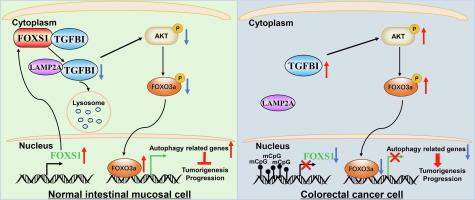
In CRC, FOXS1 was frequently downregulated due to promoter CpG methylation, acting as an independent prognostic marker. Moreover, FOXS1 exerts inhibitory effects on the growth of CRC cells in vitro and in vivo, while concurrently promoting CRC cell autophagy. Intriguingly, we found that FOXS1 interacted with transforming growth factor beta induced (TGFBI) and FOXS1 promoted TGFBI degradation through the autophagy–lysosome pathway rather than the ubiquitin–proteasome system. FOXS1 was also found to facilitate the interaction between TGFBI and lysosomal associated membrane protein 2A (LAMP2A), leading to the translocation of TGFBI into lysosomes for degradation. Additionally, FOXS1 regulates AKT phosphorylation and FOXO3a nuclear translocation, promoting the transcription of autophagy-related genes downstream of FOXO3a. Restoration of TGFBI expression reversed the suppressive effect exerted by FOXS1 on the growth of colorectal cancer cells.
Conclusion
FOXS1 functions as a tumor suppressor that is methylated in CRC and promotes the lysosomal degradation of TGFBI, regulates cell growth and promotes autophagy in CRC through the TGFBI/AKT/FOXO3a signaling pathway. These findings indicate that FOXS1 exhibits potential as a promising biomarker and therapeutic target for colorectal cancer.
期刊介绍:
Journal of Advanced Research (J. Adv. Res.) is an applied/natural sciences, peer-reviewed journal that focuses on interdisciplinary research. The journal aims to contribute to applied research and knowledge worldwide through the publication of original and high-quality research articles in the fields of Medicine, Pharmaceutical Sciences, Dentistry, Physical Therapy, Veterinary Medicine, and Basic and Biological Sciences.
The following abstracting and indexing services cover the Journal of Advanced Research: PubMed/Medline, Essential Science Indicators, Web of Science, Scopus, PubMed Central, PubMed, Science Citation Index Expanded, Directory of Open Access Journals (DOAJ), and INSPEC.





 京公网安备 11010802042870号
京ICP备2023020795号-1
京公网安备 11010802042870号
京ICP备2023020795号-1

 分享
分享
 求助内容:
求助内容: 应助结果提醒方式:
 扫码关注我们
