{"title":"步行和海马体形成体积的变化:一项系统综述。","authors":"Mohamed Hesham Khalil","doi":"10.3390/brainsci15010052","DOIUrl":null,"url":null,"abstract":"<p><strong>Background/objectives: </strong>Sustaining the human brain's hippocampus from atrophy throughout ageing is critical. Exercise is proven to be effective in promoting adaptive hippocampal plasticity, and the hippocampus has a bidirectional relationship with the physical environment. Therefore, this systematic review explores the effects of walking, a simple physical activity in the environment, on hippocampal formation volume changes for lifelong brain and cognitive health.</p><p><strong>Method: </strong>PubMed, Scopus, and Web of Science were searched for studies on humans published up to November 2022 examining hippocampal volume changes and walking. Twelve studies met the inclusion criteria. Study quality was assessed using the PEDro scale and ROBINS-I tool. A narrative synthesis explored walking factors associated with total, subregional, and hemisphere-specific hippocampal volume changes.</p><p><strong>Results: </strong>Overall, walking had positive effects on hippocampal volumes. Several studies found benefits of higher-intensity and greater amounts of walking for total hippocampal volume. The subiculum increased after low-intensity walking and nature exposure, while the parahippocampal gyrus benefited from vigorous intensity. The right hippocampus increased with spatial navigation during walking. No studies examined the effect of walking on the dentate gyrus.</p><p><strong>Conclusions: </strong>This systematic review highlights walking as a multifaceted variable that can lead to manifold adaptive hippocampal volume changes. These findings support the promotion of walking as a simple, effective strategy to enhance brain health and prevent cognitive decline, suggesting the design of physical environments with natural and biophilic characteristics and layouts with greater walkability and cognitive stimulation. Future research is encouraged to explore the hippocampal subregional changes instead of focusing on total hippocampal volume, since the hippocampal formation is multicompartmental and subfields respond differently to different walking-related variables.</p>","PeriodicalId":9095,"journal":{"name":"Brain Sciences","volume":"15 1","pages":""},"PeriodicalIF":3.4000,"publicationDate":"2025-01-08","publicationTypes":"Journal Article","fieldsOfStudy":null,"isOpenAccess":false,"openAccessPdf":"https://www.ncbi.nlm.nih.gov/pmc/articles/PMC11763604/pdf/","citationCount":"0","resultStr":"{\"title\":\"Walking and Hippocampal Formation Volume Changes: A Systematic Review.\",\"authors\":\"Mohamed Hesham Khalil\",\"doi\":\"10.3390/brainsci15010052\",\"DOIUrl\":null,\"url\":null,\"abstract\":\"<p><strong>Background/objectives: </strong>Sustaining the human brain's hippocampus from atrophy throughout ageing is critical. Exercise is proven to be effective in promoting adaptive hippocampal plasticity, and the hippocampus has a bidirectional relationship with the physical environment. Therefore, this systematic review explores the effects of walking, a simple physical activity in the environment, on hippocampal formation volume changes for lifelong brain and cognitive health.</p><p><strong>Method: </strong>PubMed, Scopus, and Web of Science were searched for studies on humans published up to November 2022 examining hippocampal volume changes and walking. Twelve studies met the inclusion criteria. Study quality was assessed using the PEDro scale and ROBINS-I tool. A narrative synthesis explored walking factors associated with total, subregional, and hemisphere-specific hippocampal volume changes.</p><p><strong>Results: </strong>Overall, walking had positive effects on hippocampal volumes. Several studies found benefits of higher-intensity and greater amounts of walking for total hippocampal volume. The subiculum increased after low-intensity walking and nature exposure, while the parahippocampal gyrus benefited from vigorous intensity. The right hippocampus increased with spatial navigation during walking. No studies examined the effect of walking on the dentate gyrus.</p><p><strong>Conclusions: </strong>This systematic review highlights walking as a multifaceted variable that can lead to manifold adaptive hippocampal volume changes. These findings support the promotion of walking as a simple, effective strategy to enhance brain health and prevent cognitive decline, suggesting the design of physical environments with natural and biophilic characteristics and layouts with greater walkability and cognitive stimulation. Future research is encouraged to explore the hippocampal subregional changes instead of focusing on total hippocampal volume, since the hippocampal formation is multicompartmental and subfields respond differently to different walking-related variables.</p>\",\"PeriodicalId\":9095,\"journal\":{\"name\":\"Brain Sciences\",\"volume\":\"15 1\",\"pages\":\"\"},\"PeriodicalIF\":3.4000,\"publicationDate\":\"2025-01-08\",\"publicationTypes\":\"Journal Article\",\"fieldsOfStudy\":null,\"isOpenAccess\":false,\"openAccessPdf\":\"https://www.ncbi.nlm.nih.gov/pmc/articles/PMC11763604/pdf/\",\"citationCount\":\"0\",\"resultStr\":null,\"platform\":\"Semanticscholar\",\"paperid\":null,\"PeriodicalName\":\"Brain Sciences\",\"FirstCategoryId\":\"3\",\"ListUrlMain\":\"https://doi.org/10.3390/brainsci15010052\",\"RegionNum\":3,\"RegionCategory\":\"医学\",\"ArticlePicture\":[],\"TitleCN\":null,\"AbstractTextCN\":null,\"PMCID\":null,\"EPubDate\":\"\",\"PubModel\":\"\",\"JCR\":\"Q3\",\"JCRName\":\"NEUROSCIENCES\",\"Score\":null,\"Total\":0}","platform":"Semanticscholar","paperid":null,"PeriodicalName":"Brain Sciences","FirstCategoryId":"3","ListUrlMain":"https://doi.org/10.3390/brainsci15010052","RegionNum":3,"RegionCategory":"医学","ArticlePicture":[],"TitleCN":null,"AbstractTextCN":null,"PMCID":null,"EPubDate":"","PubModel":"","JCR":"Q3","JCRName":"NEUROSCIENCES","Score":null,"Total":0}
引用次数: 0
摘要
背景/目的:维持人类大脑海马体在整个衰老过程中的萎缩是至关重要的。运动被证明能有效促进海马的适应性可塑性,海马与物理环境具有双向关系。因此,本系统综述探讨了步行这一环境中简单的身体活动对终身大脑和认知健康的海马形成体积变化的影响。方法:检索PubMed、Scopus和Web of Science,检索截至2022年11月发表的有关人类海马体积变化和行走的研究。12项研究符合纳入标准。采用PEDro量表和ROBINS-I工具评估研究质量。一项叙述性综合研究探讨了行走因素与总体、分区域和半球特异性海马体积变化的关系。结果:总体而言,步行对海马体积有积极影响。几项研究发现,高强度和更大的步行对海马体总量有好处。低强度步行和自然暴露后,肩下骨增加,而剧烈运动时海马旁回受益。行走过程中,右侧海马体随着空间导航的增加而增加。没有研究检查行走对齿状回的影响。结论:本系统综述强调步行是一个多方面的变量,可导致多种适应性海马体积变化。这些研究结果支持将步行作为一种简单有效的策略来促进大脑健康和防止认知能力下降,建议设计具有自然和亲生物特征的物理环境和布局,以更大的步行性和认知刺激。由于海马体的形成是多室的,子区对不同的步行相关变量的反应不同,因此鼓励未来的研究探索海马体的分区域变化,而不是关注海马体的总体积。
Walking and Hippocampal Formation Volume Changes: A Systematic Review.
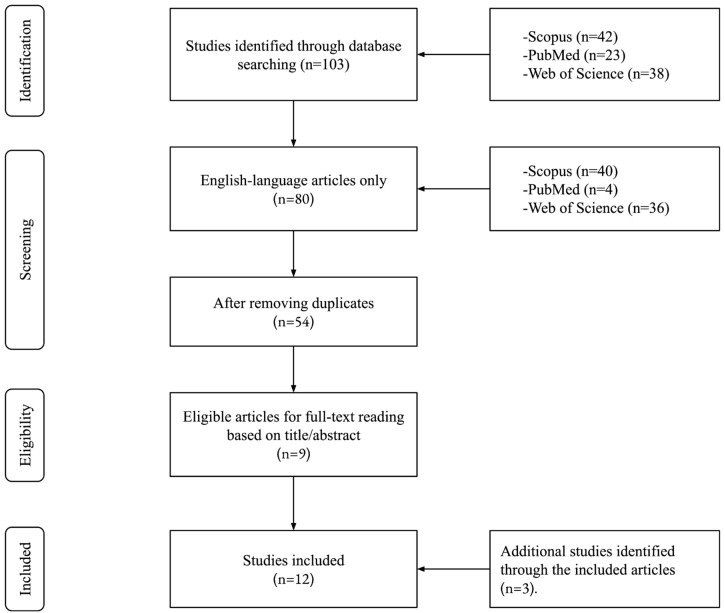
Background/objectives: Sustaining the human brain's hippocampus from atrophy throughout ageing is critical. Exercise is proven to be effective in promoting adaptive hippocampal plasticity, and the hippocampus has a bidirectional relationship with the physical environment. Therefore, this systematic review explores the effects of walking, a simple physical activity in the environment, on hippocampal formation volume changes for lifelong brain and cognitive health.
Method: PubMed, Scopus, and Web of Science were searched for studies on humans published up to November 2022 examining hippocampal volume changes and walking. Twelve studies met the inclusion criteria. Study quality was assessed using the PEDro scale and ROBINS-I tool. A narrative synthesis explored walking factors associated with total, subregional, and hemisphere-specific hippocampal volume changes.
Results: Overall, walking had positive effects on hippocampal volumes. Several studies found benefits of higher-intensity and greater amounts of walking for total hippocampal volume. The subiculum increased after low-intensity walking and nature exposure, while the parahippocampal gyrus benefited from vigorous intensity. The right hippocampus increased with spatial navigation during walking. No studies examined the effect of walking on the dentate gyrus.
Conclusions: This systematic review highlights walking as a multifaceted variable that can lead to manifold adaptive hippocampal volume changes. These findings support the promotion of walking as a simple, effective strategy to enhance brain health and prevent cognitive decline, suggesting the design of physical environments with natural and biophilic characteristics and layouts with greater walkability and cognitive stimulation. Future research is encouraged to explore the hippocampal subregional changes instead of focusing on total hippocampal volume, since the hippocampal formation is multicompartmental and subfields respond differently to different walking-related variables.
期刊介绍:
Brain Sciences (ISSN 2076-3425) is a peer-reviewed scientific journal that publishes original articles, critical reviews, research notes and short communications in the areas of cognitive neuroscience, developmental neuroscience, molecular and cellular neuroscience, neural engineering, neuroimaging, neurolinguistics, neuropathy, systems neuroscience, and theoretical and computational neuroscience. Our aim is to encourage scientists to publish their experimental and theoretical results in as much detail as possible. There is no restriction on the length of the papers. The full experimental details must be provided so that the results can be reproduced. Electronic files or software regarding the full details of the calculation and experimental procedure, if unable to be published in a normal way, can be deposited as supplementary material.






 京公网安备 11010802042870号
京ICP备2023020795号-1
京公网安备 11010802042870号
京ICP备2023020795号-1

 分享
分享
 求助内容:
求助内容: 应助结果提醒方式:
 扫码关注我们
