{"title":"混合躯干机器人在物理相互作用预期下协同形成的计算模型。","authors":"Pietro Morasso","doi":"10.3390/biomimetics10010021","DOIUrl":null,"url":null,"abstract":"<p><p>Trunk-like robots have attracted a lot of attention in the community of researchers interested in the general field of bio-inspired soft robotics, because trunk-like soft arms may offer high dexterity and adaptability very similar to elephants and potentially quite superior to traditional articulated manipulators. In view of the practical applications, the integration of a soft hydrostatic segment with a hard-articulated segment, i.e., a hybrid kinematic structure similar to the elephant's body, is probably the best design framework. It is proposed that this integration should occur at the conceptual/cognitive level before being implemented in specific soft technologies, including the related control paradigms. The proposed modeling approach is based on the passive motion paradigm (PMP), originally conceived for addressing the degrees of freedom problem of highly redundant, articulated structures. It is shown that this approach can be naturally extended from highly redundant to hyper-redundant structures, including hybrid structures that include a hard and a soft component. The PMP model is force-based, not motion-based, and it is characterized by two main computational modules: the Jacobian matrix of the hybrid kinematic chain and a compliance matrix that maps generalized force fields into coordinated gestures of the whole-body model. It is shown how the modulation of the compliance matrix can be used for the synergy formation process, which coordinates the hyper-redundant nature of the hybrid body model and, at the same time, for the preparation of the trunk tip in view of a stable physical interaction of the body with the environment, in agreement with the general impedance-control concept.</p>","PeriodicalId":8907,"journal":{"name":"Biomimetics","volume":"10 1","pages":""},"PeriodicalIF":3.9000,"publicationDate":"2025-01-02","publicationTypes":"Journal Article","fieldsOfStudy":null,"isOpenAccess":false,"openAccessPdf":"https://www.ncbi.nlm.nih.gov/pmc/articles/PMC11763144/pdf/","citationCount":"0","resultStr":"{\"title\":\"A Computational Model of Hybrid Trunk-like Robots for Synergy Formation in Anticipation of Physical Interaction.\",\"authors\":\"Pietro Morasso\",\"doi\":\"10.3390/biomimetics10010021\",\"DOIUrl\":null,\"url\":null,\"abstract\":\"<p><p>Trunk-like robots have attracted a lot of attention in the community of researchers interested in the general field of bio-inspired soft robotics, because trunk-like soft arms may offer high dexterity and adaptability very similar to elephants and potentially quite superior to traditional articulated manipulators. In view of the practical applications, the integration of a soft hydrostatic segment with a hard-articulated segment, i.e., a hybrid kinematic structure similar to the elephant's body, is probably the best design framework. It is proposed that this integration should occur at the conceptual/cognitive level before being implemented in specific soft technologies, including the related control paradigms. The proposed modeling approach is based on the passive motion paradigm (PMP), originally conceived for addressing the degrees of freedom problem of highly redundant, articulated structures. It is shown that this approach can be naturally extended from highly redundant to hyper-redundant structures, including hybrid structures that include a hard and a soft component. The PMP model is force-based, not motion-based, and it is characterized by two main computational modules: the Jacobian matrix of the hybrid kinematic chain and a compliance matrix that maps generalized force fields into coordinated gestures of the whole-body model. It is shown how the modulation of the compliance matrix can be used for the synergy formation process, which coordinates the hyper-redundant nature of the hybrid body model and, at the same time, for the preparation of the trunk tip in view of a stable physical interaction of the body with the environment, in agreement with the general impedance-control concept.</p>\",\"PeriodicalId\":8907,\"journal\":{\"name\":\"Biomimetics\",\"volume\":\"10 1\",\"pages\":\"\"},\"PeriodicalIF\":3.9000,\"publicationDate\":\"2025-01-02\",\"publicationTypes\":\"Journal Article\",\"fieldsOfStudy\":null,\"isOpenAccess\":false,\"openAccessPdf\":\"https://www.ncbi.nlm.nih.gov/pmc/articles/PMC11763144/pdf/\",\"citationCount\":\"0\",\"resultStr\":null,\"platform\":\"Semanticscholar\",\"paperid\":null,\"PeriodicalName\":\"Biomimetics\",\"FirstCategoryId\":\"5\",\"ListUrlMain\":\"https://doi.org/10.3390/biomimetics10010021\",\"RegionNum\":3,\"RegionCategory\":\"医学\",\"ArticlePicture\":[],\"TitleCN\":null,\"AbstractTextCN\":null,\"PMCID\":null,\"EPubDate\":\"\",\"PubModel\":\"\",\"JCR\":\"Q1\",\"JCRName\":\"ENGINEERING, MULTIDISCIPLINARY\",\"Score\":null,\"Total\":0}","platform":"Semanticscholar","paperid":null,"PeriodicalName":"Biomimetics","FirstCategoryId":"5","ListUrlMain":"https://doi.org/10.3390/biomimetics10010021","RegionNum":3,"RegionCategory":"医学","ArticlePicture":[],"TitleCN":null,"AbstractTextCN":null,"PMCID":null,"EPubDate":"","PubModel":"","JCR":"Q1","JCRName":"ENGINEERING, MULTIDISCIPLINARY","Score":null,"Total":0}
A Computational Model of Hybrid Trunk-like Robots for Synergy Formation in Anticipation of Physical Interaction.
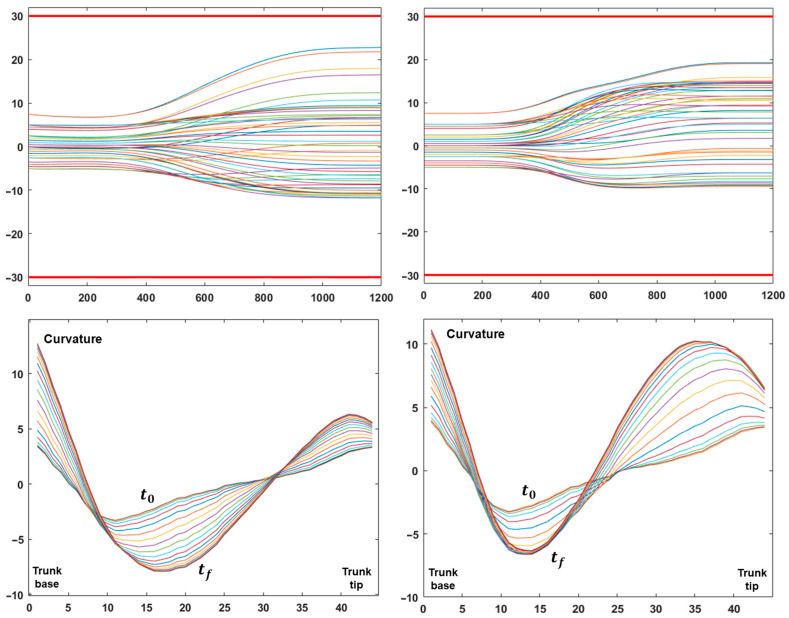
Trunk-like robots have attracted a lot of attention in the community of researchers interested in the general field of bio-inspired soft robotics, because trunk-like soft arms may offer high dexterity and adaptability very similar to elephants and potentially quite superior to traditional articulated manipulators. In view of the practical applications, the integration of a soft hydrostatic segment with a hard-articulated segment, i.e., a hybrid kinematic structure similar to the elephant's body, is probably the best design framework. It is proposed that this integration should occur at the conceptual/cognitive level before being implemented in specific soft technologies, including the related control paradigms. The proposed modeling approach is based on the passive motion paradigm (PMP), originally conceived for addressing the degrees of freedom problem of highly redundant, articulated structures. It is shown that this approach can be naturally extended from highly redundant to hyper-redundant structures, including hybrid structures that include a hard and a soft component. The PMP model is force-based, not motion-based, and it is characterized by two main computational modules: the Jacobian matrix of the hybrid kinematic chain and a compliance matrix that maps generalized force fields into coordinated gestures of the whole-body model. It is shown how the modulation of the compliance matrix can be used for the synergy formation process, which coordinates the hyper-redundant nature of the hybrid body model and, at the same time, for the preparation of the trunk tip in view of a stable physical interaction of the body with the environment, in agreement with the general impedance-control concept.







 京公网安备 11010802042870号
京ICP备2023020795号-1
京公网安备 11010802042870号
京ICP备2023020795号-1

 分享
分享
 求助内容:
求助内容: 应助结果提醒方式:
 扫码关注我们
