Ayat Kadhi, Lamiaa Hamie, Edward Eid, Georges Nemer, Mazen Kurban
{"title":"遗传性皮肤病的双基因遗传:来自中东和北非(MENA)地区参考黎巴嫩中心的两个近亲病例的见解。","authors":"Ayat Kadhi, Lamiaa Hamie, Edward Eid, Georges Nemer, Mazen Kurban","doi":"10.5826/dpc.1501a4935","DOIUrl":null,"url":null,"abstract":"<p><strong>Introduction: </strong>Genodermatoses refer to a group of heterogenous rare genetic diseases with cutaneous expression. Several genodermatoses present with multisystem involvement that can range from mild to life-threatening conditions leading to increased morbidity and mortality.</p><p><strong>Objective: </strong>Given the paucity in the literature in the field of genodermatoses, especially in the Middle East and North Africa (MENA) region, and building upon the first established genodermatoses database based in Lebanon, this study aimed to decipher the genetic basis of two different types of skin-inherited diseases (androgenic alopecia and vitiligo).</p><p><strong>Methods: </strong>We conducted a pilot study on two subjects with androgenic alopecia and vitiligo to investigate the possibility of a digenic inheritance model as a potential underlying mechanism for these conditions. Whole exome sequencing (WES) and Gene Expression Omnibus (GEO) DataSets were employed to validate the methodology and provide a foundation for future, larger-scale studies.</p><p><strong>Results: </strong>We identified two gene variants FOXC1(p.His484Tyr) and SMARCD1 (p.Arg351Cys) responsible for androgenic alopecia and HPS1(p.Ser566Ter) and ITK (p.Pro521Leu) responsible for vitiligo. Further analysis using GEO DataSets confirmed the association between the genes involved in each each disease.</p><p><strong>Conclusion: </strong>This study identified novel candidate disease genes and inheritance model that could explain the underlying phenotypes that could open the door for a better-guided genomic approach for personalized treatment and early diagnosis.</p>","PeriodicalId":11168,"journal":{"name":"Dermatology practical & conceptual","volume":" ","pages":""},"PeriodicalIF":2.3000,"publicationDate":"2025-01-30","publicationTypes":"Journal Article","fieldsOfStudy":null,"isOpenAccess":false,"openAccessPdf":"https://www.ncbi.nlm.nih.gov/pmc/articles/PMC11928134/pdf/","citationCount":"0","resultStr":"{\"title\":\"Di-Genic Inheritance in Genodermatoses: Insights from Two Consanguineous Cases in a Reference Lebanese Center within the Middle East and North Africa (MENA) Region.\",\"authors\":\"Ayat Kadhi, Lamiaa Hamie, Edward Eid, Georges Nemer, Mazen Kurban\",\"doi\":\"10.5826/dpc.1501a4935\",\"DOIUrl\":null,\"url\":null,\"abstract\":\"<p><strong>Introduction: </strong>Genodermatoses refer to a group of heterogenous rare genetic diseases with cutaneous expression. Several genodermatoses present with multisystem involvement that can range from mild to life-threatening conditions leading to increased morbidity and mortality.</p><p><strong>Objective: </strong>Given the paucity in the literature in the field of genodermatoses, especially in the Middle East and North Africa (MENA) region, and building upon the first established genodermatoses database based in Lebanon, this study aimed to decipher the genetic basis of two different types of skin-inherited diseases (androgenic alopecia and vitiligo).</p><p><strong>Methods: </strong>We conducted a pilot study on two subjects with androgenic alopecia and vitiligo to investigate the possibility of a digenic inheritance model as a potential underlying mechanism for these conditions. Whole exome sequencing (WES) and Gene Expression Omnibus (GEO) DataSets were employed to validate the methodology and provide a foundation for future, larger-scale studies.</p><p><strong>Results: </strong>We identified two gene variants FOXC1(p.His484Tyr) and SMARCD1 (p.Arg351Cys) responsible for androgenic alopecia and HPS1(p.Ser566Ter) and ITK (p.Pro521Leu) responsible for vitiligo. Further analysis using GEO DataSets confirmed the association between the genes involved in each each disease.</p><p><strong>Conclusion: </strong>This study identified novel candidate disease genes and inheritance model that could explain the underlying phenotypes that could open the door for a better-guided genomic approach for personalized treatment and early diagnosis.</p>\",\"PeriodicalId\":11168,\"journal\":{\"name\":\"Dermatology practical & conceptual\",\"volume\":\" \",\"pages\":\"\"},\"PeriodicalIF\":2.3000,\"publicationDate\":\"2025-01-30\",\"publicationTypes\":\"Journal Article\",\"fieldsOfStudy\":null,\"isOpenAccess\":false,\"openAccessPdf\":\"https://www.ncbi.nlm.nih.gov/pmc/articles/PMC11928134/pdf/\",\"citationCount\":\"0\",\"resultStr\":null,\"platform\":\"Semanticscholar\",\"paperid\":null,\"PeriodicalName\":\"Dermatology practical & conceptual\",\"FirstCategoryId\":\"3\",\"ListUrlMain\":\"https://doi.org/10.5826/dpc.1501a4935\",\"RegionNum\":4,\"RegionCategory\":\"医学\",\"ArticlePicture\":[],\"TitleCN\":null,\"AbstractTextCN\":null,\"PMCID\":null,\"EPubDate\":\"\",\"PubModel\":\"\",\"JCR\":\"Q2\",\"JCRName\":\"DERMATOLOGY\",\"Score\":null,\"Total\":0}","platform":"Semanticscholar","paperid":null,"PeriodicalName":"Dermatology practical & conceptual","FirstCategoryId":"3","ListUrlMain":"https://doi.org/10.5826/dpc.1501a4935","RegionNum":4,"RegionCategory":"医学","ArticlePicture":[],"TitleCN":null,"AbstractTextCN":null,"PMCID":null,"EPubDate":"","PubModel":"","JCR":"Q2","JCRName":"DERMATOLOGY","Score":null,"Total":0}
Di-Genic Inheritance in Genodermatoses: Insights from Two Consanguineous Cases in a Reference Lebanese Center within the Middle East and North Africa (MENA) Region.
Introduction: Genodermatoses refer to a group of heterogenous rare genetic diseases with cutaneous expression. Several genodermatoses present with multisystem involvement that can range from mild to life-threatening conditions leading to increased morbidity and mortality.
Objective: Given the paucity in the literature in the field of genodermatoses, especially in the Middle East and North Africa (MENA) region, and building upon the first established genodermatoses database based in Lebanon, this study aimed to decipher the genetic basis of two different types of skin-inherited diseases (androgenic alopecia and vitiligo).
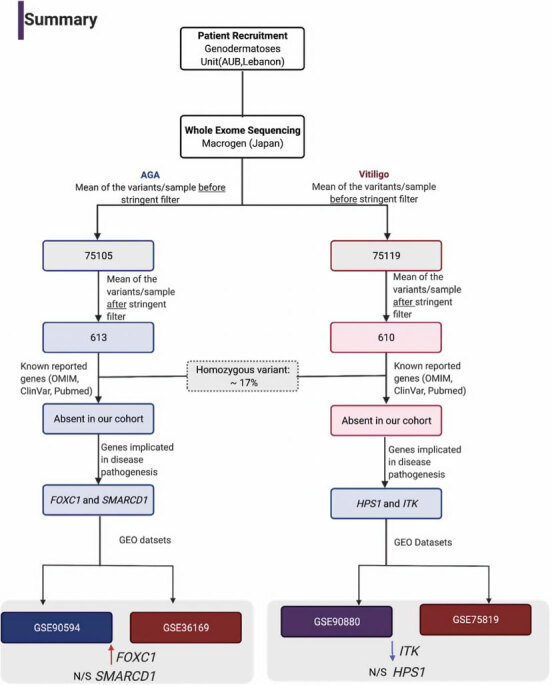
Methods: We conducted a pilot study on two subjects with androgenic alopecia and vitiligo to investigate the possibility of a digenic inheritance model as a potential underlying mechanism for these conditions. Whole exome sequencing (WES) and Gene Expression Omnibus (GEO) DataSets were employed to validate the methodology and provide a foundation for future, larger-scale studies.
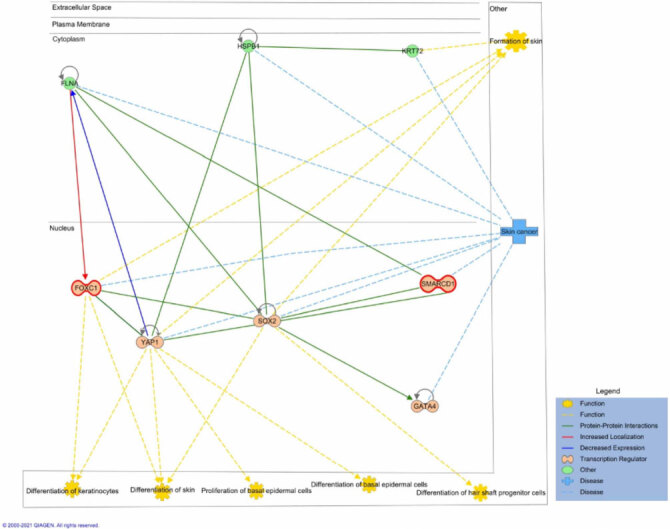
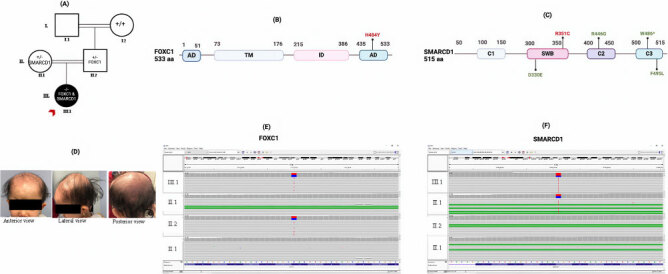
Results: We identified two gene variants FOXC1(p.His484Tyr) and SMARCD1 (p.Arg351Cys) responsible for androgenic alopecia and HPS1(p.Ser566Ter) and ITK (p.Pro521Leu) responsible for vitiligo. Further analysis using GEO DataSets confirmed the association between the genes involved in each each disease.
Conclusion: This study identified novel candidate disease genes and inheritance model that could explain the underlying phenotypes that could open the door for a better-guided genomic approach for personalized treatment and early diagnosis.




 京公网安备 11010802042870号
京ICP备2023020795号-1
京公网安备 11010802042870号
京ICP备2023020795号-1

 分享
分享
 求助内容:
求助内容: 应助结果提醒方式:
 扫码关注我们
