Daniel Madani, R Dineth Fonseka, Sihyong Jake Kim, Patrick Tang, Krishna Muralidharan, Nicholas Chang, Johnny Wong
{"title":"比较术中MRI显示不同脑肿瘤亚型间残留肿瘤的进一步切除率:一项17年的单中心研究。","authors":"Daniel Madani, R Dineth Fonseka, Sihyong Jake Kim, Patrick Tang, Krishna Muralidharan, Nicholas Chang, Johnny Wong","doi":"10.3390/brainsci15010045","DOIUrl":null,"url":null,"abstract":"<p><strong>Background: </strong>Maximal safe resection is the objective of most neuro-oncological operations. Intraoperative magnetic resonance imaging (iMRI) may guide the surgeon to improve the extent of safe resection. There is limited evidence comparing the impact of iMRI on the rates of further resection between tumour types.</p><p><strong>Aim: </strong>To investigate the impact of iMRI on the rate of further resection following visualisation of residual tumour.</p><p><strong>Methods: </strong>A retrospective cohort study identified all intracranial tumour operations performed in the 1.5 T iMRI machine of a single centre (2007-2023). Patients were identified using SurgiNet and were grouped according to their histopathological diagnosis in accordance with the WHO 2021 classification. The primary outcome was the rate of reoperation due to iMRI visualisation of residual tumours.</p><p><strong>Results: </strong>A total of 574 cases were identified, including 152 low-grade gliomas (LGG), 108 high-grade gliomas (HGG), 194 pituitary neuroendocrine tumours (PitNETs), 15 metastases, and 6 meningiomas. Further resection following iMRI visualisation occurred in 45% of LGG cases, 47% of HGG cases, 29% of PitNET cases, and no meningioma or metastasis cases. Chi-square analysis showed that the rate of further resection after iMRI use across 2018-2023 was significantly higher than that across 2007-2012 (46% versus 33%, <i>p</i> = 0.036).</p><p><strong>Conclusion: </strong>Intraoperative MRI for guiding further resection was most useful in cases of LGG and HGG, possibly reflecting the difficulty of differentiating these tumour types from normal brain tissue. In addition, there was increased reliance on iMRI over time, which may represent our surgeons becoming accustomed to its use.</p>","PeriodicalId":9095,"journal":{"name":"Brain Sciences","volume":"15 1","pages":""},"PeriodicalIF":3.4000,"publicationDate":"2025-01-05","publicationTypes":"Journal Article","fieldsOfStudy":null,"isOpenAccess":false,"openAccessPdf":"https://www.ncbi.nlm.nih.gov/pmc/articles/PMC11763480/pdf/","citationCount":"0","resultStr":"{\"title\":\"Comparing the Rates of Further Resection After Intraoperative MRI Visualisation of Residual Tumour Between Brain Tumour Subtypes: A 17-Year Single-Centre Experience.\",\"authors\":\"Daniel Madani, R Dineth Fonseka, Sihyong Jake Kim, Patrick Tang, Krishna Muralidharan, Nicholas Chang, Johnny Wong\",\"doi\":\"10.3390/brainsci15010045\",\"DOIUrl\":null,\"url\":null,\"abstract\":\"<p><strong>Background: </strong>Maximal safe resection is the objective of most neuro-oncological operations. Intraoperative magnetic resonance imaging (iMRI) may guide the surgeon to improve the extent of safe resection. There is limited evidence comparing the impact of iMRI on the rates of further resection between tumour types.</p><p><strong>Aim: </strong>To investigate the impact of iMRI on the rate of further resection following visualisation of residual tumour.</p><p><strong>Methods: </strong>A retrospective cohort study identified all intracranial tumour operations performed in the 1.5 T iMRI machine of a single centre (2007-2023). Patients were identified using SurgiNet and were grouped according to their histopathological diagnosis in accordance with the WHO 2021 classification. The primary outcome was the rate of reoperation due to iMRI visualisation of residual tumours.</p><p><strong>Results: </strong>A total of 574 cases were identified, including 152 low-grade gliomas (LGG), 108 high-grade gliomas (HGG), 194 pituitary neuroendocrine tumours (PitNETs), 15 metastases, and 6 meningiomas. Further resection following iMRI visualisation occurred in 45% of LGG cases, 47% of HGG cases, 29% of PitNET cases, and no meningioma or metastasis cases. Chi-square analysis showed that the rate of further resection after iMRI use across 2018-2023 was significantly higher than that across 2007-2012 (46% versus 33%, <i>p</i> = 0.036).</p><p><strong>Conclusion: </strong>Intraoperative MRI for guiding further resection was most useful in cases of LGG and HGG, possibly reflecting the difficulty of differentiating these tumour types from normal brain tissue. In addition, there was increased reliance on iMRI over time, which may represent our surgeons becoming accustomed to its use.</p>\",\"PeriodicalId\":9095,\"journal\":{\"name\":\"Brain Sciences\",\"volume\":\"15 1\",\"pages\":\"\"},\"PeriodicalIF\":3.4000,\"publicationDate\":\"2025-01-05\",\"publicationTypes\":\"Journal Article\",\"fieldsOfStudy\":null,\"isOpenAccess\":false,\"openAccessPdf\":\"https://www.ncbi.nlm.nih.gov/pmc/articles/PMC11763480/pdf/\",\"citationCount\":\"0\",\"resultStr\":null,\"platform\":\"Semanticscholar\",\"paperid\":null,\"PeriodicalName\":\"Brain Sciences\",\"FirstCategoryId\":\"3\",\"ListUrlMain\":\"https://doi.org/10.3390/brainsci15010045\",\"RegionNum\":3,\"RegionCategory\":\"医学\",\"ArticlePicture\":[],\"TitleCN\":null,\"AbstractTextCN\":null,\"PMCID\":null,\"EPubDate\":\"\",\"PubModel\":\"\",\"JCR\":\"Q3\",\"JCRName\":\"NEUROSCIENCES\",\"Score\":null,\"Total\":0}","platform":"Semanticscholar","paperid":null,"PeriodicalName":"Brain Sciences","FirstCategoryId":"3","ListUrlMain":"https://doi.org/10.3390/brainsci15010045","RegionNum":3,"RegionCategory":"医学","ArticlePicture":[],"TitleCN":null,"AbstractTextCN":null,"PMCID":null,"EPubDate":"","PubModel":"","JCR":"Q3","JCRName":"NEUROSCIENCES","Score":null,"Total":0}
引用次数: 0
摘要
背景:最大限度的安全切除是大多数神经肿瘤手术的目标。术中磁共振成像(iMRI)可以指导外科医生提高安全切除的程度。比较iMRI对不同肿瘤类型进一步切除率的影响的证据有限。目的:探讨iMRI对残余肿瘤显像后进一步切除率的影响。方法:一项回顾性队列研究确定了在单一中心的1.5 T iMRI机器上进行的所有颅内肿瘤手术(2007-2023)。使用SurgiNet对患者进行识别,并根据其组织病理学诊断根据世卫组织2021分类进行分组。主要结果是由于残留肿瘤的iMRI显像导致的再手术率。结果:共确诊574例,其中低级别胶质瘤(LGG) 152例,高级别胶质瘤(HGG) 108例,垂体神经内分泌瘤(PitNETs) 194例,转移瘤15例,脑膜瘤6例。45%的LGG病例、47%的HGG病例、29%的PitNET病例在iMRI显像后进一步切除,没有脑膜瘤或转移病例。卡方分析显示,2018-2023年使用iMRI后的进一步切除率显著高于2007-2012年(46%对33%,p = 0.036)。结论:术中MRI指导进一步切除在LGG和HGG病例中最有用,可能反映了这些肿瘤类型难以与正常脑组织区分。此外,随着时间的推移,对iMRI的依赖越来越多,这可能表明我们的外科医生已经习惯了它的使用。
Comparing the Rates of Further Resection After Intraoperative MRI Visualisation of Residual Tumour Between Brain Tumour Subtypes: A 17-Year Single-Centre Experience.
Background: Maximal safe resection is the objective of most neuro-oncological operations. Intraoperative magnetic resonance imaging (iMRI) may guide the surgeon to improve the extent of safe resection. There is limited evidence comparing the impact of iMRI on the rates of further resection between tumour types.
Aim: To investigate the impact of iMRI on the rate of further resection following visualisation of residual tumour.
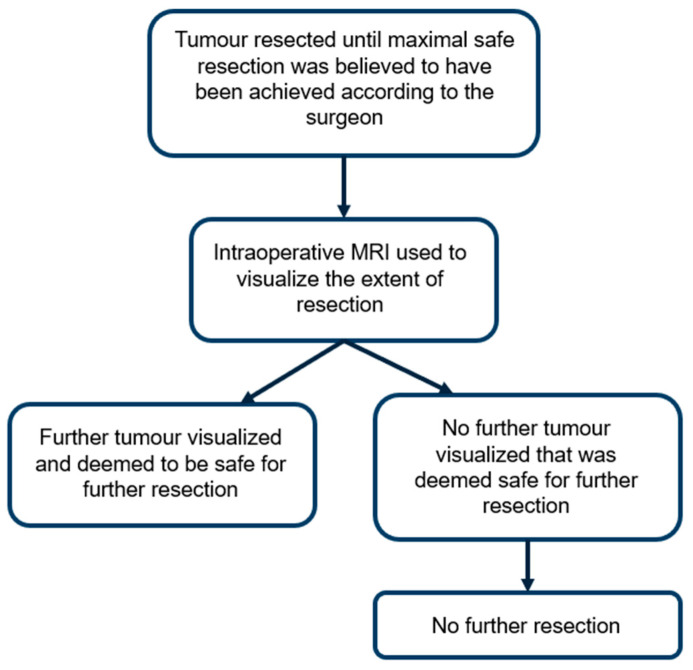
Methods: A retrospective cohort study identified all intracranial tumour operations performed in the 1.5 T iMRI machine of a single centre (2007-2023). Patients were identified using SurgiNet and were grouped according to their histopathological diagnosis in accordance with the WHO 2021 classification. The primary outcome was the rate of reoperation due to iMRI visualisation of residual tumours.
Results: A total of 574 cases were identified, including 152 low-grade gliomas (LGG), 108 high-grade gliomas (HGG), 194 pituitary neuroendocrine tumours (PitNETs), 15 metastases, and 6 meningiomas. Further resection following iMRI visualisation occurred in 45% of LGG cases, 47% of HGG cases, 29% of PitNET cases, and no meningioma or metastasis cases. Chi-square analysis showed that the rate of further resection after iMRI use across 2018-2023 was significantly higher than that across 2007-2012 (46% versus 33%, p = 0.036).
Conclusion: Intraoperative MRI for guiding further resection was most useful in cases of LGG and HGG, possibly reflecting the difficulty of differentiating these tumour types from normal brain tissue. In addition, there was increased reliance on iMRI over time, which may represent our surgeons becoming accustomed to its use.
期刊介绍:
Brain Sciences (ISSN 2076-3425) is a peer-reviewed scientific journal that publishes original articles, critical reviews, research notes and short communications in the areas of cognitive neuroscience, developmental neuroscience, molecular and cellular neuroscience, neural engineering, neuroimaging, neurolinguistics, neuropathy, systems neuroscience, and theoretical and computational neuroscience. Our aim is to encourage scientists to publish their experimental and theoretical results in as much detail as possible. There is no restriction on the length of the papers. The full experimental details must be provided so that the results can be reproduced. Electronic files or software regarding the full details of the calculation and experimental procedure, if unable to be published in a normal way, can be deposited as supplementary material.






 京公网安备 11010802042870号
京ICP备2023020795号-1
京公网安备 11010802042870号
京ICP备2023020795号-1

 分享
分享
 求助内容:
求助内容: 应助结果提醒方式:
 扫码关注我们
