Jayoti Bansal, Gaurav Gangwar, Mohammad Aljaidi, Ali Alkoradees, Gagandeep Singh
{"title":"基于自编码器特征提取和双重增强注意机制的ResNet的脑电图ADHD分类。","authors":"Jayoti Bansal, Gaurav Gangwar, Mohammad Aljaidi, Ali Alkoradees, Gagandeep Singh","doi":"10.3390/brainsci15010095","DOIUrl":null,"url":null,"abstract":"<p><strong>Background: </strong>Attention-Deficit/Hyperactivity Disorder (ADHD) represents a widely prevalent and heterogeneous neurodevelopmental condition in pediatric populations, often exhibiting a substantial propensity to persist into adulthood. ADHD is a multifaceted disorder that resists straightforward diagnostic tests. Clinicians must invest substantial time and effort to secure an accurate diagnosis and implement effective treatment. ADHD diagnosis is primarily based on psychiatric tests, as there is currently no clinically utilized objective diagnostic tool. Nonetheless, several studies in have documented endeavors to create objective instruments designed to assist in the diagnostic process of ADHD, aiming to enhance diagnostic accuracy and reduce subjectivity.</p><p><strong>Method: </strong>This research endeavor sought to establish an objective diagnostic modality for ADHD through the utilization of electroencephalography (EEG) signal analysis. With the use of innovative deep learning techniques, this research seeks to improve the diagnosis of ADHD using EEG data. To capture complex patterns in EEG data, this study proposes a double-augmented attention mechanism ResNet-based model. Using an autoencoder for feature extraction, the Reptile Search Algorithm for feature selection, and a modified ResNet architecture for model training comprise the technique.</p><p><strong>Results: </strong>AUC, F1-score, accuracy, precision, recall, and other standard classifiers like Random Forest and AdaBoost were utilized to compare the model's performance. By a wide margin, the proposed ResNet model outperforms the traditional models with a 99.42% accuracy, 99.03% precision, 99.82% recall, and 99.42% F1-score.</p><p><strong>Conclusions: </strong>ROC AUC score of 0.99 for the model underscores its remarkable capability to differentiate between children with and without ADHD, thereby minimizing misclassification errors and improving diagnostic precision.</p>","PeriodicalId":9095,"journal":{"name":"Brain Sciences","volume":"15 1","pages":""},"PeriodicalIF":2.8000,"publicationDate":"2025-01-20","publicationTypes":"Journal Article","fieldsOfStudy":null,"isOpenAccess":false,"openAccessPdf":"https://www.ncbi.nlm.nih.gov/pmc/articles/PMC11763499/pdf/","citationCount":"0","resultStr":"{\"title\":\"EEG-Based ADHD Classification Using Autoencoder Feature Extraction and ResNet with Double Augmented Attention Mechanism.\",\"authors\":\"Jayoti Bansal, Gaurav Gangwar, Mohammad Aljaidi, Ali Alkoradees, Gagandeep Singh\",\"doi\":\"10.3390/brainsci15010095\",\"DOIUrl\":null,\"url\":null,\"abstract\":\"<p><strong>Background: </strong>Attention-Deficit/Hyperactivity Disorder (ADHD) represents a widely prevalent and heterogeneous neurodevelopmental condition in pediatric populations, often exhibiting a substantial propensity to persist into adulthood. ADHD is a multifaceted disorder that resists straightforward diagnostic tests. Clinicians must invest substantial time and effort to secure an accurate diagnosis and implement effective treatment. ADHD diagnosis is primarily based on psychiatric tests, as there is currently no clinically utilized objective diagnostic tool. Nonetheless, several studies in have documented endeavors to create objective instruments designed to assist in the diagnostic process of ADHD, aiming to enhance diagnostic accuracy and reduce subjectivity.</p><p><strong>Method: </strong>This research endeavor sought to establish an objective diagnostic modality for ADHD through the utilization of electroencephalography (EEG) signal analysis. With the use of innovative deep learning techniques, this research seeks to improve the diagnosis of ADHD using EEG data. To capture complex patterns in EEG data, this study proposes a double-augmented attention mechanism ResNet-based model. Using an autoencoder for feature extraction, the Reptile Search Algorithm for feature selection, and a modified ResNet architecture for model training comprise the technique.</p><p><strong>Results: </strong>AUC, F1-score, accuracy, precision, recall, and other standard classifiers like Random Forest and AdaBoost were utilized to compare the model's performance. By a wide margin, the proposed ResNet model outperforms the traditional models with a 99.42% accuracy, 99.03% precision, 99.82% recall, and 99.42% F1-score.</p><p><strong>Conclusions: </strong>ROC AUC score of 0.99 for the model underscores its remarkable capability to differentiate between children with and without ADHD, thereby minimizing misclassification errors and improving diagnostic precision.</p>\",\"PeriodicalId\":9095,\"journal\":{\"name\":\"Brain Sciences\",\"volume\":\"15 1\",\"pages\":\"\"},\"PeriodicalIF\":2.8000,\"publicationDate\":\"2025-01-20\",\"publicationTypes\":\"Journal Article\",\"fieldsOfStudy\":null,\"isOpenAccess\":false,\"openAccessPdf\":\"https://www.ncbi.nlm.nih.gov/pmc/articles/PMC11763499/pdf/\",\"citationCount\":\"0\",\"resultStr\":null,\"platform\":\"Semanticscholar\",\"paperid\":null,\"PeriodicalName\":\"Brain Sciences\",\"FirstCategoryId\":\"3\",\"ListUrlMain\":\"https://doi.org/10.3390/brainsci15010095\",\"RegionNum\":3,\"RegionCategory\":\"医学\",\"ArticlePicture\":[],\"TitleCN\":null,\"AbstractTextCN\":null,\"PMCID\":null,\"EPubDate\":\"\",\"PubModel\":\"\",\"JCR\":\"Q3\",\"JCRName\":\"NEUROSCIENCES\",\"Score\":null,\"Total\":0}","platform":"Semanticscholar","paperid":null,"PeriodicalName":"Brain Sciences","FirstCategoryId":"3","ListUrlMain":"https://doi.org/10.3390/brainsci15010095","RegionNum":3,"RegionCategory":"医学","ArticlePicture":[],"TitleCN":null,"AbstractTextCN":null,"PMCID":null,"EPubDate":"","PubModel":"","JCR":"Q3","JCRName":"NEUROSCIENCES","Score":null,"Total":0}
EEG-Based ADHD Classification Using Autoencoder Feature Extraction and ResNet with Double Augmented Attention Mechanism.
Background: Attention-Deficit/Hyperactivity Disorder (ADHD) represents a widely prevalent and heterogeneous neurodevelopmental condition in pediatric populations, often exhibiting a substantial propensity to persist into adulthood. ADHD is a multifaceted disorder that resists straightforward diagnostic tests. Clinicians must invest substantial time and effort to secure an accurate diagnosis and implement effective treatment. ADHD diagnosis is primarily based on psychiatric tests, as there is currently no clinically utilized objective diagnostic tool. Nonetheless, several studies in have documented endeavors to create objective instruments designed to assist in the diagnostic process of ADHD, aiming to enhance diagnostic accuracy and reduce subjectivity.
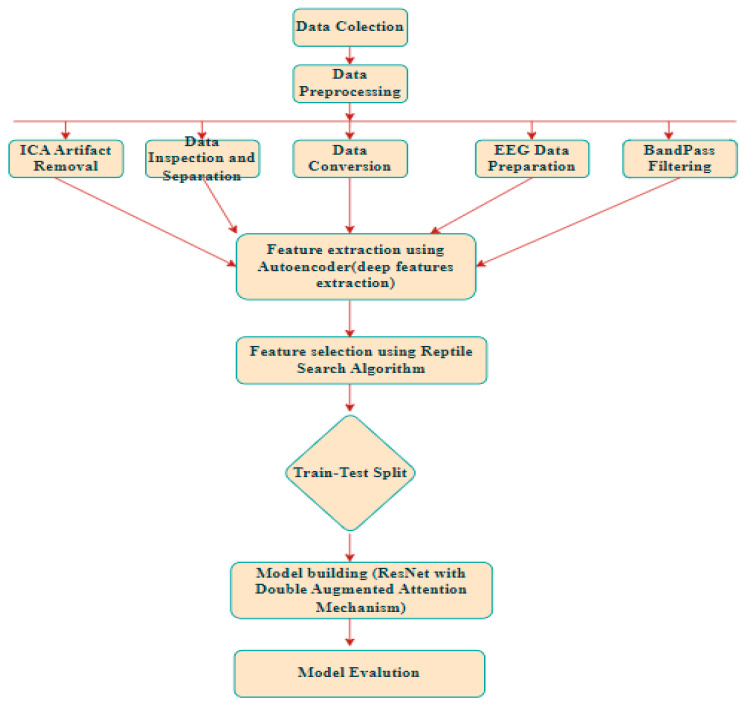
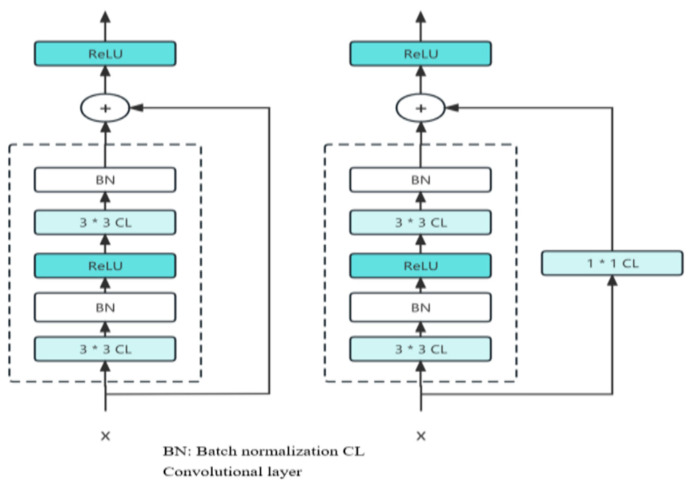
Method: This research endeavor sought to establish an objective diagnostic modality for ADHD through the utilization of electroencephalography (EEG) signal analysis. With the use of innovative deep learning techniques, this research seeks to improve the diagnosis of ADHD using EEG data. To capture complex patterns in EEG data, this study proposes a double-augmented attention mechanism ResNet-based model. Using an autoencoder for feature extraction, the Reptile Search Algorithm for feature selection, and a modified ResNet architecture for model training comprise the technique.
Results: AUC, F1-score, accuracy, precision, recall, and other standard classifiers like Random Forest and AdaBoost were utilized to compare the model's performance. By a wide margin, the proposed ResNet model outperforms the traditional models with a 99.42% accuracy, 99.03% precision, 99.82% recall, and 99.42% F1-score.
Conclusions: ROC AUC score of 0.99 for the model underscores its remarkable capability to differentiate between children with and without ADHD, thereby minimizing misclassification errors and improving diagnostic precision.
期刊介绍:
Brain Sciences (ISSN 2076-3425) is a peer-reviewed scientific journal that publishes original articles, critical reviews, research notes and short communications in the areas of cognitive neuroscience, developmental neuroscience, molecular and cellular neuroscience, neural engineering, neuroimaging, neurolinguistics, neuropathy, systems neuroscience, and theoretical and computational neuroscience. Our aim is to encourage scientists to publish their experimental and theoretical results in as much detail as possible. There is no restriction on the length of the papers. The full experimental details must be provided so that the results can be reproduced. Electronic files or software regarding the full details of the calculation and experimental procedure, if unable to be published in a normal way, can be deposited as supplementary material.





 京公网安备 11010802042870号
京ICP备2023020795号-1
京公网安备 11010802042870号
京ICP备2023020795号-1

 分享
分享
 求助内容:
求助内容: 应助结果提醒方式:
 扫码关注我们
