Yongcong Shao, Lin Xu, Ziyi Peng, Xin An, Jingjing Gong, Mengfei Han
{"title":"急性睡眠剥夺对空间工作记忆的非线性影响:认知损耗和神经补偿。","authors":"Yongcong Shao, Lin Xu, Ziyi Peng, Xin An, Jingjing Gong, Mengfei Han","doi":"10.3390/brainsci15010018","DOIUrl":null,"url":null,"abstract":"<p><strong>Background: </strong>Spatial working memory is crucial for processing visual and spatial information, serving as a foundation for complex cognitive tasks. However, the effects of prolonged sleep deprivation on its dynamics and underlying neural mechanisms remain unclear. This study aims to investigate the specific trends and neural mechanisms underlying spatial working memory alterations during 36 h of acute sleep deprivation.</p><p><strong>Methods: </strong>Twenty participants underwent a 36 h protocol of acute sleep deprivation. Utilizing the spatial 2-back task for assessing spatial working memory, combined with event-related potential (ERP) technology, we compared behavioral and neural responses at four critical time points-before deprivation, and after 12, 24, and 36 h of sleep deprivation-to uncover dynamic cognitive changes.</p><p><strong>Results: </strong>The findings indicate that the impact of sleep deprivation on spatial working memory exhibits significant temporal dependence. After 24 h of deprivation, both behavioral performance and ERP component amplitudes showed significant declines. During the period from 24 to 36 h, the amplitudes of the P2, N2, and P3 components exhibited a recovery trend, potentially reflecting neural compensatory mechanisms.</p><p><strong>Conclusions: </strong>The impact of 36 h acute sleep deprivation on spatial working memory is characterized by time-dependent and phase-specific effects. Initially, sleep deprivation leads to severe cognitive depletion, followed by an adaptive compensatory phase where neural mechanisms may partially restore function. These findings highlight the non-linear nature of cognitive impairment due to sleep deprivation, involving complex self-regulatory and compensatory mechanisms, with implications for understanding cognitive resilience and adaptive processes.</p>","PeriodicalId":9095,"journal":{"name":"Brain Sciences","volume":"15 1","pages":""},"PeriodicalIF":2.8000,"publicationDate":"2024-12-27","publicationTypes":"Journal Article","fieldsOfStudy":null,"isOpenAccess":false,"openAccessPdf":"https://www.ncbi.nlm.nih.gov/pmc/articles/PMC11763834/pdf/","citationCount":"0","resultStr":"{\"title\":\"Non-Linear Effects of Acute Sleep Deprivation on Spatial Working Memory: Cognitive Depletion and Neural Compensation.\",\"authors\":\"Yongcong Shao, Lin Xu, Ziyi Peng, Xin An, Jingjing Gong, Mengfei Han\",\"doi\":\"10.3390/brainsci15010018\",\"DOIUrl\":null,\"url\":null,\"abstract\":\"<p><strong>Background: </strong>Spatial working memory is crucial for processing visual and spatial information, serving as a foundation for complex cognitive tasks. However, the effects of prolonged sleep deprivation on its dynamics and underlying neural mechanisms remain unclear. This study aims to investigate the specific trends and neural mechanisms underlying spatial working memory alterations during 36 h of acute sleep deprivation.</p><p><strong>Methods: </strong>Twenty participants underwent a 36 h protocol of acute sleep deprivation. Utilizing the spatial 2-back task for assessing spatial working memory, combined with event-related potential (ERP) technology, we compared behavioral and neural responses at four critical time points-before deprivation, and after 12, 24, and 36 h of sleep deprivation-to uncover dynamic cognitive changes.</p><p><strong>Results: </strong>The findings indicate that the impact of sleep deprivation on spatial working memory exhibits significant temporal dependence. After 24 h of deprivation, both behavioral performance and ERP component amplitudes showed significant declines. During the period from 24 to 36 h, the amplitudes of the P2, N2, and P3 components exhibited a recovery trend, potentially reflecting neural compensatory mechanisms.</p><p><strong>Conclusions: </strong>The impact of 36 h acute sleep deprivation on spatial working memory is characterized by time-dependent and phase-specific effects. Initially, sleep deprivation leads to severe cognitive depletion, followed by an adaptive compensatory phase where neural mechanisms may partially restore function. These findings highlight the non-linear nature of cognitive impairment due to sleep deprivation, involving complex self-regulatory and compensatory mechanisms, with implications for understanding cognitive resilience and adaptive processes.</p>\",\"PeriodicalId\":9095,\"journal\":{\"name\":\"Brain Sciences\",\"volume\":\"15 1\",\"pages\":\"\"},\"PeriodicalIF\":2.8000,\"publicationDate\":\"2024-12-27\",\"publicationTypes\":\"Journal Article\",\"fieldsOfStudy\":null,\"isOpenAccess\":false,\"openAccessPdf\":\"https://www.ncbi.nlm.nih.gov/pmc/articles/PMC11763834/pdf/\",\"citationCount\":\"0\",\"resultStr\":null,\"platform\":\"Semanticscholar\",\"paperid\":null,\"PeriodicalName\":\"Brain Sciences\",\"FirstCategoryId\":\"3\",\"ListUrlMain\":\"https://doi.org/10.3390/brainsci15010018\",\"RegionNum\":3,\"RegionCategory\":\"医学\",\"ArticlePicture\":[],\"TitleCN\":null,\"AbstractTextCN\":null,\"PMCID\":null,\"EPubDate\":\"\",\"PubModel\":\"\",\"JCR\":\"Q3\",\"JCRName\":\"NEUROSCIENCES\",\"Score\":null,\"Total\":0}","platform":"Semanticscholar","paperid":null,"PeriodicalName":"Brain Sciences","FirstCategoryId":"3","ListUrlMain":"https://doi.org/10.3390/brainsci15010018","RegionNum":3,"RegionCategory":"医学","ArticlePicture":[],"TitleCN":null,"AbstractTextCN":null,"PMCID":null,"EPubDate":"","PubModel":"","JCR":"Q3","JCRName":"NEUROSCIENCES","Score":null,"Total":0}
Non-Linear Effects of Acute Sleep Deprivation on Spatial Working Memory: Cognitive Depletion and Neural Compensation.
Background: Spatial working memory is crucial for processing visual and spatial information, serving as a foundation for complex cognitive tasks. However, the effects of prolonged sleep deprivation on its dynamics and underlying neural mechanisms remain unclear. This study aims to investigate the specific trends and neural mechanisms underlying spatial working memory alterations during 36 h of acute sleep deprivation.
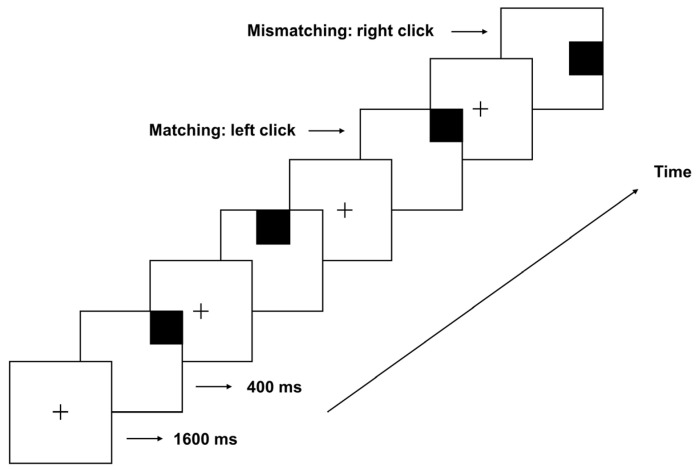
Methods: Twenty participants underwent a 36 h protocol of acute sleep deprivation. Utilizing the spatial 2-back task for assessing spatial working memory, combined with event-related potential (ERP) technology, we compared behavioral and neural responses at four critical time points-before deprivation, and after 12, 24, and 36 h of sleep deprivation-to uncover dynamic cognitive changes.
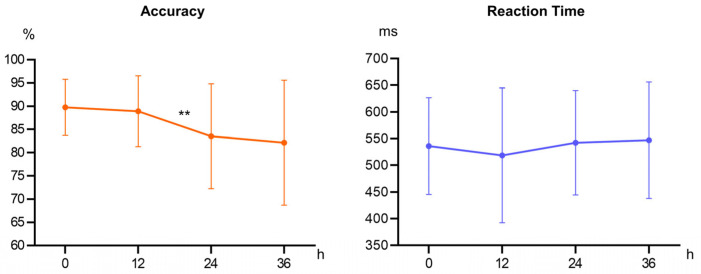
Results: The findings indicate that the impact of sleep deprivation on spatial working memory exhibits significant temporal dependence. After 24 h of deprivation, both behavioral performance and ERP component amplitudes showed significant declines. During the period from 24 to 36 h, the amplitudes of the P2, N2, and P3 components exhibited a recovery trend, potentially reflecting neural compensatory mechanisms.
Conclusions: The impact of 36 h acute sleep deprivation on spatial working memory is characterized by time-dependent and phase-specific effects. Initially, sleep deprivation leads to severe cognitive depletion, followed by an adaptive compensatory phase where neural mechanisms may partially restore function. These findings highlight the non-linear nature of cognitive impairment due to sleep deprivation, involving complex self-regulatory and compensatory mechanisms, with implications for understanding cognitive resilience and adaptive processes.
期刊介绍:
Brain Sciences (ISSN 2076-3425) is a peer-reviewed scientific journal that publishes original articles, critical reviews, research notes and short communications in the areas of cognitive neuroscience, developmental neuroscience, molecular and cellular neuroscience, neural engineering, neuroimaging, neurolinguistics, neuropathy, systems neuroscience, and theoretical and computational neuroscience. Our aim is to encourage scientists to publish their experimental and theoretical results in as much detail as possible. There is no restriction on the length of the papers. The full experimental details must be provided so that the results can be reproduced. Electronic files or software regarding the full details of the calculation and experimental procedure, if unable to be published in a normal way, can be deposited as supplementary material.





 京公网安备 11010802042870号
京ICP备2023020795号-1
京公网安备 11010802042870号
京ICP备2023020795号-1

 分享
分享
 求助内容:
求助内容: 应助结果提醒方式:
 扫码关注我们
