Xiaotong Li, Kaitlin Lampson, Tim A Ahles, James C Root, Q Susan Li, Yuelin Li, Anam Ahsan, Jun J Mao, Kevin T Liou
{"title":"针灸治疗不同癌症幸存者认知功能障碍的可行性和初步效果:一项试点、随机、安慰剂对照试验。","authors":"Xiaotong Li, Kaitlin Lampson, Tim A Ahles, James C Root, Q Susan Li, Yuelin Li, Anam Ahsan, Jun J Mao, Kevin T Liou","doi":"10.3390/curroncol32010027","DOIUrl":null,"url":null,"abstract":"<p><p>(1) Background: This pilot study evaluates the feasibility and preliminary effects of acupuncture for cancer-related cognitive dysfunction (CRCD) in cancer survivors. (2) Methods: A randomized trial comparing real acupuncture (RA) to sham acupuncture (SA) and waitlist control (WLC) among cancer survivors reporting cognitive difficulties. Interventions were delivered weekly over 10 weeks. Feasibility was evaluated by recruitment, treatment adherence, and assessment completion. Subjective CRCD was assessed by the Functional Assessment of Cancer Therapy-Cognitive Function-Perceived Cognitive Impairment subscale (FACT-Cog PCI) and objective CRCD was assessed by the Hopkins Verbal Learning Test-Revised (HVLT-R). (3) Results: 32 participants (57.1% of eligible patients) were enrolled. All participants in acupuncture groups completed ≥8 of 10 treatments. Assessment completion rate was 100% for all participants. From baseline to week 10, the RA group (n = 19) reported a clinically meaningful 17.3-point increase in FACT-Cog PCI (95% confidence interval [CI] 12.5 to 22.1), compared to 9.7 points (95% CI 2.8 to 16.7) in the SA group (n = 9), and 6.8 points (95% CI -3.7 to 17.2) in the WLC group (n = 4). In the subgroup analysis among patients with a below-average baseline HVLT-R (T-score < 50), the RA group (n = 8) increased FACT-Cog PCI scores by 20.4 (95% CI 13.6 to 27.3), compared to 11.1 points (95% CI 0.6 to 21.5) in the SA group (n = 5). The improvements from RA persisted through week 16 in both the total sample and the sub-group. Eleven mild adverse events were reported, with pain and bleeding at the needling sites being the most common. (4) Conclusions: The findings support the feasibility and safety of conducting a randomized, placebo-controlled trial to evaluate acupuncture for cognitive dysfunction in cancer survivors.</p>","PeriodicalId":11012,"journal":{"name":"Current oncology","volume":"32 1","pages":""},"PeriodicalIF":3.6000,"publicationDate":"2025-01-01","publicationTypes":"Journal Article","fieldsOfStudy":null,"isOpenAccess":false,"openAccessPdf":"https://www.ncbi.nlm.nih.gov/pmc/articles/PMC11763785/pdf/","citationCount":"0","resultStr":"{\"title\":\"Feasibility and Preliminary Effects of Acupuncture for Cognitive Dysfunction in Diverse Cancer Survivors: A Pilot, Randomized, Placebo-Controlled Trial.\",\"authors\":\"Xiaotong Li, Kaitlin Lampson, Tim A Ahles, James C Root, Q Susan Li, Yuelin Li, Anam Ahsan, Jun J Mao, Kevin T Liou\",\"doi\":\"10.3390/curroncol32010027\",\"DOIUrl\":null,\"url\":null,\"abstract\":\"<p><p>(1) Background: This pilot study evaluates the feasibility and preliminary effects of acupuncture for cancer-related cognitive dysfunction (CRCD) in cancer survivors. (2) Methods: A randomized trial comparing real acupuncture (RA) to sham acupuncture (SA) and waitlist control (WLC) among cancer survivors reporting cognitive difficulties. Interventions were delivered weekly over 10 weeks. Feasibility was evaluated by recruitment, treatment adherence, and assessment completion. Subjective CRCD was assessed by the Functional Assessment of Cancer Therapy-Cognitive Function-Perceived Cognitive Impairment subscale (FACT-Cog PCI) and objective CRCD was assessed by the Hopkins Verbal Learning Test-Revised (HVLT-R). (3) Results: 32 participants (57.1% of eligible patients) were enrolled. All participants in acupuncture groups completed ≥8 of 10 treatments. Assessment completion rate was 100% for all participants. From baseline to week 10, the RA group (n = 19) reported a clinically meaningful 17.3-point increase in FACT-Cog PCI (95% confidence interval [CI] 12.5 to 22.1), compared to 9.7 points (95% CI 2.8 to 16.7) in the SA group (n = 9), and 6.8 points (95% CI -3.7 to 17.2) in the WLC group (n = 4). In the subgroup analysis among patients with a below-average baseline HVLT-R (T-score < 50), the RA group (n = 8) increased FACT-Cog PCI scores by 20.4 (95% CI 13.6 to 27.3), compared to 11.1 points (95% CI 0.6 to 21.5) in the SA group (n = 5). The improvements from RA persisted through week 16 in both the total sample and the sub-group. Eleven mild adverse events were reported, with pain and bleeding at the needling sites being the most common. (4) Conclusions: The findings support the feasibility and safety of conducting a randomized, placebo-controlled trial to evaluate acupuncture for cognitive dysfunction in cancer survivors.</p>\",\"PeriodicalId\":11012,\"journal\":{\"name\":\"Current oncology\",\"volume\":\"32 1\",\"pages\":\"\"},\"PeriodicalIF\":3.6000,\"publicationDate\":\"2025-01-01\",\"publicationTypes\":\"Journal Article\",\"fieldsOfStudy\":null,\"isOpenAccess\":false,\"openAccessPdf\":\"https://www.ncbi.nlm.nih.gov/pmc/articles/PMC11763785/pdf/\",\"citationCount\":\"0\",\"resultStr\":null,\"platform\":\"Semanticscholar\",\"paperid\":null,\"PeriodicalName\":\"Current oncology\",\"FirstCategoryId\":\"3\",\"ListUrlMain\":\"https://doi.org/10.3390/curroncol32010027\",\"RegionNum\":4,\"RegionCategory\":\"医学\",\"ArticlePicture\":[],\"TitleCN\":null,\"AbstractTextCN\":null,\"PMCID\":null,\"EPubDate\":\"\",\"PubModel\":\"\",\"JCR\":\"Q2\",\"JCRName\":\"ONCOLOGY\",\"Score\":null,\"Total\":0}","platform":"Semanticscholar","paperid":null,"PeriodicalName":"Current oncology","FirstCategoryId":"3","ListUrlMain":"https://doi.org/10.3390/curroncol32010027","RegionNum":4,"RegionCategory":"医学","ArticlePicture":[],"TitleCN":null,"AbstractTextCN":null,"PMCID":null,"EPubDate":"","PubModel":"","JCR":"Q2","JCRName":"ONCOLOGY","Score":null,"Total":0}
引用次数: 0
摘要
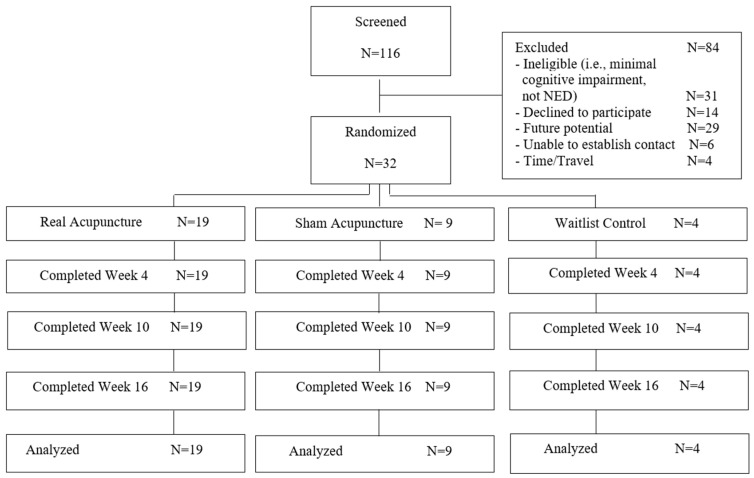
(1)背景:本初步研究评估针刺治疗癌症幸存者癌症相关认知功能障碍(CRCD)的可行性和初步效果。(2)方法:在报告认知困难的癌症幸存者中进行随机对照试验,比较真针灸(RA)、假针灸(SA)和候补对照(WLC)。干预措施在10周内每周进行一次。通过招募、治疗依从性和评估完成情况来评估可行性。主观CRCD采用肿瘤治疗功能评估-认知功能-感知认知障碍量表(FACT-Cog PCI)评估,客观CRCD采用霍普金斯语言学习测试(HVLT-R)评估。(3)结果:32名受试者(占符合条件患者的57.1%)入组。针刺组所有受试者均完成10次治疗中的≥8次。所有参与者的评估完成率均为100%。从基线到10周,RA组(n = 19)报告临床有意义的增加17.3分FACT-Cog PCI(95%可信区间(CI) 12.5至22.1),而9.7点(95% CI 2.8 - 16.7)在SA组(n = 9),和6.8点(95% CI -3.7 - 17.2) WLC组(n = 4)。在患者亚组分析在一个低于平均水平的基线HVLT-R (t指数< 50),RA组(n = 8) FACT-Cog PCI分数提高到20.4 (95% CI 13.6 - 27.3),相比之下,SA组(n = 5)为11.1点(95% CI 0.6至21.5)。RA的改善在总样本和亚组中持续到第16周。报告了11个轻度不良事件,针刺部位的疼痛和出血是最常见的。(4)结论:本研究结果支持开展一项随机、安慰剂对照试验来评估针灸治疗癌症幸存者认知功能障碍的可行性和安全性。
Feasibility and Preliminary Effects of Acupuncture for Cognitive Dysfunction in Diverse Cancer Survivors: A Pilot, Randomized, Placebo-Controlled Trial.
(1) Background: This pilot study evaluates the feasibility and preliminary effects of acupuncture for cancer-related cognitive dysfunction (CRCD) in cancer survivors. (2) Methods: A randomized trial comparing real acupuncture (RA) to sham acupuncture (SA) and waitlist control (WLC) among cancer survivors reporting cognitive difficulties. Interventions were delivered weekly over 10 weeks. Feasibility was evaluated by recruitment, treatment adherence, and assessment completion. Subjective CRCD was assessed by the Functional Assessment of Cancer Therapy-Cognitive Function-Perceived Cognitive Impairment subscale (FACT-Cog PCI) and objective CRCD was assessed by the Hopkins Verbal Learning Test-Revised (HVLT-R). (3) Results: 32 participants (57.1% of eligible patients) were enrolled. All participants in acupuncture groups completed ≥8 of 10 treatments. Assessment completion rate was 100% for all participants. From baseline to week 10, the RA group (n = 19) reported a clinically meaningful 17.3-point increase in FACT-Cog PCI (95% confidence interval [CI] 12.5 to 22.1), compared to 9.7 points (95% CI 2.8 to 16.7) in the SA group (n = 9), and 6.8 points (95% CI -3.7 to 17.2) in the WLC group (n = 4). In the subgroup analysis among patients with a below-average baseline HVLT-R (T-score < 50), the RA group (n = 8) increased FACT-Cog PCI scores by 20.4 (95% CI 13.6 to 27.3), compared to 11.1 points (95% CI 0.6 to 21.5) in the SA group (n = 5). The improvements from RA persisted through week 16 in both the total sample and the sub-group. Eleven mild adverse events were reported, with pain and bleeding at the needling sites being the most common. (4) Conclusions: The findings support the feasibility and safety of conducting a randomized, placebo-controlled trial to evaluate acupuncture for cognitive dysfunction in cancer survivors.
期刊介绍:
Current Oncology is a peer-reviewed, Canadian-based and internationally respected journal. Current Oncology represents a multidisciplinary medium encompassing health care workers in the field of cancer therapy in Canada to report upon and to review progress in the management of this disease.
We encourage submissions from all fields of cancer medicine, including radiation oncology, surgical oncology, medical oncology, pediatric oncology, pathology, and cancer rehabilitation and survivorship. Articles published in the journal typically contain information that is relevant directly to clinical oncology practice, and have clear potential for application to the current or future practice of cancer medicine.





 京公网安备 11010802042870号
京ICP备2023020795号-1
京公网安备 11010802042870号
京ICP备2023020795号-1

 分享
分享
 求助内容:
求助内容: 应助结果提醒方式:
 扫码关注我们
