Chujie Li, Yue Wang, Jian Liang, Guido R M M Haenen, Yonger Chen, Zhengwen Li, Ming Zhang, Ludwig J Dubois
{"title":"7-单- o- (β-羟乙基)-鲁托苷的抗癌潜力:HepG2细胞线粒体依赖性凋亡。","authors":"Chujie Li, Yue Wang, Jian Liang, Guido R M M Haenen, Yonger Chen, Zhengwen Li, Ming Zhang, Ludwig J Dubois","doi":"10.3390/cimb47010036","DOIUrl":null,"url":null,"abstract":"<p><strong>Background/aim: </strong>Flavonoids are a group of polyphenols, abundantly present in our diet. Although, based on their chemoprotective effects, intake of flavonoids is associated with a high anticancer potential as evidenced in in vitro and in vivo models, the molecular mechanism is still elusive. This study explores the antiproliferative and cytotoxic effects of the semi-synthetic flavonoid MonoHER (7-mono-O-(β-hydroxyethyl)-rutoside) in vitro on cancer cells.</p><p><strong>Materials and methods: </strong>HepG2 liver, MCF7 breast, and H1299 lung cancer cells were grown under ambient conditions with or without MonoHER exposure. CCK8 assay was used to assess cell viability. Apoptosis, JC-1, and mitochondrial mass were determined using flow cytometry and confocal analysis. The effects of monoHER on apoptosis proteins were detected by confocal microscopy analysis and Western blot.</p><p><strong>Results: </strong>It was found that MonoHER can reduce HepG2 cells' and MCF7 cells' viability, but not H1299 cells', and induced apoptosis only in HepG2 cells. MonoHER has the potential to enhance the expression of caspase-9 and caspase-3, to damage mitochondria, and to provoke the release of cytochrome C from the mitochondria.</p><p><strong>Conclusion: </strong>MonoHER can inhibit cell growth and induce apoptosis especially in HepG2 human liver cancer cells by triggering the mitochondrial signal transduction pathway, leading to the release of cytochrome C in the cytoplasm and the subsequent activation of caspase-9 and caspase-3. Future research should further explore MonoHER's mechanism of action, efficacy, and potential for clinical translation.</p>","PeriodicalId":10839,"journal":{"name":"Current Issues in Molecular Biology","volume":"47 1","pages":""},"PeriodicalIF":3.0000,"publicationDate":"2025-01-09","publicationTypes":"Journal Article","fieldsOfStudy":null,"isOpenAccess":false,"openAccessPdf":"https://www.ncbi.nlm.nih.gov/pmc/articles/PMC11763755/pdf/","citationCount":"0","resultStr":"{\"title\":\"Exploring the Anticancer Potential of MonoHER (7-Mono-O-(β-Hydroxyethyl)-Rutoside): Mitochondrial-Dependent Apoptosis in HepG2 Cells.\",\"authors\":\"Chujie Li, Yue Wang, Jian Liang, Guido R M M Haenen, Yonger Chen, Zhengwen Li, Ming Zhang, Ludwig J Dubois\",\"doi\":\"10.3390/cimb47010036\",\"DOIUrl\":null,\"url\":null,\"abstract\":\"<p><strong>Background/aim: </strong>Flavonoids are a group of polyphenols, abundantly present in our diet. Although, based on their chemoprotective effects, intake of flavonoids is associated with a high anticancer potential as evidenced in in vitro and in vivo models, the molecular mechanism is still elusive. This study explores the antiproliferative and cytotoxic effects of the semi-synthetic flavonoid MonoHER (7-mono-O-(β-hydroxyethyl)-rutoside) in vitro on cancer cells.</p><p><strong>Materials and methods: </strong>HepG2 liver, MCF7 breast, and H1299 lung cancer cells were grown under ambient conditions with or without MonoHER exposure. CCK8 assay was used to assess cell viability. Apoptosis, JC-1, and mitochondrial mass were determined using flow cytometry and confocal analysis. The effects of monoHER on apoptosis proteins were detected by confocal microscopy analysis and Western blot.</p><p><strong>Results: </strong>It was found that MonoHER can reduce HepG2 cells' and MCF7 cells' viability, but not H1299 cells', and induced apoptosis only in HepG2 cells. MonoHER has the potential to enhance the expression of caspase-9 and caspase-3, to damage mitochondria, and to provoke the release of cytochrome C from the mitochondria.</p><p><strong>Conclusion: </strong>MonoHER can inhibit cell growth and induce apoptosis especially in HepG2 human liver cancer cells by triggering the mitochondrial signal transduction pathway, leading to the release of cytochrome C in the cytoplasm and the subsequent activation of caspase-9 and caspase-3. Future research should further explore MonoHER's mechanism of action, efficacy, and potential for clinical translation.</p>\",\"PeriodicalId\":10839,\"journal\":{\"name\":\"Current Issues in Molecular Biology\",\"volume\":\"47 1\",\"pages\":\"\"},\"PeriodicalIF\":3.0000,\"publicationDate\":\"2025-01-09\",\"publicationTypes\":\"Journal Article\",\"fieldsOfStudy\":null,\"isOpenAccess\":false,\"openAccessPdf\":\"https://www.ncbi.nlm.nih.gov/pmc/articles/PMC11763755/pdf/\",\"citationCount\":\"0\",\"resultStr\":null,\"platform\":\"Semanticscholar\",\"paperid\":null,\"PeriodicalName\":\"Current Issues in Molecular Biology\",\"FirstCategoryId\":\"99\",\"ListUrlMain\":\"https://doi.org/10.3390/cimb47010036\",\"RegionNum\":3,\"RegionCategory\":\"生物学\",\"ArticlePicture\":[],\"TitleCN\":null,\"AbstractTextCN\":null,\"PMCID\":null,\"EPubDate\":\"\",\"PubModel\":\"\",\"JCR\":\"Q3\",\"JCRName\":\"BIOCHEMISTRY & MOLECULAR BIOLOGY\",\"Score\":null,\"Total\":0}","platform":"Semanticscholar","paperid":null,"PeriodicalName":"Current Issues in Molecular Biology","FirstCategoryId":"99","ListUrlMain":"https://doi.org/10.3390/cimb47010036","RegionNum":3,"RegionCategory":"生物学","ArticlePicture":[],"TitleCN":null,"AbstractTextCN":null,"PMCID":null,"EPubDate":"","PubModel":"","JCR":"Q3","JCRName":"BIOCHEMISTRY & MOLECULAR BIOLOGY","Score":null,"Total":0}
Exploring the Anticancer Potential of MonoHER (7-Mono-O-(β-Hydroxyethyl)-Rutoside): Mitochondrial-Dependent Apoptosis in HepG2 Cells.
Background/aim: Flavonoids are a group of polyphenols, abundantly present in our diet. Although, based on their chemoprotective effects, intake of flavonoids is associated with a high anticancer potential as evidenced in in vitro and in vivo models, the molecular mechanism is still elusive. This study explores the antiproliferative and cytotoxic effects of the semi-synthetic flavonoid MonoHER (7-mono-O-(β-hydroxyethyl)-rutoside) in vitro on cancer cells.
Materials and methods: HepG2 liver, MCF7 breast, and H1299 lung cancer cells were grown under ambient conditions with or without MonoHER exposure. CCK8 assay was used to assess cell viability. Apoptosis, JC-1, and mitochondrial mass were determined using flow cytometry and confocal analysis. The effects of monoHER on apoptosis proteins were detected by confocal microscopy analysis and Western blot.
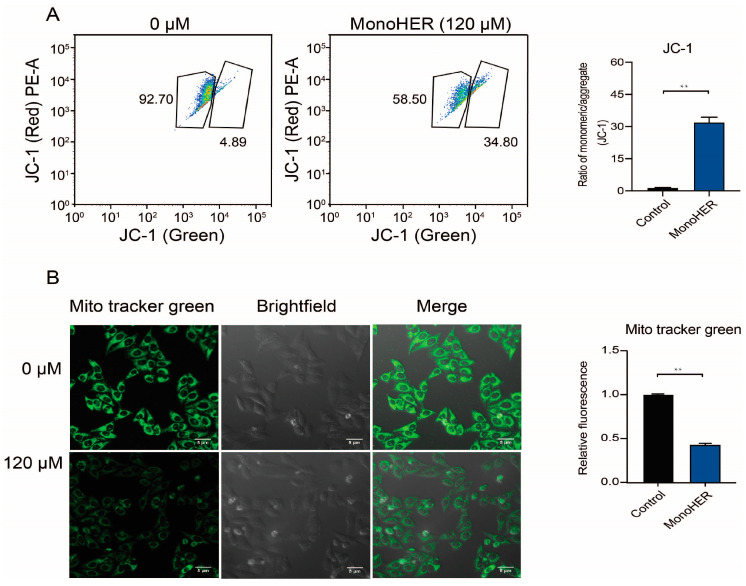
Results: It was found that MonoHER can reduce HepG2 cells' and MCF7 cells' viability, but not H1299 cells', and induced apoptosis only in HepG2 cells. MonoHER has the potential to enhance the expression of caspase-9 and caspase-3, to damage mitochondria, and to provoke the release of cytochrome C from the mitochondria.
Conclusion: MonoHER can inhibit cell growth and induce apoptosis especially in HepG2 human liver cancer cells by triggering the mitochondrial signal transduction pathway, leading to the release of cytochrome C in the cytoplasm and the subsequent activation of caspase-9 and caspase-3. Future research should further explore MonoHER's mechanism of action, efficacy, and potential for clinical translation.
期刊介绍:
Current Issues in Molecular Biology (CIMB) is a peer-reviewed journal publishing review articles and minireviews in all areas of molecular biology and microbiology. Submitted articles are subject to an Article Processing Charge (APC) and are open access immediately upon publication. All manuscripts undergo a peer-review process.






 京公网安备 11010802042870号
京ICP备2023020795号-1
京公网安备 11010802042870号
京ICP备2023020795号-1

 分享
分享
 求助内容:
求助内容: 应助结果提醒方式:
 扫码关注我们
