Ciprian Pușcașu, Corina Andrei, Octavian Tudorel Olaru, Anca Zanfirescu
{"title":"代谢物感应受体:调节慢性疼痛通路的新靶点。","authors":"Ciprian Pușcașu, Corina Andrei, Octavian Tudorel Olaru, Anca Zanfirescu","doi":"10.3390/cimb47010063","DOIUrl":null,"url":null,"abstract":"<p><p>Chronic pain is a debilitating condition affecting millions worldwide, often resulting from complex interactions between the nervous and immune systems. Recent advances highlight the critical role of metabolite-sensing G protein-coupled receptors (GPCRs) in various chronic pain types. These receptors link metabolic changes with cellular responses, influencing inflammatory and degenerative processes. Receptors such as free fatty acid receptor 1 (FFAR1/GPR40), free fatty acid receptor 4 (FFAR4/GPR120), free fatty acid receptor 2 (FFAR2/GPR43), and Takeda G protein-coupled receptor 5 (TGR5/GPR131/GPBAR1) are key modulators of nociceptive signaling. GPR40, activated by long-chain fatty acids, exhibits strong anti-inflammatory effects by reducing cytokine expression. Butyrate-activated GPR43 inhibits inflammatory mediators like nitric oxide synthase-2 and cyclooxygenase-2, mitigating inflammation. TGR5, activated by bile acids, regulates inflammation and cellular senescence through pathways like NF-κB and p38. These receptors are promising therapeutic targets in chronic pain, addressing the metabolic and inflammatory factors underlying nociceptive sensitization and tissue degeneration. This review explores the molecular mechanisms of metabolite-sensing receptors in chronic pain, their therapeutic potential, and challenges in clinical application. By uncovering these mechanisms, metabolite-sensing receptors could lead to safer, more effective pain management strategies.</p>","PeriodicalId":10839,"journal":{"name":"Current Issues in Molecular Biology","volume":"47 1","pages":""},"PeriodicalIF":3.0000,"publicationDate":"2025-01-17","publicationTypes":"Journal Article","fieldsOfStudy":null,"isOpenAccess":false,"openAccessPdf":"https://www.ncbi.nlm.nih.gov/pmc/articles/PMC11763455/pdf/","citationCount":"0","resultStr":"{\"title\":\"Metabolite-Sensing Receptors: Emerging Targets for Modulating Chronic Pain Pathways.\",\"authors\":\"Ciprian Pușcașu, Corina Andrei, Octavian Tudorel Olaru, Anca Zanfirescu\",\"doi\":\"10.3390/cimb47010063\",\"DOIUrl\":null,\"url\":null,\"abstract\":\"<p><p>Chronic pain is a debilitating condition affecting millions worldwide, often resulting from complex interactions between the nervous and immune systems. Recent advances highlight the critical role of metabolite-sensing G protein-coupled receptors (GPCRs) in various chronic pain types. These receptors link metabolic changes with cellular responses, influencing inflammatory and degenerative processes. Receptors such as free fatty acid receptor 1 (FFAR1/GPR40), free fatty acid receptor 4 (FFAR4/GPR120), free fatty acid receptor 2 (FFAR2/GPR43), and Takeda G protein-coupled receptor 5 (TGR5/GPR131/GPBAR1) are key modulators of nociceptive signaling. GPR40, activated by long-chain fatty acids, exhibits strong anti-inflammatory effects by reducing cytokine expression. Butyrate-activated GPR43 inhibits inflammatory mediators like nitric oxide synthase-2 and cyclooxygenase-2, mitigating inflammation. TGR5, activated by bile acids, regulates inflammation and cellular senescence through pathways like NF-κB and p38. These receptors are promising therapeutic targets in chronic pain, addressing the metabolic and inflammatory factors underlying nociceptive sensitization and tissue degeneration. This review explores the molecular mechanisms of metabolite-sensing receptors in chronic pain, their therapeutic potential, and challenges in clinical application. By uncovering these mechanisms, metabolite-sensing receptors could lead to safer, more effective pain management strategies.</p>\",\"PeriodicalId\":10839,\"journal\":{\"name\":\"Current Issues in Molecular Biology\",\"volume\":\"47 1\",\"pages\":\"\"},\"PeriodicalIF\":3.0000,\"publicationDate\":\"2025-01-17\",\"publicationTypes\":\"Journal Article\",\"fieldsOfStudy\":null,\"isOpenAccess\":false,\"openAccessPdf\":\"https://www.ncbi.nlm.nih.gov/pmc/articles/PMC11763455/pdf/\",\"citationCount\":\"0\",\"resultStr\":null,\"platform\":\"Semanticscholar\",\"paperid\":null,\"PeriodicalName\":\"Current Issues in Molecular Biology\",\"FirstCategoryId\":\"99\",\"ListUrlMain\":\"https://doi.org/10.3390/cimb47010063\",\"RegionNum\":3,\"RegionCategory\":\"生物学\",\"ArticlePicture\":[],\"TitleCN\":null,\"AbstractTextCN\":null,\"PMCID\":null,\"EPubDate\":\"\",\"PubModel\":\"\",\"JCR\":\"Q3\",\"JCRName\":\"BIOCHEMISTRY & MOLECULAR BIOLOGY\",\"Score\":null,\"Total\":0}","platform":"Semanticscholar","paperid":null,"PeriodicalName":"Current Issues in Molecular Biology","FirstCategoryId":"99","ListUrlMain":"https://doi.org/10.3390/cimb47010063","RegionNum":3,"RegionCategory":"生物学","ArticlePicture":[],"TitleCN":null,"AbstractTextCN":null,"PMCID":null,"EPubDate":"","PubModel":"","JCR":"Q3","JCRName":"BIOCHEMISTRY & MOLECULAR BIOLOGY","Score":null,"Total":0}
Metabolite-Sensing Receptors: Emerging Targets for Modulating Chronic Pain Pathways.
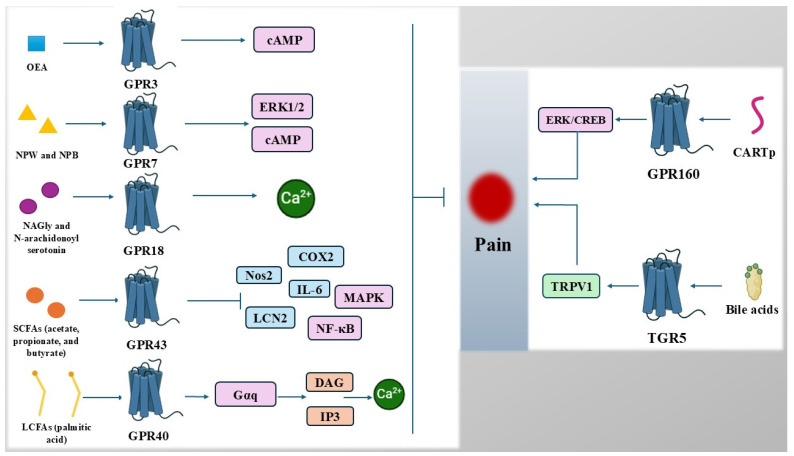
Chronic pain is a debilitating condition affecting millions worldwide, often resulting from complex interactions between the nervous and immune systems. Recent advances highlight the critical role of metabolite-sensing G protein-coupled receptors (GPCRs) in various chronic pain types. These receptors link metabolic changes with cellular responses, influencing inflammatory and degenerative processes. Receptors such as free fatty acid receptor 1 (FFAR1/GPR40), free fatty acid receptor 4 (FFAR4/GPR120), free fatty acid receptor 2 (FFAR2/GPR43), and Takeda G protein-coupled receptor 5 (TGR5/GPR131/GPBAR1) are key modulators of nociceptive signaling. GPR40, activated by long-chain fatty acids, exhibits strong anti-inflammatory effects by reducing cytokine expression. Butyrate-activated GPR43 inhibits inflammatory mediators like nitric oxide synthase-2 and cyclooxygenase-2, mitigating inflammation. TGR5, activated by bile acids, regulates inflammation and cellular senescence through pathways like NF-κB and p38. These receptors are promising therapeutic targets in chronic pain, addressing the metabolic and inflammatory factors underlying nociceptive sensitization and tissue degeneration. This review explores the molecular mechanisms of metabolite-sensing receptors in chronic pain, their therapeutic potential, and challenges in clinical application. By uncovering these mechanisms, metabolite-sensing receptors could lead to safer, more effective pain management strategies.
期刊介绍:
Current Issues in Molecular Biology (CIMB) is a peer-reviewed journal publishing review articles and minireviews in all areas of molecular biology and microbiology. Submitted articles are subject to an Article Processing Charge (APC) and are open access immediately upon publication. All manuscripts undergo a peer-review process.




 京公网安备 11010802042870号
京ICP备2023020795号-1
京公网安备 11010802042870号
京ICP备2023020795号-1

 分享
分享
 求助内容:
求助内容: 应助结果提醒方式:
 扫码关注我们
