Rachelle Lanceleur, Vincent Hort, Marion Peyrat, Denis Habauzit, Andrew I Selwood, Valérie Fessard
{"title":"品纳妥毒素与波替明体外肠通透性的比较研究。","authors":"Rachelle Lanceleur, Vincent Hort, Marion Peyrat, Denis Habauzit, Andrew I Selwood, Valérie Fessard","doi":"10.3390/md23010026","DOIUrl":null,"url":null,"abstract":"<p><p>The pinnatoxins (PnTXs) and portimines, produced by <i>Vulcanodinium rugosum</i>, have been detected in several countries, raising concerns for human health. Although no human poisoning from these toxins has been reported so far, they have been shown to distribute throughout the rodent body after oral administration. Therefore, we investigated the impact of PnTX analogs (PnTX-A, -E, -F, -G, and -H) and portimine (8, 16, and 32 ng/mL) on intestinal barrier integrity and their oral bioavailability using human Caco-2 cell monolayers treated for 2, 6, and 24 h. Our results demonstrated that all of the toxins could impair barrier integrity after 24 h, with differences observed for PnTX-A, -E, and -F, as well as portimine, the most potent of all. While PnTX-A and -E exhibited poor permeability, the other PnTXs were more penetrative, with a Papp > 1.5 × 10<sup>-6</sup> cm·s<sup>-1</sup>. Portimine was the only toxin displaying both a time- and concentration-dependent passage, likely involving a passive diffusion process. The experimental results were compared to predictions obtained by QSAR tools. Although only qualitative, our results suggest that some of these compounds may be more likely to be distributed throughout the body. Further in vivo studies are required to estimate oral bioavailability and potential public health concerns.</p>","PeriodicalId":18222,"journal":{"name":"Marine Drugs","volume":"23 1","pages":""},"PeriodicalIF":5.4000,"publicationDate":"2025-01-07","publicationTypes":"Journal Article","fieldsOfStudy":null,"isOpenAccess":false,"openAccessPdf":"https://www.ncbi.nlm.nih.gov/pmc/articles/PMC11766601/pdf/","citationCount":"0","resultStr":"{\"title\":\"A Comparative Study of the In Vitro Intestinal Permeability of Pinnatoxins and Portimine.\",\"authors\":\"Rachelle Lanceleur, Vincent Hort, Marion Peyrat, Denis Habauzit, Andrew I Selwood, Valérie Fessard\",\"doi\":\"10.3390/md23010026\",\"DOIUrl\":null,\"url\":null,\"abstract\":\"<p><p>The pinnatoxins (PnTXs) and portimines, produced by <i>Vulcanodinium rugosum</i>, have been detected in several countries, raising concerns for human health. Although no human poisoning from these toxins has been reported so far, they have been shown to distribute throughout the rodent body after oral administration. Therefore, we investigated the impact of PnTX analogs (PnTX-A, -E, -F, -G, and -H) and portimine (8, 16, and 32 ng/mL) on intestinal barrier integrity and their oral bioavailability using human Caco-2 cell monolayers treated for 2, 6, and 24 h. Our results demonstrated that all of the toxins could impair barrier integrity after 24 h, with differences observed for PnTX-A, -E, and -F, as well as portimine, the most potent of all. While PnTX-A and -E exhibited poor permeability, the other PnTXs were more penetrative, with a Papp > 1.5 × 10<sup>-6</sup> cm·s<sup>-1</sup>. Portimine was the only toxin displaying both a time- and concentration-dependent passage, likely involving a passive diffusion process. The experimental results were compared to predictions obtained by QSAR tools. Although only qualitative, our results suggest that some of these compounds may be more likely to be distributed throughout the body. Further in vivo studies are required to estimate oral bioavailability and potential public health concerns.</p>\",\"PeriodicalId\":18222,\"journal\":{\"name\":\"Marine Drugs\",\"volume\":\"23 1\",\"pages\":\"\"},\"PeriodicalIF\":5.4000,\"publicationDate\":\"2025-01-07\",\"publicationTypes\":\"Journal Article\",\"fieldsOfStudy\":null,\"isOpenAccess\":false,\"openAccessPdf\":\"https://www.ncbi.nlm.nih.gov/pmc/articles/PMC11766601/pdf/\",\"citationCount\":\"0\",\"resultStr\":null,\"platform\":\"Semanticscholar\",\"paperid\":null,\"PeriodicalName\":\"Marine Drugs\",\"FirstCategoryId\":\"3\",\"ListUrlMain\":\"https://doi.org/10.3390/md23010026\",\"RegionNum\":2,\"RegionCategory\":\"医学\",\"ArticlePicture\":[],\"TitleCN\":null,\"AbstractTextCN\":null,\"PMCID\":null,\"EPubDate\":\"\",\"PubModel\":\"\",\"JCR\":\"Q1\",\"JCRName\":\"CHEMISTRY, MEDICINAL\",\"Score\":null,\"Total\":0}","platform":"Semanticscholar","paperid":null,"PeriodicalName":"Marine Drugs","FirstCategoryId":"3","ListUrlMain":"https://doi.org/10.3390/md23010026","RegionNum":2,"RegionCategory":"医学","ArticlePicture":[],"TitleCN":null,"AbstractTextCN":null,"PMCID":null,"EPubDate":"","PubModel":"","JCR":"Q1","JCRName":"CHEMISTRY, MEDICINAL","Score":null,"Total":0}
A Comparative Study of the In Vitro Intestinal Permeability of Pinnatoxins and Portimine.
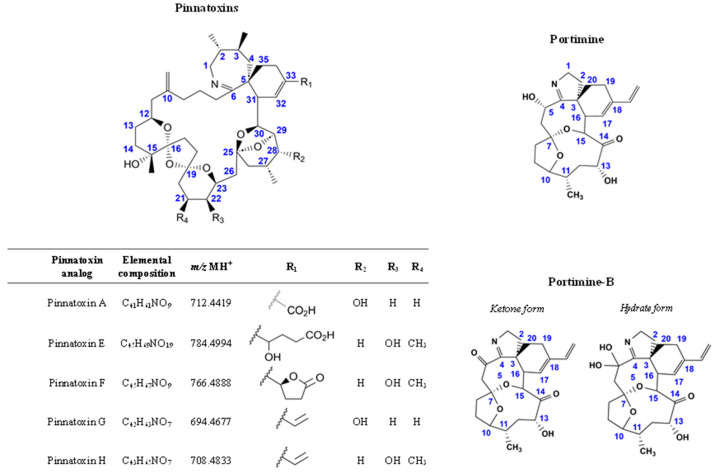
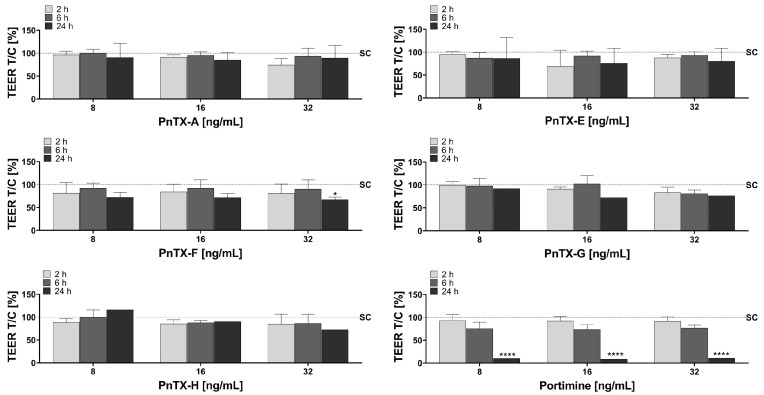
The pinnatoxins (PnTXs) and portimines, produced by Vulcanodinium rugosum, have been detected in several countries, raising concerns for human health. Although no human poisoning from these toxins has been reported so far, they have been shown to distribute throughout the rodent body after oral administration. Therefore, we investigated the impact of PnTX analogs (PnTX-A, -E, -F, -G, and -H) and portimine (8, 16, and 32 ng/mL) on intestinal barrier integrity and their oral bioavailability using human Caco-2 cell monolayers treated for 2, 6, and 24 h. Our results demonstrated that all of the toxins could impair barrier integrity after 24 h, with differences observed for PnTX-A, -E, and -F, as well as portimine, the most potent of all. While PnTX-A and -E exhibited poor permeability, the other PnTXs were more penetrative, with a Papp > 1.5 × 10⁻⁶ cm·s-1. Portimine was the only toxin displaying both a time- and concentration-dependent passage, likely involving a passive diffusion process. The experimental results were compared to predictions obtained by QSAR tools. Although only qualitative, our results suggest that some of these compounds may be more likely to be distributed throughout the body. Further in vivo studies are required to estimate oral bioavailability and potential public health concerns.
期刊介绍:
Marine Drugs (ISSN 1660-3397) publishes reviews, regular research papers and short notes on the research, development and production of drugs from the sea. Our aim is to encourage scientists to publish their experimental and theoretical research in as much detail as possible, particularly synthetic procedures and characterization information for bioactive compounds. There is no restriction on the length of the experimental section.





 京公网安备 11010802042870号
京ICP备2023020795号-1
京公网安备 11010802042870号
京ICP备2023020795号-1

 分享
分享
 求助内容:
求助内容: 应助结果提醒方式:
 扫码关注我们
