Anthony Damiani, Viviane De Menezes Caceres, Greg Roberts, Jessica Coddo, Nicholas Scarfo, Desmond B Willliams, Vinosshini Tharmathurai, Rami Tadros, Stephen Fitzgerald, Alice O'Connell, Amrit Kaur Sandhu, Andrew Vanlint, Arduino A Mangoni, Dirk Hofmann, Hosam Bony, Jeff Faunt, Jir Ping Boey, Nicholas Farinola, Rachel Wells, Stephen Hedger, Udul Hewage, Yogesh Sharma, Zuhair Jabbar, Josephine Thomas, Katerina Flabouris, Toby Gilbert, Campbell Thompson, Patrick Russell
{"title":"基于临床实践的依诺肝素治疗的常规和个体化给药策略比较。","authors":"Anthony Damiani, Viviane De Menezes Caceres, Greg Roberts, Jessica Coddo, Nicholas Scarfo, Desmond B Willliams, Vinosshini Tharmathurai, Rami Tadros, Stephen Fitzgerald, Alice O'Connell, Amrit Kaur Sandhu, Andrew Vanlint, Arduino A Mangoni, Dirk Hofmann, Hosam Bony, Jeff Faunt, Jir Ping Boey, Nicholas Farinola, Rachel Wells, Stephen Hedger, Udul Hewage, Yogesh Sharma, Zuhair Jabbar, Josephine Thomas, Katerina Flabouris, Toby Gilbert, Campbell Thompson, Patrick Russell","doi":"10.1002/prp2.70039","DOIUrl":null,"url":null,"abstract":"<p><p>To understand differences in anti-factor-Xa levels produced by two different dosing strategies (conventional and individualized) for therapeutic enoxaparin in a cohort of hospital inpatients. A multicenter, retrospective cohort study over a two- and a half-year period for inpatients with stable renal function and on therapeutic enoxaparin. Anti-factor-Xa levels were taken 3-5 h after enoxaparin administration and a minimum of 48 h of dosing. The final analysis included 278 patients from five hospitals: conventional dosing was used for 141, while 137 were given an unconventional dose, that is, individualized for their renal function and weight. Out-of-range levels were frequent (35% to 40% of all inpatients). After adjustment for age, renal function, and body mass index (BMI), the conventional group was more likely to experience above-range levels (> 1.0 IU/mL; OR 2.50 [95% CI 1.38-4.56], p < 0.003) than the individualized group. Individualized dosing was independently associated with higher odds of a below-range anti-Xa level (< 0.5 IU/mL) compared to conventional dosing (OR 2.27 [95% CI 1.07-4.76], p = 0.03). Within the conventional group, above-range levels were significantly and independently associated with decreasing renal function (OR 0.97, 95% CI 0.96-0.99, p = 0.004) and with increasing BMI (OR 1.06, 95% CI 1.01-1.10, p = 0.02). No such associations were seen with an individualized approach. Clinical event rates were low and not different between groups (p > 0.24). Conventional therapeutic dosing of enoxaparin exposed people with obesity or renal impairment to more frequent above-range anti-factor-Xa levels; individualizing the dose could improve this but might expose people to subtherapeutic levels. More research is needed.</p>","PeriodicalId":19948,"journal":{"name":"Pharmacology Research & Perspectives","volume":"13 1","pages":"e70039"},"PeriodicalIF":2.6000,"publicationDate":"2025-02-01","publicationTypes":"Journal Article","fieldsOfStudy":null,"isOpenAccess":false,"openAccessPdf":"https://www.ncbi.nlm.nih.gov/pmc/articles/PMC11760983/pdf/","citationCount":"0","resultStr":"{\"title\":\"A Clinical Practice-Based Comparison of Conventional and Individualized Dosing Strategies for Therapeutic Enoxaparin.\",\"authors\":\"Anthony Damiani, Viviane De Menezes Caceres, Greg Roberts, Jessica Coddo, Nicholas Scarfo, Desmond B Willliams, Vinosshini Tharmathurai, Rami Tadros, Stephen Fitzgerald, Alice O'Connell, Amrit Kaur Sandhu, Andrew Vanlint, Arduino A Mangoni, Dirk Hofmann, Hosam Bony, Jeff Faunt, Jir Ping Boey, Nicholas Farinola, Rachel Wells, Stephen Hedger, Udul Hewage, Yogesh Sharma, Zuhair Jabbar, Josephine Thomas, Katerina Flabouris, Toby Gilbert, Campbell Thompson, Patrick Russell\",\"doi\":\"10.1002/prp2.70039\",\"DOIUrl\":null,\"url\":null,\"abstract\":\"<p><p>To understand differences in anti-factor-Xa levels produced by two different dosing strategies (conventional and individualized) for therapeutic enoxaparin in a cohort of hospital inpatients. A multicenter, retrospective cohort study over a two- and a half-year period for inpatients with stable renal function and on therapeutic enoxaparin. Anti-factor-Xa levels were taken 3-5 h after enoxaparin administration and a minimum of 48 h of dosing. The final analysis included 278 patients from five hospitals: conventional dosing was used for 141, while 137 were given an unconventional dose, that is, individualized for their renal function and weight. Out-of-range levels were frequent (35% to 40% of all inpatients). After adjustment for age, renal function, and body mass index (BMI), the conventional group was more likely to experience above-range levels (> 1.0 IU/mL; OR 2.50 [95% CI 1.38-4.56], p < 0.003) than the individualized group. Individualized dosing was independently associated with higher odds of a below-range anti-Xa level (< 0.5 IU/mL) compared to conventional dosing (OR 2.27 [95% CI 1.07-4.76], p = 0.03). Within the conventional group, above-range levels were significantly and independently associated with decreasing renal function (OR 0.97, 95% CI 0.96-0.99, p = 0.004) and with increasing BMI (OR 1.06, 95% CI 1.01-1.10, p = 0.02). No such associations were seen with an individualized approach. Clinical event rates were low and not different between groups (p > 0.24). Conventional therapeutic dosing of enoxaparin exposed people with obesity or renal impairment to more frequent above-range anti-factor-Xa levels; individualizing the dose could improve this but might expose people to subtherapeutic levels. More research is needed.</p>\",\"PeriodicalId\":19948,\"journal\":{\"name\":\"Pharmacology Research & Perspectives\",\"volume\":\"13 1\",\"pages\":\"e70039\"},\"PeriodicalIF\":2.6000,\"publicationDate\":\"2025-02-01\",\"publicationTypes\":\"Journal Article\",\"fieldsOfStudy\":null,\"isOpenAccess\":false,\"openAccessPdf\":\"https://www.ncbi.nlm.nih.gov/pmc/articles/PMC11760983/pdf/\",\"citationCount\":\"0\",\"resultStr\":null,\"platform\":\"Semanticscholar\",\"paperid\":null,\"PeriodicalName\":\"Pharmacology Research & Perspectives\",\"FirstCategoryId\":\"3\",\"ListUrlMain\":\"https://doi.org/10.1002/prp2.70039\",\"RegionNum\":4,\"RegionCategory\":\"医学\",\"ArticlePicture\":[],\"TitleCN\":null,\"AbstractTextCN\":null,\"PMCID\":null,\"EPubDate\":\"\",\"PubModel\":\"\",\"JCR\":\"Q2\",\"JCRName\":\"PHARMACOLOGY & PHARMACY\",\"Score\":null,\"Total\":0}","platform":"Semanticscholar","paperid":null,"PeriodicalName":"Pharmacology Research & Perspectives","FirstCategoryId":"3","ListUrlMain":"https://doi.org/10.1002/prp2.70039","RegionNum":4,"RegionCategory":"医学","ArticlePicture":[],"TitleCN":null,"AbstractTextCN":null,"PMCID":null,"EPubDate":"","PubModel":"","JCR":"Q2","JCRName":"PHARMACOLOGY & PHARMACY","Score":null,"Total":0}
引用次数: 0
摘要
了解两种不同给药策略(常规和个体化)对住院患者治疗性依诺肝素产生的抗因子xa水平的差异。一项为期两年半的多中心回顾性队列研究,研究对象为肾功能稳定且接受依诺肝素治疗的住院患者。在依诺肝素给药后3-5小时和给药后至少48小时检测抗因子xa水平。最终分析包括来自5家医院的278名患者:141名患者使用常规剂量,137名患者使用非常规剂量,即根据其肾功能和体重进行个体化治疗。超出范围的水平很常见(占所有住院患者的35%至40%)。在调整了年龄、肾功能和体重指数(BMI)后,常规组更有可能出现高于范围的水平(> 1.0 IU/mL;OR 2.50 [95% CI 1.38-4.56], p 0.24)。依诺肝素的常规治疗剂量使肥胖或肾功能损害患者的抗因子xa水平更频繁地高于范围;个体化剂量可以改善这种情况,但可能会使人们暴露于亚治疗水平。需要更多的研究。
A Clinical Practice-Based Comparison of Conventional and Individualized Dosing Strategies for Therapeutic Enoxaparin.
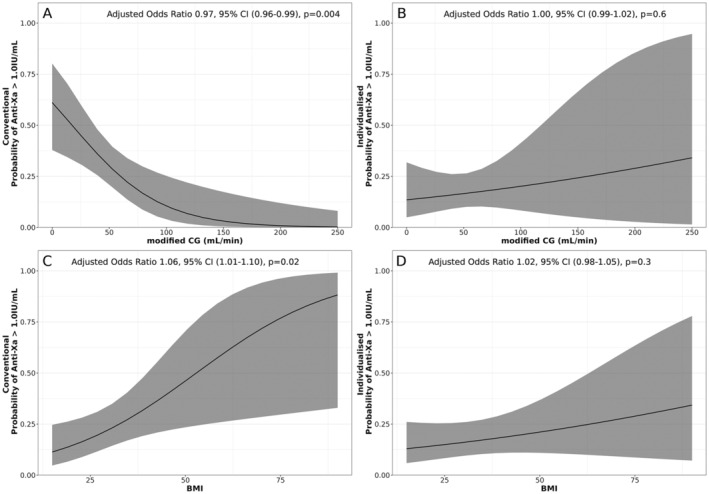
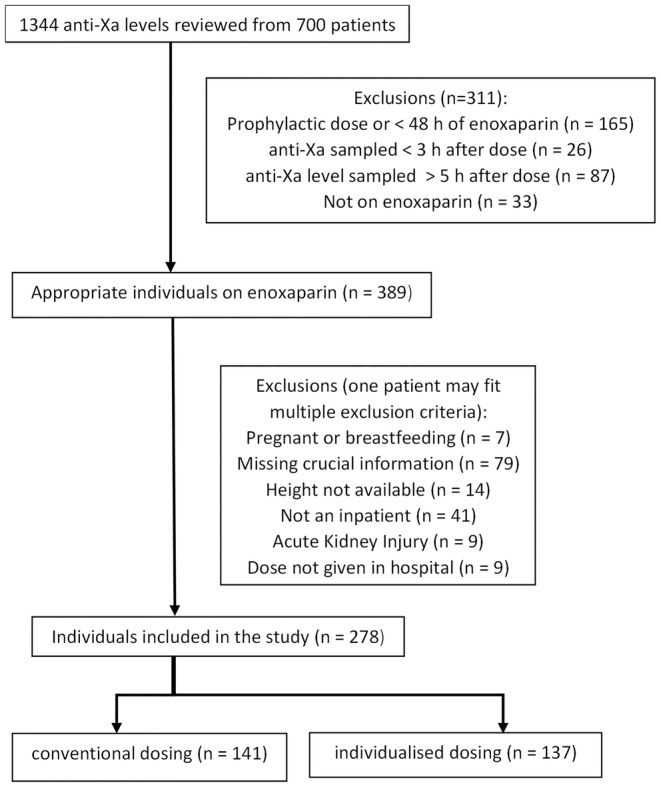
To understand differences in anti-factor-Xa levels produced by two different dosing strategies (conventional and individualized) for therapeutic enoxaparin in a cohort of hospital inpatients. A multicenter, retrospective cohort study over a two- and a half-year period for inpatients with stable renal function and on therapeutic enoxaparin. Anti-factor-Xa levels were taken 3-5 h after enoxaparin administration and a minimum of 48 h of dosing. The final analysis included 278 patients from five hospitals: conventional dosing was used for 141, while 137 were given an unconventional dose, that is, individualized for their renal function and weight. Out-of-range levels were frequent (35% to 40% of all inpatients). After adjustment for age, renal function, and body mass index (BMI), the conventional group was more likely to experience above-range levels (> 1.0 IU/mL; OR 2.50 [95% CI 1.38-4.56], p < 0.003) than the individualized group. Individualized dosing was independently associated with higher odds of a below-range anti-Xa level (< 0.5 IU/mL) compared to conventional dosing (OR 2.27 [95% CI 1.07-4.76], p = 0.03). Within the conventional group, above-range levels were significantly and independently associated with decreasing renal function (OR 0.97, 95% CI 0.96-0.99, p = 0.004) and with increasing BMI (OR 1.06, 95% CI 1.01-1.10, p = 0.02). No such associations were seen with an individualized approach. Clinical event rates were low and not different between groups (p > 0.24). Conventional therapeutic dosing of enoxaparin exposed people with obesity or renal impairment to more frequent above-range anti-factor-Xa levels; individualizing the dose could improve this but might expose people to subtherapeutic levels. More research is needed.
期刊介绍:
PR&P is jointly published by the American Society for Pharmacology and Experimental Therapeutics (ASPET), the British Pharmacological Society (BPS), and Wiley. PR&P is a bi-monthly open access journal that publishes a range of article types, including: target validation (preclinical papers that show a hypothesis is incorrect or papers on drugs that have failed in early clinical development); drug discovery reviews (strategy, hypotheses, and data resulting in a successful therapeutic drug); frontiers in translational medicine (drug and target validation for an unmet therapeutic need); pharmacological hypotheses (reviews that are oriented to inform a novel hypothesis); and replication studies (work that refutes key findings [failed replication] and work that validates key findings). PR&P publishes papers submitted directly to the journal and those referred from the journals of ASPET and the BPS





 京公网安备 11010802042870号
京ICP备2023020795号-1
京公网安备 11010802042870号
京ICP备2023020795号-1

 分享
分享
 求助内容:
求助内容: 应助结果提醒方式:
 扫码关注我们
