{"title":"低聚壳聚糖对脂多糖诱导的牛乳腺上皮细胞炎症反应和氧化应激的保护作用。","authors":"Ziwei Lin, Yanlong Zhou, Ruiwen Chen, Qiuyan Tao, Qiwen Lu, Qianchao Xu, Haibin Yu, Ping Jiang, Zhihui Zhao","doi":"10.3390/md23010031","DOIUrl":null,"url":null,"abstract":"<p><p>Chitosan oligosaccharide (COS) is receiving increasing attention as a feed additive in animal production. COS has a variety of biological functions, including anti-inflammatory and antioxidant activities. Mastitis is a major disease in dairy cows that has a significant impact on animal welfare and production. Hence, this research aimed to investigate the mechanism of COS on the lipopolysaccharide (LPS)-stimulated inflammatory response and oxidative stress in bovine mammary epithelial cells (BMECs). In this study, the results demonstrated that COS protected BMECs from the inflammatory response induced by LPS by restraining the excessive production of toll-like receptor 4 (TLR4), tumor necrosis factor-α (TNF-α), interleukin-6 (IL-6), and interleukin-1β (IL-1β). COS treatment also suppressed excessive reactive oxygen species (ROS) production and restored antioxidant enzyme activity under LPS-induced oxidative stress conditions. Furthermore, the results also demonstrated that COS promote nuclear factor erythroid 2-related factor 2 (Nrf2) expression and inhibit TLR4 levels and p65 and IκBα phosphorylation in BMECs exposed to LPS. In summary, the results demonstrate that the protective mechanism of COS on the LPS-induced inflammatory response and oxidative stress depend on the TLR4/nuclear factor-κB (NF-κB) and Nrf2 signaling pathways, indicating that COS could serve as natural protective agents for alleviating BMECs in mastitis.</p>","PeriodicalId":18222,"journal":{"name":"Marine Drugs","volume":"23 1","pages":""},"PeriodicalIF":5.4000,"publicationDate":"2025-01-09","publicationTypes":"Journal Article","fieldsOfStudy":null,"isOpenAccess":false,"openAccessPdf":"https://www.ncbi.nlm.nih.gov/pmc/articles/PMC11767086/pdf/","citationCount":"0","resultStr":"{\"title\":\"Protective Effects of Chitosan Oligosaccharide Against Lipopolysaccharide-Induced Inflammatory Response and Oxidative Stress in Bovine Mammary Epithelial Cells.\",\"authors\":\"Ziwei Lin, Yanlong Zhou, Ruiwen Chen, Qiuyan Tao, Qiwen Lu, Qianchao Xu, Haibin Yu, Ping Jiang, Zhihui Zhao\",\"doi\":\"10.3390/md23010031\",\"DOIUrl\":null,\"url\":null,\"abstract\":\"<p><p>Chitosan oligosaccharide (COS) is receiving increasing attention as a feed additive in animal production. COS has a variety of biological functions, including anti-inflammatory and antioxidant activities. Mastitis is a major disease in dairy cows that has a significant impact on animal welfare and production. Hence, this research aimed to investigate the mechanism of COS on the lipopolysaccharide (LPS)-stimulated inflammatory response and oxidative stress in bovine mammary epithelial cells (BMECs). In this study, the results demonstrated that COS protected BMECs from the inflammatory response induced by LPS by restraining the excessive production of toll-like receptor 4 (TLR4), tumor necrosis factor-α (TNF-α), interleukin-6 (IL-6), and interleukin-1β (IL-1β). COS treatment also suppressed excessive reactive oxygen species (ROS) production and restored antioxidant enzyme activity under LPS-induced oxidative stress conditions. Furthermore, the results also demonstrated that COS promote nuclear factor erythroid 2-related factor 2 (Nrf2) expression and inhibit TLR4 levels and p65 and IκBα phosphorylation in BMECs exposed to LPS. In summary, the results demonstrate that the protective mechanism of COS on the LPS-induced inflammatory response and oxidative stress depend on the TLR4/nuclear factor-κB (NF-κB) and Nrf2 signaling pathways, indicating that COS could serve as natural protective agents for alleviating BMECs in mastitis.</p>\",\"PeriodicalId\":18222,\"journal\":{\"name\":\"Marine Drugs\",\"volume\":\"23 1\",\"pages\":\"\"},\"PeriodicalIF\":5.4000,\"publicationDate\":\"2025-01-09\",\"publicationTypes\":\"Journal Article\",\"fieldsOfStudy\":null,\"isOpenAccess\":false,\"openAccessPdf\":\"https://www.ncbi.nlm.nih.gov/pmc/articles/PMC11767086/pdf/\",\"citationCount\":\"0\",\"resultStr\":null,\"platform\":\"Semanticscholar\",\"paperid\":null,\"PeriodicalName\":\"Marine Drugs\",\"FirstCategoryId\":\"3\",\"ListUrlMain\":\"https://doi.org/10.3390/md23010031\",\"RegionNum\":2,\"RegionCategory\":\"医学\",\"ArticlePicture\":[],\"TitleCN\":null,\"AbstractTextCN\":null,\"PMCID\":null,\"EPubDate\":\"\",\"PubModel\":\"\",\"JCR\":\"Q1\",\"JCRName\":\"CHEMISTRY, MEDICINAL\",\"Score\":null,\"Total\":0}","platform":"Semanticscholar","paperid":null,"PeriodicalName":"Marine Drugs","FirstCategoryId":"3","ListUrlMain":"https://doi.org/10.3390/md23010031","RegionNum":2,"RegionCategory":"医学","ArticlePicture":[],"TitleCN":null,"AbstractTextCN":null,"PMCID":null,"EPubDate":"","PubModel":"","JCR":"Q1","JCRName":"CHEMISTRY, MEDICINAL","Score":null,"Total":0}
Protective Effects of Chitosan Oligosaccharide Against Lipopolysaccharide-Induced Inflammatory Response and Oxidative Stress in Bovine Mammary Epithelial Cells.
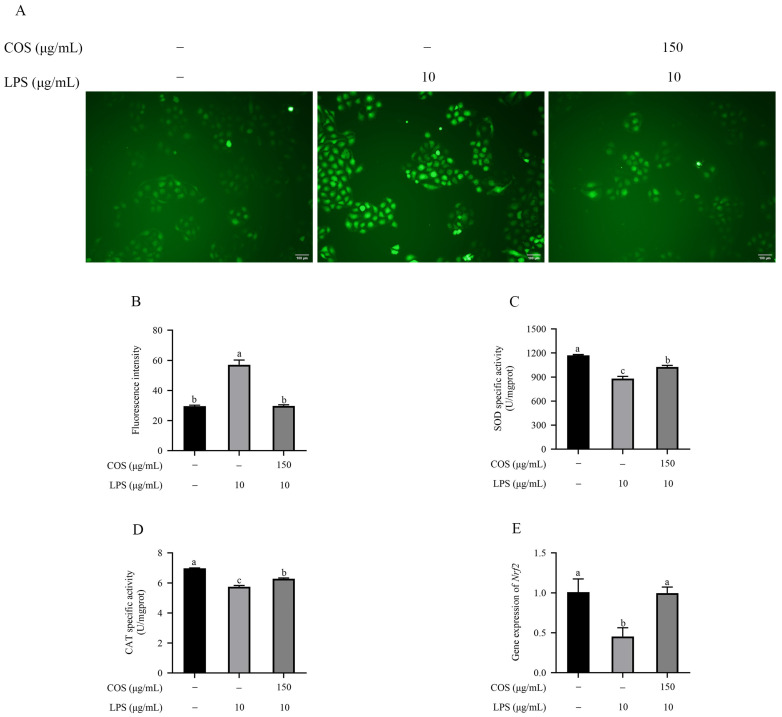
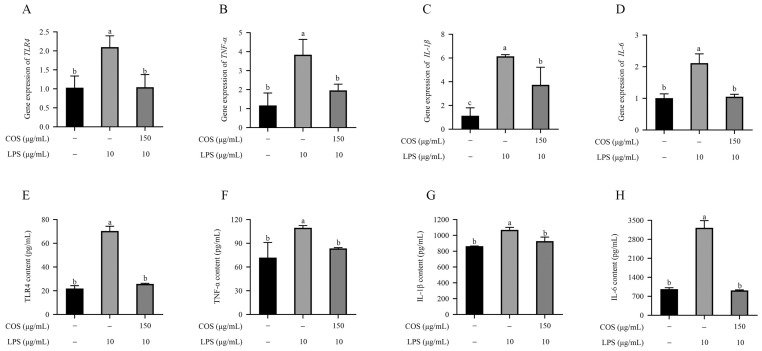
Chitosan oligosaccharide (COS) is receiving increasing attention as a feed additive in animal production. COS has a variety of biological functions, including anti-inflammatory and antioxidant activities. Mastitis is a major disease in dairy cows that has a significant impact on animal welfare and production. Hence, this research aimed to investigate the mechanism of COS on the lipopolysaccharide (LPS)-stimulated inflammatory response and oxidative stress in bovine mammary epithelial cells (BMECs). In this study, the results demonstrated that COS protected BMECs from the inflammatory response induced by LPS by restraining the excessive production of toll-like receptor 4 (TLR4), tumor necrosis factor-α (TNF-α), interleukin-6 (IL-6), and interleukin-1β (IL-1β). COS treatment also suppressed excessive reactive oxygen species (ROS) production and restored antioxidant enzyme activity under LPS-induced oxidative stress conditions. Furthermore, the results also demonstrated that COS promote nuclear factor erythroid 2-related factor 2 (Nrf2) expression and inhibit TLR4 levels and p65 and IκBα phosphorylation in BMECs exposed to LPS. In summary, the results demonstrate that the protective mechanism of COS on the LPS-induced inflammatory response and oxidative stress depend on the TLR4/nuclear factor-κB (NF-κB) and Nrf2 signaling pathways, indicating that COS could serve as natural protective agents for alleviating BMECs in mastitis.
期刊介绍:
Marine Drugs (ISSN 1660-3397) publishes reviews, regular research papers and short notes on the research, development and production of drugs from the sea. Our aim is to encourage scientists to publish their experimental and theoretical research in as much detail as possible, particularly synthetic procedures and characterization information for bioactive compounds. There is no restriction on the length of the experimental section.





 京公网安备 11010802042870号
京ICP备2023020795号-1
京公网安备 11010802042870号
京ICP备2023020795号-1

 分享
分享
 求助内容:
求助内容: 应助结果提醒方式:
 扫码关注我们
