Chandylen L Nightingale, Emily V Dressler, Maura Kepper, Heidi D Klepin, Simon Craddock Lee, Sydney Smith, Aylin Aguilar, Kimberly D Wiseman, Stephanie J Sohl, Brian J Wells, Joseph A DeMari, Alyssa Throckmorton, Lindsey W Kulbacki, Jenny Hanna, Randi E Foraker, Kathryn E Weaver
{"title":"社区肿瘤学治疗后生存护理中使用的心血管健康评估工具(来自WF-1804CD的结果):混合方法观察性研究。","authors":"Chandylen L Nightingale, Emily V Dressler, Maura Kepper, Heidi D Klepin, Simon Craddock Lee, Sydney Smith, Aylin Aguilar, Kimberly D Wiseman, Stephanie J Sohl, Brian J Wells, Joseph A DeMari, Alyssa Throckmorton, Lindsey W Kulbacki, Jenny Hanna, Randi E Foraker, Kathryn E Weaver","doi":"10.2196/65152","DOIUrl":null,"url":null,"abstract":"<p><strong>Background: </strong>Most survivors of cancer have multiple cardiovascular risk factors, increasing their risk of poor cardiovascular and cancer outcomes. The Automated Heart-Health Assessment (AH-HA) tool is a novel electronic health record clinical decision support tool based on the American Heart Association's Life's Simple 7 cardiovascular health metrics to promote cardiovascular health assessment and discussion in outpatient oncology. Before proceeding to future implementation trials, it is critical to establish the acceptability of the tool among providers and survivors.</p><p><strong>Objective: </strong>This study aims to assess provider and survivor acceptability of the AH-HA tool and provider training at practices randomized to the AH-HA tool arm within WF-1804CD.</p><p><strong>Methods: </strong>Providers (physicians, nurse practitioners, and physician assistants) completed a survey to assess the acceptability of the AH-HA training, immediately following training. Providers also completed surveys to assess AH-HA tool acceptability and potential sustainability. Tool acceptability was assessed after 30 patients were enrolled at the practice with both a survey developed for the study as well as with domains from the Unified Theory of Acceptance and Use of Technology survey (performance expectancy, effort expectancy, attitude toward using technology, and facilitating conditions). Semistructured interviews at the end of the study captured additional provider perceptions of the AH-HA tool. Posttreatment survivors (breast, prostate, colorectal, endometrial, and lymphomas) completed a survey to assess the acceptability of the AH-HA tool immediately after the designated study appointment.</p><p><strong>Results: </strong>Providers (n=15) reported high overall acceptability of the AH-HA training (mean 5.8, SD 1.0) and tool (mean 5.5, SD 1.4); provider acceptability was also supported by the Unified Theory of Acceptance and Use of Technology scores (eg, effort expectancy: mean 5.6, SD 1.5). Qualitative data also supported provider acceptability of different aspects of the AH-HA tool (eg, \"It helps focus the conversation and give the patient a visual of continuum of progress\"). Providers were more favorable about using the AH-HA tool for posttreatment survivorship care. Enrolled survivors (n=245) were an average of 4.4 (SD 3.7) years posttreatment. Most survivors reported that they strongly agreed or agreed that they liked the AH-HA tool (n=231, 94.3%). A larger proportion of survivors with high health literacy strongly agreed or agreed that it was helpful to see their heart health score (n=161, 98.2%) compared to survivors with lower health literacy scores (n=68, 89.5%; P=.005).</p><p><strong>Conclusions: </strong>Quantitative surveys and qualitative interview data both demonstrate high acceptability of the AH-HA tool among both providers and survivors. Although most survivors found it helpful to see their heart health score, there may be room for improving communication with survivors who have lower health literacy.</p><p><strong>Trial registration: </strong>ClinicalTrials.gov NCT03935282; http://clinicaltrials.gov/ct2/show/NCT03935282.</p><p><strong>International registered report identifier (irrid): </strong>RR2-https://doi-org.wake.idm.oclc.org/10.1016/j.conctc.2021.100808.</p>","PeriodicalId":16337,"journal":{"name":"Journal of Medical Internet Research","volume":" ","pages":"e65152"},"PeriodicalIF":8.2000,"publicationDate":"2025-03-06","publicationTypes":"Journal Article","fieldsOfStudy":null,"isOpenAccess":false,"openAccessPdf":"https://www.ncbi.nlm.nih.gov/pmc/articles/PMC11926453/pdf/","citationCount":"0","resultStr":"{\"title\":\"Oncology Provider and Patient Perspectives on a Cardiovascular Health Assessment Tool Used During Posttreatment Survivorship Care in Community Oncology (Results from WF-1804CD): Mixed Methods Observational Study.\",\"authors\":\"Chandylen L Nightingale, Emily V Dressler, Maura Kepper, Heidi D Klepin, Simon Craddock Lee, Sydney Smith, Aylin Aguilar, Kimberly D Wiseman, Stephanie J Sohl, Brian J Wells, Joseph A DeMari, Alyssa Throckmorton, Lindsey W Kulbacki, Jenny Hanna, Randi E Foraker, Kathryn E Weaver\",\"doi\":\"10.2196/65152\",\"DOIUrl\":null,\"url\":null,\"abstract\":\"<p><strong>Background: </strong>Most survivors of cancer have multiple cardiovascular risk factors, increasing their risk of poor cardiovascular and cancer outcomes. The Automated Heart-Health Assessment (AH-HA) tool is a novel electronic health record clinical decision support tool based on the American Heart Association's Life's Simple 7 cardiovascular health metrics to promote cardiovascular health assessment and discussion in outpatient oncology. Before proceeding to future implementation trials, it is critical to establish the acceptability of the tool among providers and survivors.</p><p><strong>Objective: </strong>This study aims to assess provider and survivor acceptability of the AH-HA tool and provider training at practices randomized to the AH-HA tool arm within WF-1804CD.</p><p><strong>Methods: </strong>Providers (physicians, nurse practitioners, and physician assistants) completed a survey to assess the acceptability of the AH-HA training, immediately following training. Providers also completed surveys to assess AH-HA tool acceptability and potential sustainability. Tool acceptability was assessed after 30 patients were enrolled at the practice with both a survey developed for the study as well as with domains from the Unified Theory of Acceptance and Use of Technology survey (performance expectancy, effort expectancy, attitude toward using technology, and facilitating conditions). Semistructured interviews at the end of the study captured additional provider perceptions of the AH-HA tool. Posttreatment survivors (breast, prostate, colorectal, endometrial, and lymphomas) completed a survey to assess the acceptability of the AH-HA tool immediately after the designated study appointment.</p><p><strong>Results: </strong>Providers (n=15) reported high overall acceptability of the AH-HA training (mean 5.8, SD 1.0) and tool (mean 5.5, SD 1.4); provider acceptability was also supported by the Unified Theory of Acceptance and Use of Technology scores (eg, effort expectancy: mean 5.6, SD 1.5). Qualitative data also supported provider acceptability of different aspects of the AH-HA tool (eg, \\\"It helps focus the conversation and give the patient a visual of continuum of progress\\\"). Providers were more favorable about using the AH-HA tool for posttreatment survivorship care. Enrolled survivors (n=245) were an average of 4.4 (SD 3.7) years posttreatment. Most survivors reported that they strongly agreed or agreed that they liked the AH-HA tool (n=231, 94.3%). A larger proportion of survivors with high health literacy strongly agreed or agreed that it was helpful to see their heart health score (n=161, 98.2%) compared to survivors with lower health literacy scores (n=68, 89.5%; P=.005).</p><p><strong>Conclusions: </strong>Quantitative surveys and qualitative interview data both demonstrate high acceptability of the AH-HA tool among both providers and survivors. Although most survivors found it helpful to see their heart health score, there may be room for improving communication with survivors who have lower health literacy.</p><p><strong>Trial registration: </strong>ClinicalTrials.gov NCT03935282; http://clinicaltrials.gov/ct2/show/NCT03935282.</p><p><strong>International registered report identifier (irrid): </strong>RR2-https://doi-org.wake.idm.oclc.org/10.1016/j.conctc.2021.100808.</p>\",\"PeriodicalId\":16337,\"journal\":{\"name\":\"Journal of Medical Internet Research\",\"volume\":\" \",\"pages\":\"e65152\"},\"PeriodicalIF\":8.2000,\"publicationDate\":\"2025-03-06\",\"publicationTypes\":\"Journal Article\",\"fieldsOfStudy\":null,\"isOpenAccess\":false,\"openAccessPdf\":\"https://www.ncbi.nlm.nih.gov/pmc/articles/PMC11926453/pdf/\",\"citationCount\":\"0\",\"resultStr\":null,\"platform\":\"Semanticscholar\",\"paperid\":null,\"PeriodicalName\":\"Journal of Medical Internet Research\",\"FirstCategoryId\":\"3\",\"ListUrlMain\":\"https://doi.org/10.2196/65152\",\"RegionNum\":2,\"RegionCategory\":\"医学\",\"ArticlePicture\":[],\"TitleCN\":null,\"AbstractTextCN\":null,\"PMCID\":null,\"EPubDate\":\"\",\"PubModel\":\"\",\"JCR\":\"Q1\",\"JCRName\":\"HEALTH CARE SCIENCES & SERVICES\",\"Score\":null,\"Total\":0}","platform":"Semanticscholar","paperid":null,"PeriodicalName":"Journal of Medical Internet Research","FirstCategoryId":"3","ListUrlMain":"https://doi.org/10.2196/65152","RegionNum":2,"RegionCategory":"医学","ArticlePicture":[],"TitleCN":null,"AbstractTextCN":null,"PMCID":null,"EPubDate":"","PubModel":"","JCR":"Q1","JCRName":"HEALTH CARE SCIENCES & SERVICES","Score":null,"Total":0}
Oncology Provider and Patient Perspectives on a Cardiovascular Health Assessment Tool Used During Posttreatment Survivorship Care in Community Oncology (Results from WF-1804CD): Mixed Methods Observational Study.
Background: Most survivors of cancer have multiple cardiovascular risk factors, increasing their risk of poor cardiovascular and cancer outcomes. The Automated Heart-Health Assessment (AH-HA) tool is a novel electronic health record clinical decision support tool based on the American Heart Association's Life's Simple 7 cardiovascular health metrics to promote cardiovascular health assessment and discussion in outpatient oncology. Before proceeding to future implementation trials, it is critical to establish the acceptability of the tool among providers and survivors.
Objective: This study aims to assess provider and survivor acceptability of the AH-HA tool and provider training at practices randomized to the AH-HA tool arm within WF-1804CD.
Methods: Providers (physicians, nurse practitioners, and physician assistants) completed a survey to assess the acceptability of the AH-HA training, immediately following training. Providers also completed surveys to assess AH-HA tool acceptability and potential sustainability. Tool acceptability was assessed after 30 patients were enrolled at the practice with both a survey developed for the study as well as with domains from the Unified Theory of Acceptance and Use of Technology survey (performance expectancy, effort expectancy, attitude toward using technology, and facilitating conditions). Semistructured interviews at the end of the study captured additional provider perceptions of the AH-HA tool. Posttreatment survivors (breast, prostate, colorectal, endometrial, and lymphomas) completed a survey to assess the acceptability of the AH-HA tool immediately after the designated study appointment.
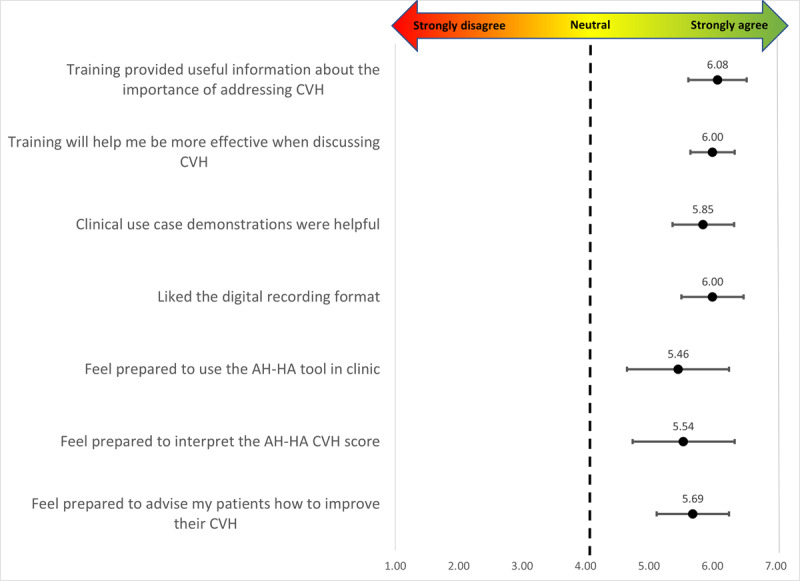
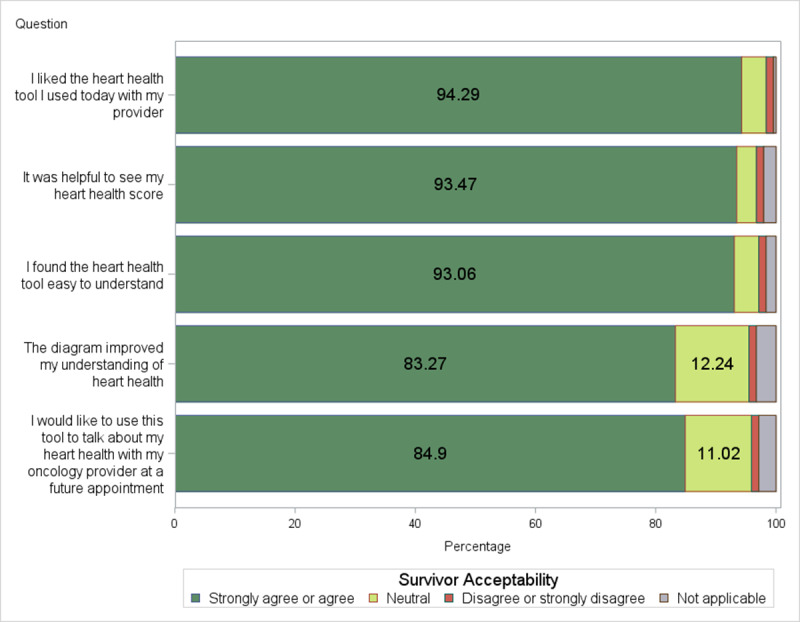
Results: Providers (n=15) reported high overall acceptability of the AH-HA training (mean 5.8, SD 1.0) and tool (mean 5.5, SD 1.4); provider acceptability was also supported by the Unified Theory of Acceptance and Use of Technology scores (eg, effort expectancy: mean 5.6, SD 1.5). Qualitative data also supported provider acceptability of different aspects of the AH-HA tool (eg, "It helps focus the conversation and give the patient a visual of continuum of progress"). Providers were more favorable about using the AH-HA tool for posttreatment survivorship care. Enrolled survivors (n=245) were an average of 4.4 (SD 3.7) years posttreatment. Most survivors reported that they strongly agreed or agreed that they liked the AH-HA tool (n=231, 94.3%). A larger proportion of survivors with high health literacy strongly agreed or agreed that it was helpful to see their heart health score (n=161, 98.2%) compared to survivors with lower health literacy scores (n=68, 89.5%; P=.005).
Conclusions: Quantitative surveys and qualitative interview data both demonstrate high acceptability of the AH-HA tool among both providers and survivors. Although most survivors found it helpful to see their heart health score, there may be room for improving communication with survivors who have lower health literacy.
期刊介绍:
The Journal of Medical Internet Research (JMIR) is a highly respected publication in the field of health informatics and health services. With a founding date in 1999, JMIR has been a pioneer in the field for over two decades.
As a leader in the industry, the journal focuses on digital health, data science, health informatics, and emerging technologies for health, medicine, and biomedical research. It is recognized as a top publication in these disciplines, ranking in the first quartile (Q1) by Impact Factor.
Notably, JMIR holds the prestigious position of being ranked #1 on Google Scholar within the "Medical Informatics" discipline.





 京公网安备 11010802042870号
京ICP备2023020795号-1
京公网安备 11010802042870号
京ICP备2023020795号-1

 分享
分享
 求助内容:
求助内容: 应助结果提醒方式:
 扫码关注我们
