Anyela Lozano-Parra, Víctor Herrera, Luis Ángel Villar
{"title":"抗氧化反应作为登革热低血压和出血性并发症的候选预后因素:来自哥伦比亚巢式病例对照研究的结果","authors":"Anyela Lozano-Parra, Víctor Herrera, Luis Ángel Villar","doi":"10.3390/tropicalmed10010014","DOIUrl":null,"url":null,"abstract":"<p><p>Dengue infection has been associated with oxidative stress (OS) induction; however, whether such a response predicts the development of complications remains unknown. We conducted a case-control study (1:2 ratio) nested within a cohort of febrile patients with a presumptive or confirmed diagnosis of dengue. Incident cases were patients who developed hypotension or severe bleeding during the follow-up, whereas controls did not. Total antioxidant status (TAS), superoxide dismutase (SOD), and glutathione peroxidase activity (GPx) were quantified in serums obtained ≤96 h from disease onset. The association between each biomarker and complications was evaluated by estimating adjusted odds ratios (ORs) using logistic regression. We evaluated 132 patients (median age: 19.0 years; 58.2% males). TAS and SOD were higher among cases than controls (2.1 versus 1.7 mM and 6.7 versus 6.0 U/mL, respectively), and the opposite was observed for GPx (128.1 versus 133.7 mmol/min/mL); however, none of these contrasts reached statistical significance. In the multivariate analysis, higher levels of TAS and SOD were associated with a higher likelihood of complications up to 3.5 mM (OR = 2.46; 95%CI: 1.10-5.53) and 8.0 U/mL (OR = 1.69; 95%CI: 1.01-2.83), respectively. GPx did not show an association with hypotension or severe bleeding. Our results suggest that the induction of OS during the acute phase of dengue infection might be a prognostic factor of hypotensive and hemorrhagic complications.</p>","PeriodicalId":23330,"journal":{"name":"Tropical Medicine and Infectious Disease","volume":"10 1","pages":""},"PeriodicalIF":2.6000,"publicationDate":"2025-01-04","publicationTypes":"Journal Article","fieldsOfStudy":null,"isOpenAccess":false,"openAccessPdf":"https://www.ncbi.nlm.nih.gov/pmc/articles/PMC11769034/pdf/","citationCount":"0","resultStr":"{\"title\":\"Antioxidant Response as a Candidate Prognostic Factor for Dengue Hypotensive and Hemorrhagic Complications: Results from a Nested Case-Control Study in Colombia.\",\"authors\":\"Anyela Lozano-Parra, Víctor Herrera, Luis Ángel Villar\",\"doi\":\"10.3390/tropicalmed10010014\",\"DOIUrl\":null,\"url\":null,\"abstract\":\"<p><p>Dengue infection has been associated with oxidative stress (OS) induction; however, whether such a response predicts the development of complications remains unknown. We conducted a case-control study (1:2 ratio) nested within a cohort of febrile patients with a presumptive or confirmed diagnosis of dengue. Incident cases were patients who developed hypotension or severe bleeding during the follow-up, whereas controls did not. Total antioxidant status (TAS), superoxide dismutase (SOD), and glutathione peroxidase activity (GPx) were quantified in serums obtained ≤96 h from disease onset. The association between each biomarker and complications was evaluated by estimating adjusted odds ratios (ORs) using logistic regression. We evaluated 132 patients (median age: 19.0 years; 58.2% males). TAS and SOD were higher among cases than controls (2.1 versus 1.7 mM and 6.7 versus 6.0 U/mL, respectively), and the opposite was observed for GPx (128.1 versus 133.7 mmol/min/mL); however, none of these contrasts reached statistical significance. In the multivariate analysis, higher levels of TAS and SOD were associated with a higher likelihood of complications up to 3.5 mM (OR = 2.46; 95%CI: 1.10-5.53) and 8.0 U/mL (OR = 1.69; 95%CI: 1.01-2.83), respectively. GPx did not show an association with hypotension or severe bleeding. Our results suggest that the induction of OS during the acute phase of dengue infection might be a prognostic factor of hypotensive and hemorrhagic complications.</p>\",\"PeriodicalId\":23330,\"journal\":{\"name\":\"Tropical Medicine and Infectious Disease\",\"volume\":\"10 1\",\"pages\":\"\"},\"PeriodicalIF\":2.6000,\"publicationDate\":\"2025-01-04\",\"publicationTypes\":\"Journal Article\",\"fieldsOfStudy\":null,\"isOpenAccess\":false,\"openAccessPdf\":\"https://www.ncbi.nlm.nih.gov/pmc/articles/PMC11769034/pdf/\",\"citationCount\":\"0\",\"resultStr\":null,\"platform\":\"Semanticscholar\",\"paperid\":null,\"PeriodicalName\":\"Tropical Medicine and Infectious Disease\",\"FirstCategoryId\":\"3\",\"ListUrlMain\":\"https://doi.org/10.3390/tropicalmed10010014\",\"RegionNum\":4,\"RegionCategory\":\"医学\",\"ArticlePicture\":[],\"TitleCN\":null,\"AbstractTextCN\":null,\"PMCID\":null,\"EPubDate\":\"\",\"PubModel\":\"\",\"JCR\":\"Q2\",\"JCRName\":\"INFECTIOUS DISEASES\",\"Score\":null,\"Total\":0}","platform":"Semanticscholar","paperid":null,"PeriodicalName":"Tropical Medicine and Infectious Disease","FirstCategoryId":"3","ListUrlMain":"https://doi.org/10.3390/tropicalmed10010014","RegionNum":4,"RegionCategory":"医学","ArticlePicture":[],"TitleCN":null,"AbstractTextCN":null,"PMCID":null,"EPubDate":"","PubModel":"","JCR":"Q2","JCRName":"INFECTIOUS DISEASES","Score":null,"Total":0}
引用次数: 0
摘要
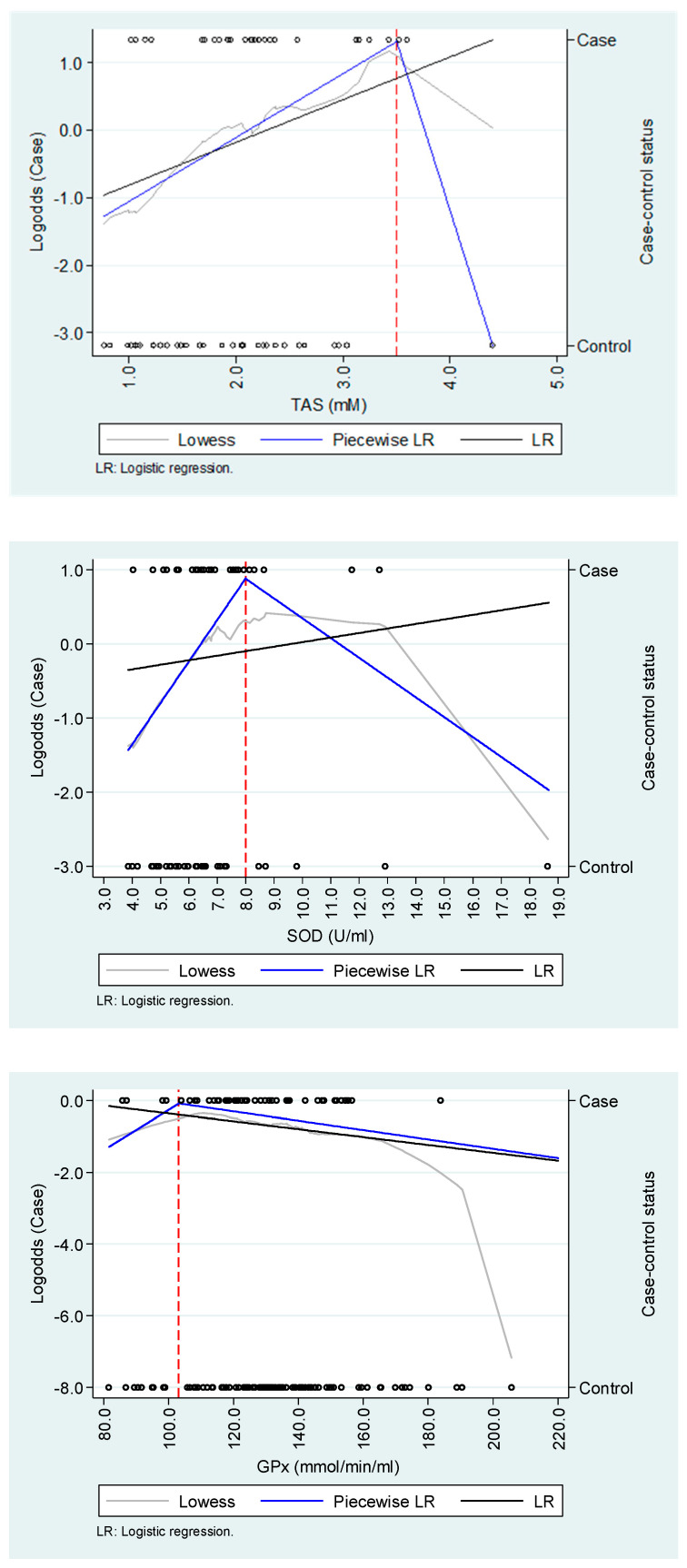
登革热感染与氧化应激(OS)诱导有关;然而,这种反应是否预示着并发症的发展仍然未知。我们进行了一项病例对照研究(1:2比例),研究对象是一组推测或确诊为登革热的发热患者。意外病例是在随访期间出现低血压或严重出血的患者,而对照组没有。测定发病后≤96 h血清的总抗氧化状态(TAS)、超氧化物歧化酶(SOD)和谷胱甘肽过氧化物酶活性(GPx)。每个生物标志物与并发症之间的关联通过使用逻辑回归估计校正优势比(ORs)来评估。我们评估了132例患者(中位年龄:19.0岁;58.2%的男性)。TAS和SOD在病例中高于对照组(分别为2.1 vs 1.7 mM和6.7 vs 6.0 U/mL),而GPx则相反(128.1 vs 133.7 mmol/min/mL);然而,这些对比都没有达到统计学意义。在多变量分析中,TAS和SOD水平较高与3.5 mM以下并发症的可能性较高相关(OR = 2.46;95%CI: 1.10-5.53)和8.0 U/mL (OR = 1.69;95%CI: 1.01-2.83)。GPx未显示与低血压或严重出血相关。我们的研究结果表明,在登革热感染的急性期诱导OS可能是低血压和出血性并发症的预后因素。
Antioxidant Response as a Candidate Prognostic Factor for Dengue Hypotensive and Hemorrhagic Complications: Results from a Nested Case-Control Study in Colombia.
Dengue infection has been associated with oxidative stress (OS) induction; however, whether such a response predicts the development of complications remains unknown. We conducted a case-control study (1:2 ratio) nested within a cohort of febrile patients with a presumptive or confirmed diagnosis of dengue. Incident cases were patients who developed hypotension or severe bleeding during the follow-up, whereas controls did not. Total antioxidant status (TAS), superoxide dismutase (SOD), and glutathione peroxidase activity (GPx) were quantified in serums obtained ≤96 h from disease onset. The association between each biomarker and complications was evaluated by estimating adjusted odds ratios (ORs) using logistic regression. We evaluated 132 patients (median age: 19.0 years; 58.2% males). TAS and SOD were higher among cases than controls (2.1 versus 1.7 mM and 6.7 versus 6.0 U/mL, respectively), and the opposite was observed for GPx (128.1 versus 133.7 mmol/min/mL); however, none of these contrasts reached statistical significance. In the multivariate analysis, higher levels of TAS and SOD were associated with a higher likelihood of complications up to 3.5 mM (OR = 2.46; 95%CI: 1.10-5.53) and 8.0 U/mL (OR = 1.69; 95%CI: 1.01-2.83), respectively. GPx did not show an association with hypotension or severe bleeding. Our results suggest that the induction of OS during the acute phase of dengue infection might be a prognostic factor of hypotensive and hemorrhagic complications.





 京公网安备 11010802042870号
京ICP备2023020795号-1
京公网安备 11010802042870号
京ICP备2023020795号-1

 分享
分享
 求助内容:
求助内容: 应助结果提醒方式:
 扫码关注我们
