Víctor Macarrón, Itsaso Losantos-García, Alberto Peláez-García, Laura Yébenes, Alberto Berjón, Laura Frías, Covadonga Martí, Pilar Zamora, José Ignacio Sánchez-Méndez, David Hardisson
{"title":"在雌激素受体阳性/人表皮生长因子受体2 (HER2)阴性乳腺癌的endpredict®检测中,一种评估高风险结果的新Nomogram (Nomogram)。","authors":"Víctor Macarrón, Itsaso Losantos-García, Alberto Peláez-García, Laura Yébenes, Alberto Berjón, Laura Frías, Covadonga Martí, Pilar Zamora, José Ignacio Sánchez-Méndez, David Hardisson","doi":"10.3390/cancers17020273","DOIUrl":null,"url":null,"abstract":"<p><p><b>Background/Objectives</b>: The EndoPredict<sup>®</sup> assay has been widely used in recent years to estimate the risk of distant recurrence and the absolute chemotherapy benefit for patients with estrogen (ER)-positive/human epidermal growth factor receptor 2 (HER2)-negative breast cancer. However, there are no well-defined criteria for selecting patients who may benefit from the test. The aim of this study was to develop a novel nomogram to estimate the probability of obtaining a high-risk EndoPredict<sup>®</sup> result in clinical practice. <b>Methods</b>: The study cohort comprised 348 cases of T1-3/N0-1a/M0 ER-positive/HER2-negative breast carcinoma. A multivariate analysis was conducted using a training cohort (n = 270) based on clinicopathological features that demonstrated a statistically significant correlation with the EndoPredict<sup>®</sup> result in a univariate analysis. The predictive model was subsequently represented as a nomogram to estimate the probability of obtaining a high-risk result in the EndoPredict<sup>®</sup> assay. The predictive model was then validated using a separate validation cohort (n = 78). <b>Results</b>: The clinicopathological features incorporated into the nomogram included tumor size, tumor grade, sentinel lymph node status, pN stage, and Ki67. The internal validation of the model yielded an area under the curve (AUC) of 0.803 (95% CI = 0.751, 0.855) in the receiver operating characteristic (ROC) curve for the training cohort, with an optimal sensitivity and specificity at a threshold of 0.536. The external validation yielded an AUC of 0.789 (95% CI = 0.689, 0.890) in its ROC curve, with optimal sensitivity and specificity achieved at a threshold of 0.393. <b>Conclusions</b>: This study presents, for the first time, the development of a clinically accessible nomogram designed to estimate the probability of obtaining a high-risk result in the EndoPredict<sup>®</sup> assay. The use of easily available clinicopathological features allows for the optimization of patient selection for the EndoPredict<sup>®</sup> assay, ensuring that those who would most benefit from undergoing the test are identified.</p>","PeriodicalId":9681,"journal":{"name":"Cancers","volume":"17 2","pages":""},"PeriodicalIF":4.8000,"publicationDate":"2025-01-16","publicationTypes":"Journal Article","fieldsOfStudy":null,"isOpenAccess":false,"openAccessPdf":"https://www.ncbi.nlm.nih.gov/pmc/articles/PMC11763868/pdf/","citationCount":"0","resultStr":"{\"title\":\"A Novel Nomogram for Estimating a High-Risk Result in the EndoPredict<sup>®</sup> Test for Estrogen Receptor-Positive/Human Epidermal Growth Factor Receptor 2 (HER2)-Negative Breast Carcinoma.\",\"authors\":\"Víctor Macarrón, Itsaso Losantos-García, Alberto Peláez-García, Laura Yébenes, Alberto Berjón, Laura Frías, Covadonga Martí, Pilar Zamora, José Ignacio Sánchez-Méndez, David Hardisson\",\"doi\":\"10.3390/cancers17020273\",\"DOIUrl\":null,\"url\":null,\"abstract\":\"<p><p><b>Background/Objectives</b>: The EndoPredict<sup>®</sup> assay has been widely used in recent years to estimate the risk of distant recurrence and the absolute chemotherapy benefit for patients with estrogen (ER)-positive/human epidermal growth factor receptor 2 (HER2)-negative breast cancer. However, there are no well-defined criteria for selecting patients who may benefit from the test. The aim of this study was to develop a novel nomogram to estimate the probability of obtaining a high-risk EndoPredict<sup>®</sup> result in clinical practice. <b>Methods</b>: The study cohort comprised 348 cases of T1-3/N0-1a/M0 ER-positive/HER2-negative breast carcinoma. A multivariate analysis was conducted using a training cohort (n = 270) based on clinicopathological features that demonstrated a statistically significant correlation with the EndoPredict<sup>®</sup> result in a univariate analysis. The predictive model was subsequently represented as a nomogram to estimate the probability of obtaining a high-risk result in the EndoPredict<sup>®</sup> assay. The predictive model was then validated using a separate validation cohort (n = 78). <b>Results</b>: The clinicopathological features incorporated into the nomogram included tumor size, tumor grade, sentinel lymph node status, pN stage, and Ki67. The internal validation of the model yielded an area under the curve (AUC) of 0.803 (95% CI = 0.751, 0.855) in the receiver operating characteristic (ROC) curve for the training cohort, with an optimal sensitivity and specificity at a threshold of 0.536. The external validation yielded an AUC of 0.789 (95% CI = 0.689, 0.890) in its ROC curve, with optimal sensitivity and specificity achieved at a threshold of 0.393. <b>Conclusions</b>: This study presents, for the first time, the development of a clinically accessible nomogram designed to estimate the probability of obtaining a high-risk result in the EndoPredict<sup>®</sup> assay. The use of easily available clinicopathological features allows for the optimization of patient selection for the EndoPredict<sup>®</sup> assay, ensuring that those who would most benefit from undergoing the test are identified.</p>\",\"PeriodicalId\":9681,\"journal\":{\"name\":\"Cancers\",\"volume\":\"17 2\",\"pages\":\"\"},\"PeriodicalIF\":4.8000,\"publicationDate\":\"2025-01-16\",\"publicationTypes\":\"Journal Article\",\"fieldsOfStudy\":null,\"isOpenAccess\":false,\"openAccessPdf\":\"https://www.ncbi.nlm.nih.gov/pmc/articles/PMC11763868/pdf/\",\"citationCount\":\"0\",\"resultStr\":null,\"platform\":\"Semanticscholar\",\"paperid\":null,\"PeriodicalName\":\"Cancers\",\"FirstCategoryId\":\"3\",\"ListUrlMain\":\"https://doi.org/10.3390/cancers17020273\",\"RegionNum\":2,\"RegionCategory\":\"医学\",\"ArticlePicture\":[],\"TitleCN\":null,\"AbstractTextCN\":null,\"PMCID\":null,\"EPubDate\":\"\",\"PubModel\":\"\",\"JCR\":\"Q1\",\"JCRName\":\"ONCOLOGY\",\"Score\":null,\"Total\":0}","platform":"Semanticscholar","paperid":null,"PeriodicalName":"Cancers","FirstCategoryId":"3","ListUrlMain":"https://doi.org/10.3390/cancers17020273","RegionNum":2,"RegionCategory":"医学","ArticlePicture":[],"TitleCN":null,"AbstractTextCN":null,"PMCID":null,"EPubDate":"","PubModel":"","JCR":"Q1","JCRName":"ONCOLOGY","Score":null,"Total":0}
引用次数: 0
摘要
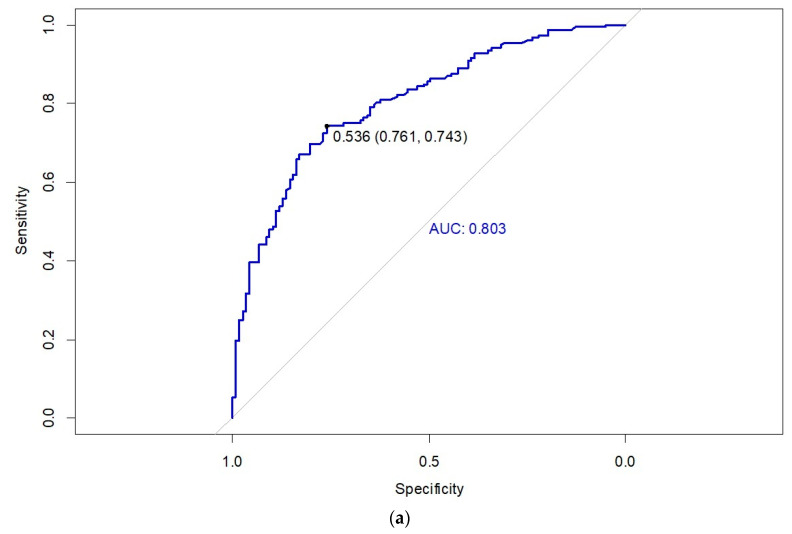
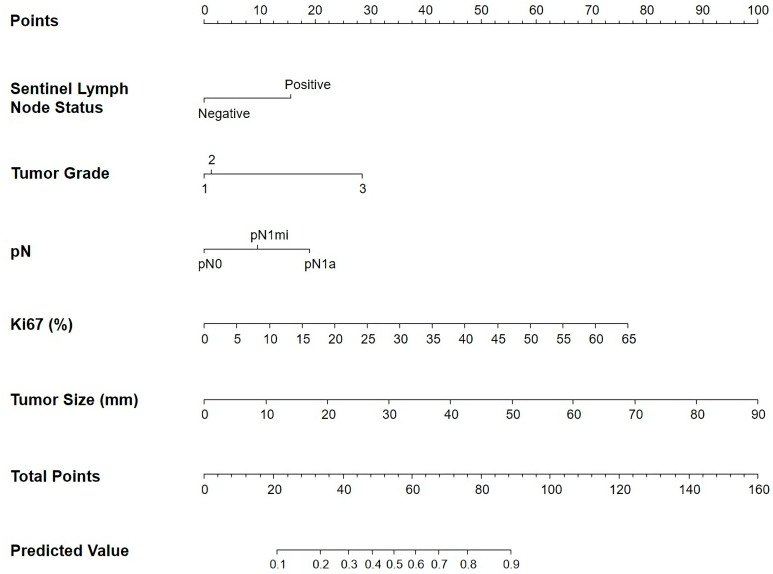
背景/目的:近年来,endopdict®检测被广泛用于评估雌激素(ER)阳性/人表皮生长因子受体2 (HER2)阴性乳腺癌患者远处复发的风险和绝对化疗获益。然而,目前还没有明确的标准来选择可能从该测试中受益的患者。本研究的目的是开发一种新的nomogram来估计在临床实践中获得高风险endoppredict®结果的概率。方法:研究队列包括348例T1-3/N0-1a/M0 er阳性/ her2阴性乳腺癌。采用训练队列(n = 270)进行多因素分析,基于临床病理特征,在单因素分析中显示与endopdict®结果具有统计学显著相关性。预测模型随后被表示为nomogram,以估计在endopdict®检测中获得高风险结果的概率。然后使用单独的验证队列(n = 78)对预测模型进行验证。结果:nomogram临床病理特征包括肿瘤大小、肿瘤分级、前哨淋巴结状态、pN分期、Ki67。该模型的内部验证结果显示,训练队列的受试者工作特征(ROC)曲线下面积(AUC)为0.803 (95% CI = 0.751, 0.855),最佳灵敏度和特异性阈值为0.536。外部验证的ROC曲线AUC为0.789 (95% CI = 0.689, 0.890),最佳灵敏度和特异性阈值为0.393。结论:本研究首次提出了一种临床可获得的nomogram,用于估计在endopdict®检测中获得高风险结果的概率。使用易于获得的临床病理特征可以优化endopdict®检测的患者选择,确保那些将从进行测试中获益最多的患者被确定。
A Novel Nomogram for Estimating a High-Risk Result in the EndoPredict® Test for Estrogen Receptor-Positive/Human Epidermal Growth Factor Receptor 2 (HER2)-Negative Breast Carcinoma.
Background/Objectives: The EndoPredict® assay has been widely used in recent years to estimate the risk of distant recurrence and the absolute chemotherapy benefit for patients with estrogen (ER)-positive/human epidermal growth factor receptor 2 (HER2)-negative breast cancer. However, there are no well-defined criteria for selecting patients who may benefit from the test. The aim of this study was to develop a novel nomogram to estimate the probability of obtaining a high-risk EndoPredict® result in clinical practice. Methods: The study cohort comprised 348 cases of T1-3/N0-1a/M0 ER-positive/HER2-negative breast carcinoma. A multivariate analysis was conducted using a training cohort (n = 270) based on clinicopathological features that demonstrated a statistically significant correlation with the EndoPredict® result in a univariate analysis. The predictive model was subsequently represented as a nomogram to estimate the probability of obtaining a high-risk result in the EndoPredict® assay. The predictive model was then validated using a separate validation cohort (n = 78). Results: The clinicopathological features incorporated into the nomogram included tumor size, tumor grade, sentinel lymph node status, pN stage, and Ki67. The internal validation of the model yielded an area under the curve (AUC) of 0.803 (95% CI = 0.751, 0.855) in the receiver operating characteristic (ROC) curve for the training cohort, with an optimal sensitivity and specificity at a threshold of 0.536. The external validation yielded an AUC of 0.789 (95% CI = 0.689, 0.890) in its ROC curve, with optimal sensitivity and specificity achieved at a threshold of 0.393. Conclusions: This study presents, for the first time, the development of a clinically accessible nomogram designed to estimate the probability of obtaining a high-risk result in the EndoPredict® assay. The use of easily available clinicopathological features allows for the optimization of patient selection for the EndoPredict® assay, ensuring that those who would most benefit from undergoing the test are identified.
期刊介绍:
Cancers (ISSN 2072-6694) is an international, peer-reviewed open access journal on oncology. It publishes reviews, regular research papers and short communications. Our aim is to encourage scientists to publish their experimental and theoretical results in as much detail as possible. There is no restriction on the length of the papers. The full experimental details must be provided so that the results can be reproduced.





 京公网安备 11010802042870号
京ICP备2023020795号-1
京公网安备 11010802042870号
京ICP备2023020795号-1

 分享
分享
 求助内容:
求助内容: 应助结果提醒方式:
 扫码关注我们
